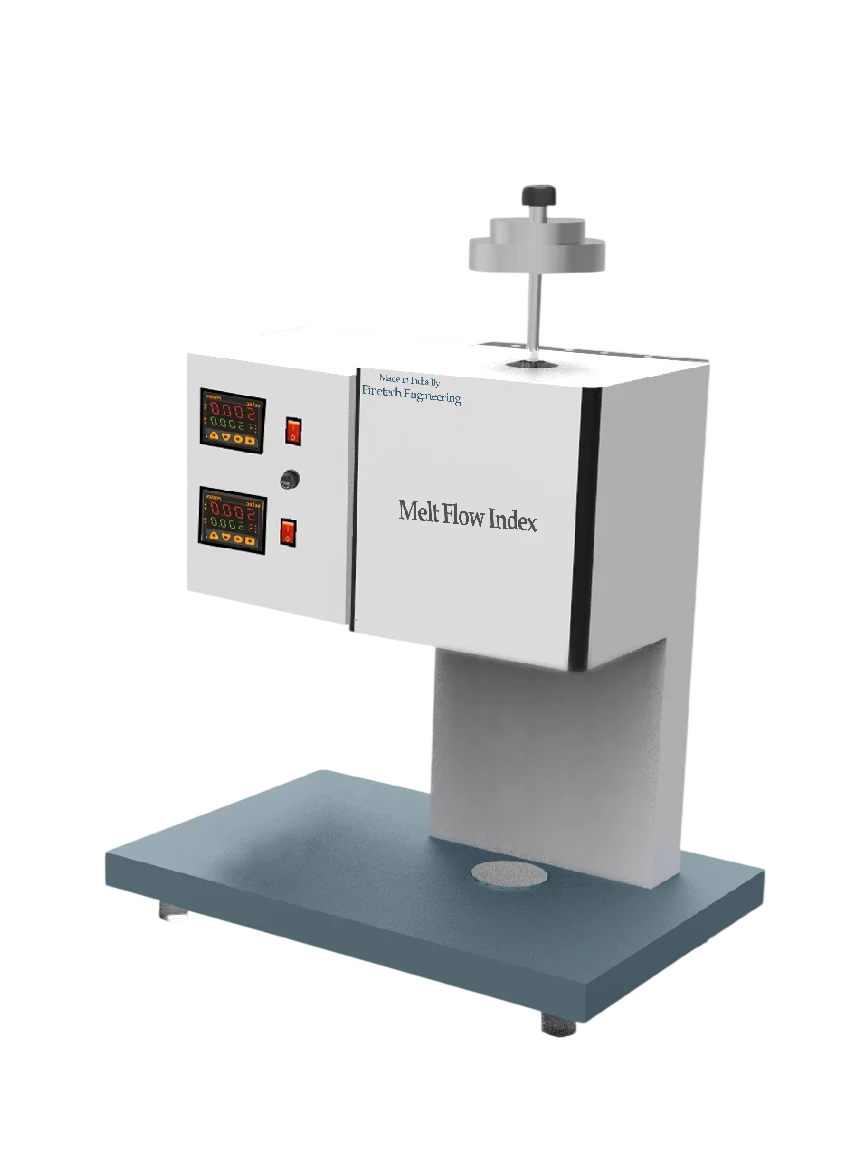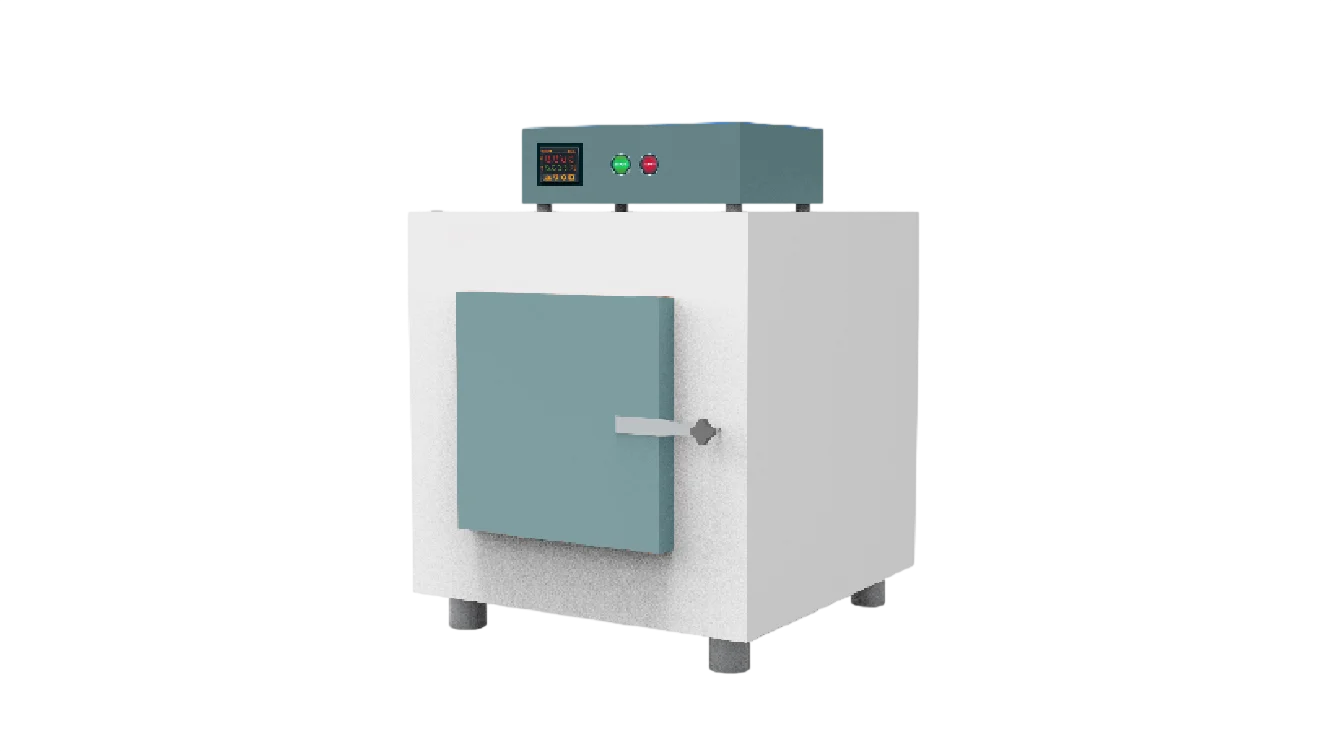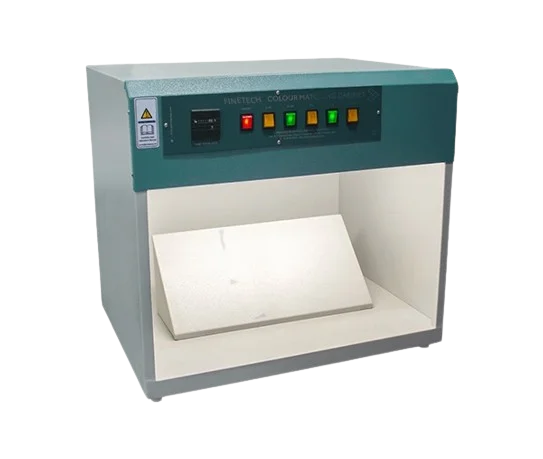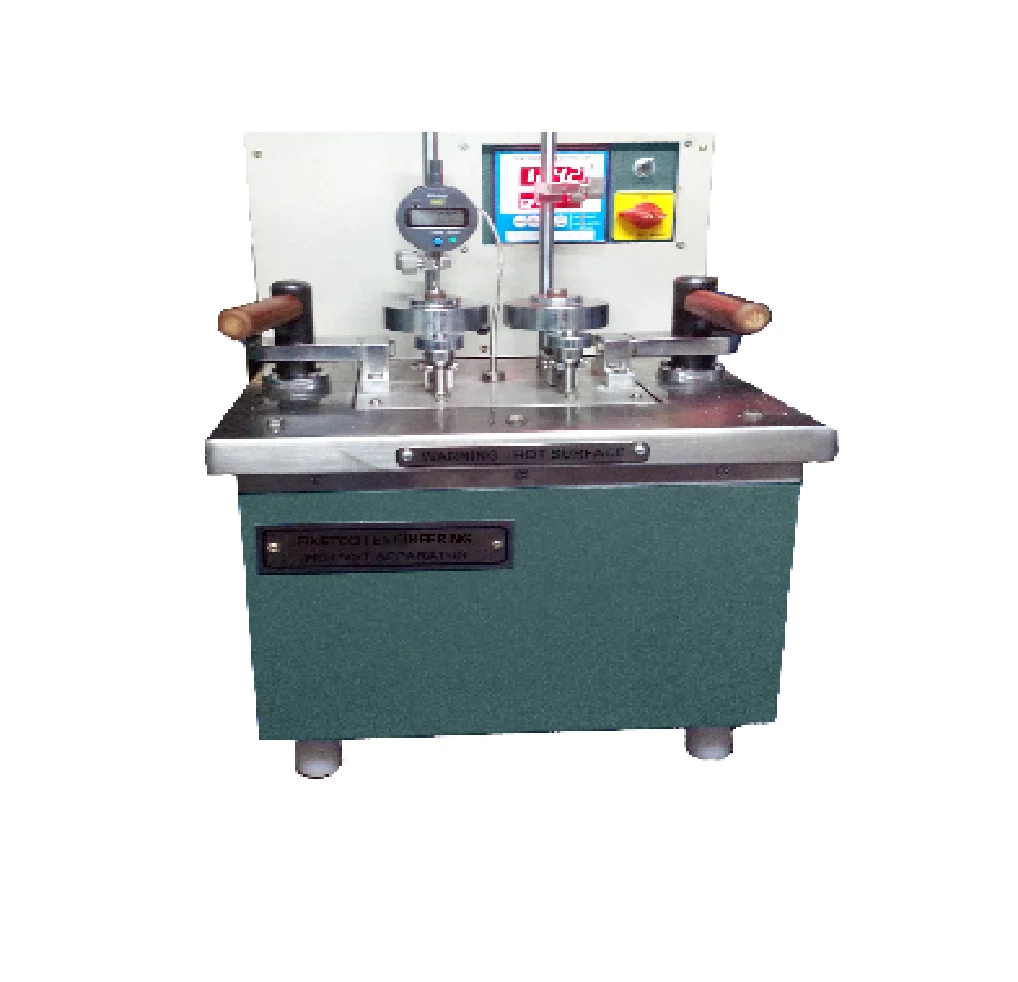







Maharashtra is India’s largest plastics processing state, with injection moulding, extrusion, compounding and film manufacturing plants concentrated across the Thane–Navi Mumbai–Pune MIDC belt. Quality control in these plants depends on a consistent core of instruments: heat deflection and Vicat softening point testing to verify that a plastic part holds its shape under thermal load, melt flow index testing to verify that a resin batch flows correctly in the moulding machine, impact testing to verify toughness, and hardness testing for final-part QA. Finetech Engineering is a Plastic Laboratory Testing Equipment manufacturer Maharashtra labs across this belt rely on, building these instruments in-house at our Wagle Estate, Thane facility. A melt flow index tester Maharashtra plastics processors rely on most is usually the very first instrument they buy, since incoming-resin QC has to happen before anything else.
As NABL traceable Plastic Laboratory Testing Equipment Maharashtra supplier and manufacturer, we supply instruments where every calibration certificate can be traced back to recognised national measurement standards – required for NABL-accredited labs and increasingly requested by OEM customers auditing their Tier-1 and Tier-2 plastic component suppliers across Maharashtra.
Because our factory sits in Thane – at the centre of the Plastic Laboratory Testing Equipment manufacturer Thane–Navi Mumbai–Pune MIDC belt – we install and commission faster than suppliers shipping from outside Maharashtra. Same-week installation in Thane, Taloja and Rabale MIDC, and short-lead-time delivery to Pimpri-Chinchwad, Pune MIDC and beyond.
Which 3 instruments does a plastics lab need first? Most Maharashtra plastics labs start with three instruments: an MFI tester for incoming-resin QC, an HDT/VSP apparatus for heat-performance testing, and a Shore D hardness tester for final-part inspection. Toughness testing (Izod/Charpy) and ESCR testing are usually added as the product range or customer requirements grow. Tell us your material and your customer specification, and we will scope the right starter set.
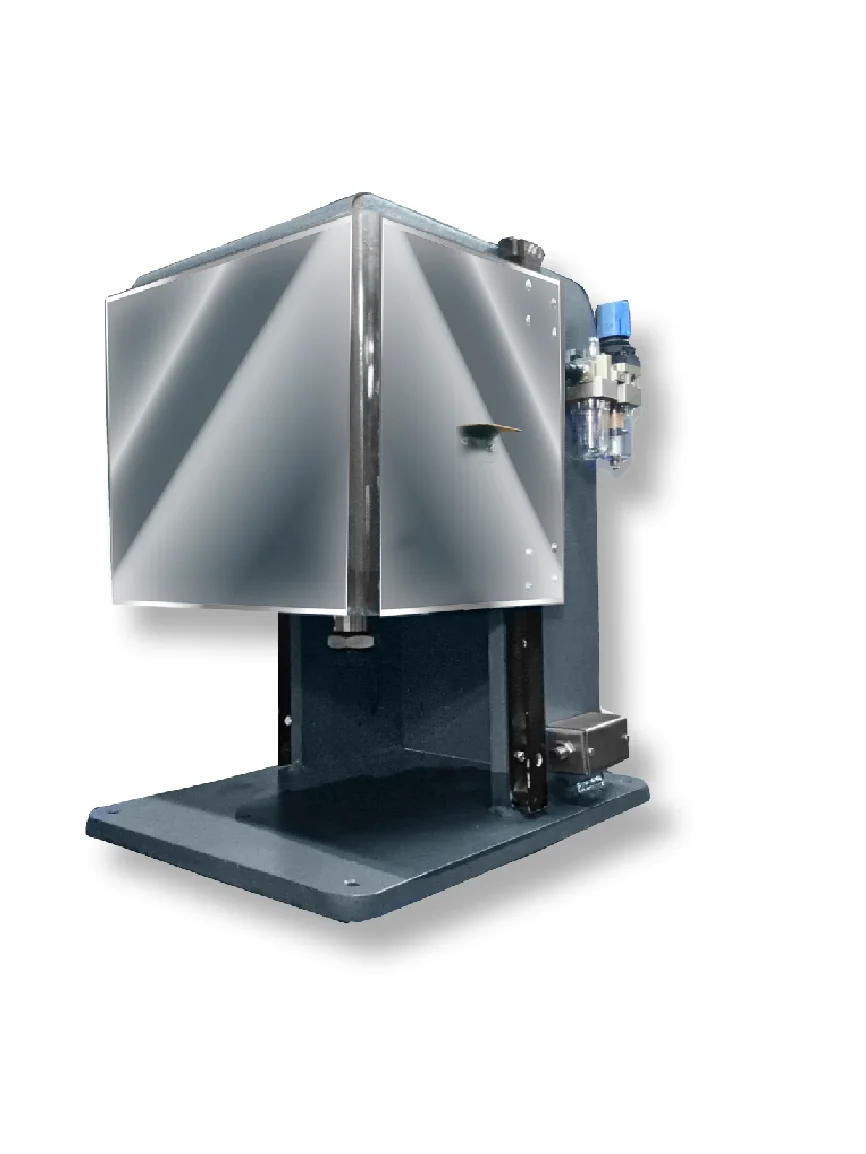
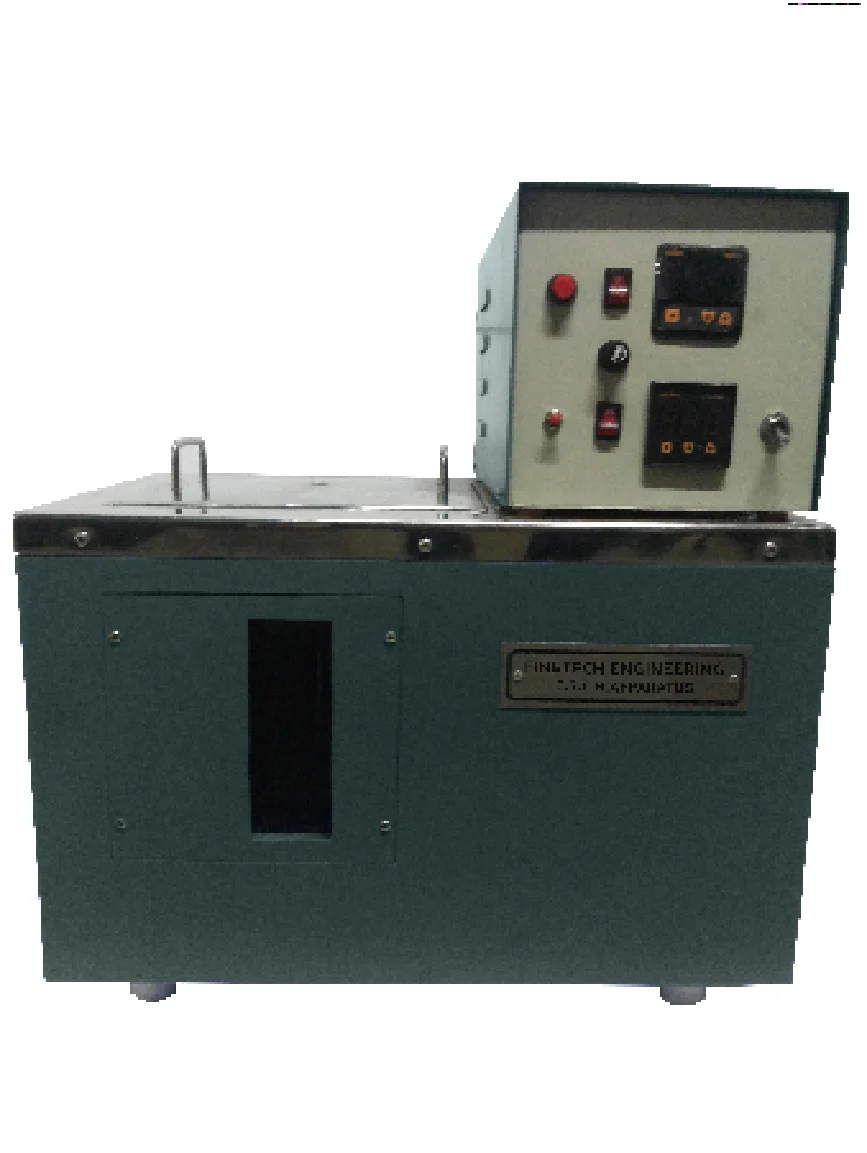
How does HDT VSP apparatus work – a question we answer for every Maharashtra plastics lab buying their first thermal testing instrument. The Finetech HDT/VSP apparatus measures two related but distinct thermal properties:
Both tests run on the same instrument – the HDT/VSP apparatus – by switching the specimen holder and load. Our Finetech apparatus accommodates ASTM D648 and ASTM D1525 in one unit.
Tip: HDT is the go-to test for engineering plastics (ABS, nylon, polycarbonate, glass-filled grades) used in automotive and electrical components. VSP is more commonly specified for commodity plastics (PVC, PE, PP) used in pipes, containers and packaging. If your customer specification cites both, our apparatus runs both from the same setup.
The melt flow index test procedure measures how easily a thermoplastic material flows when melted, per ASTM D1238 or ISO 1133. It is one of the most widely used incoming-material QC tests in Maharashtra’s plastics processing plants. Here is the melt flow index test procedure step by step, from loading the charge to interpreting the result:
Step | What Happens |
1. Load | A weighed charge of plastic granules or powder is loaded into the heated barrel of the MFI tester. |
2. Preheat | The barrel heats to a standard test temperature (specific to the material – e.g. 190°C for PE, 230°C for PP). The plastic melts and equilibrates for a set preheat time. |
3. Apply load | A standard piston weight is placed on top, applying a fixed downward force. The molten plastic is forced through a standard die (2.095 mm diameter, 8.00 mm length). |
4. Collect & weigh | Extruded strands are collected at timed intervals and weighed. The melt flow index (MFI) is reported as grams per 10 minutes (g/10 min). |
5. Interpret | Higher MFI = more fluid (easier to mould, lower viscosity). Lower MFI = stiffer flow (higher viscosity). Each resin grade has a target MFI range – batches outside this range will give moulding problems. |
Note: The test temperature and load weight are material-specific and must match the resin being tested. Using the wrong condition gives a meaningless result. Always confirm the correct test condition (expressed as temperature/load, e.g. 190°C/2.16 kg for polyethylene) against ASTM D1238 Table 1 or the resin manufacturer’s data sheet before testing.
As a Plastic Laboratory Testing Equipment supplier Maharashtra plastics plants have relied on, Finetech Engineering supplies the following instruments for plastic material and product testing. Each is built to the named ASTM / ISO / UL standard – never vague “international standards”.
| Instrument | What It Tests | Primary Standards | Why Plastics Labs Need It |
| HDT / VSP Apparatus | Heat deflection temperature & Vicat softening point of plastics | ASTM D648, ASTM D1525 | Verify that a plastic part holds shape under thermal load; mandatory for automotive and electrical grade approvals |
| Melt Flow Index (MFI) Tester | Melt flow rate of thermoplastics | ASTM D1238, ISO 1133 | Incoming-resin QC; verifies that each batch will process correctly in the moulding machine |
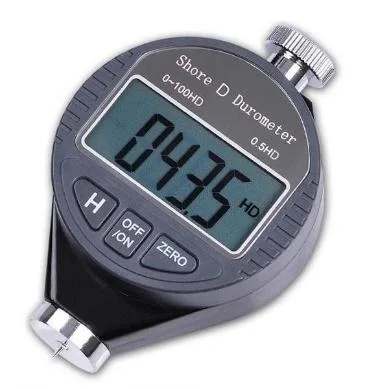
| Shore D Hardness Tester | Indentation hardness of rigid plastics | ASTM D2240, IS 3400 | Final-part hardness check; quick QC on moulded components |
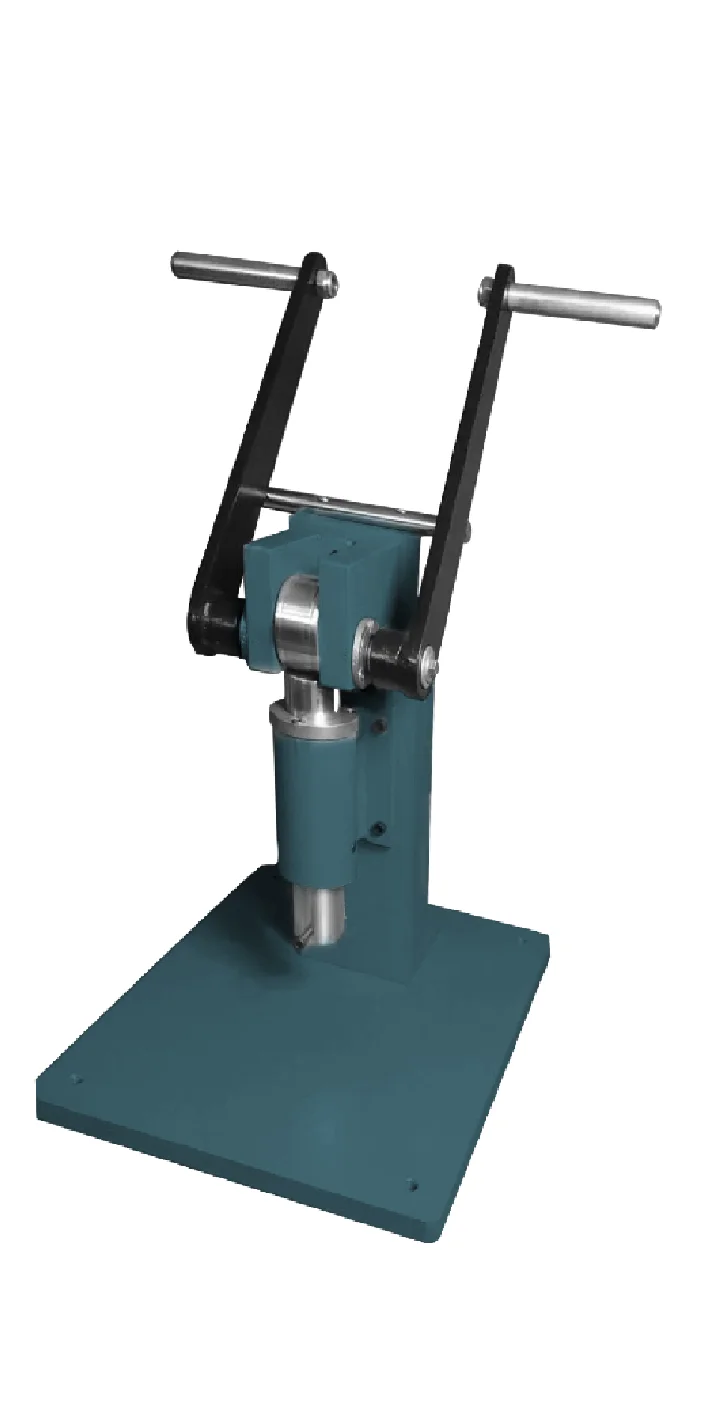
| Izod & Charpy Impact Tester | Notched impact strength of plastics | ASTM D256, ISO 179/180 | Toughness testing for plastic parts subject to impact loads |
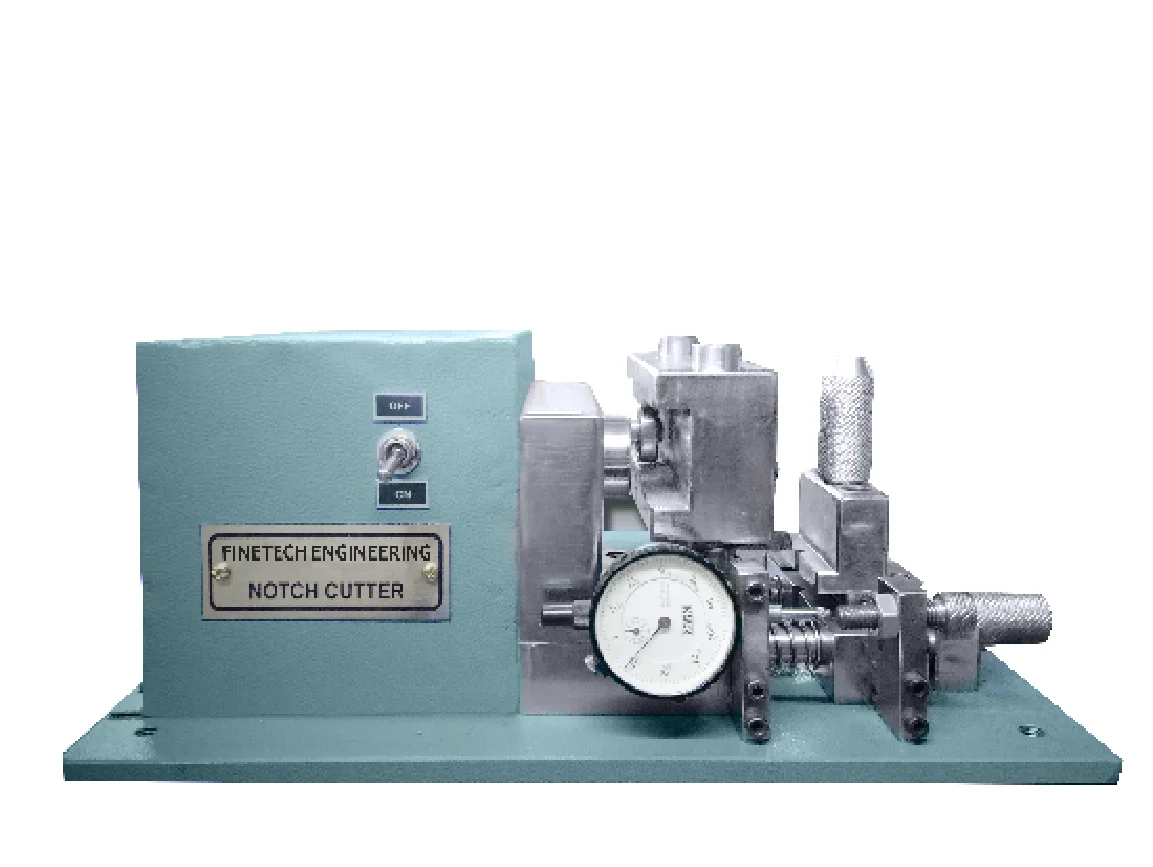
| Notch Cutter | Precision notching of impact test specimens | ASTM D256, ISO 179/180 | Prepares specimens for Izod & Charpy testing at the correct notch geometry |
| ESCR Apparatus | Environmental stress cracking resistance of plastics | ASTM D1693, ASTM D2552 | Critical for PE pipes, bottles and containers – tests long-term cracking resistance in contact with chemicals |
| Flammability Tester | UL 94 horizontal & vertical burning rate classification | UL 94, ASTM D635 | Required for any plastic used in electrical enclosures, appliances or automotive interiors |
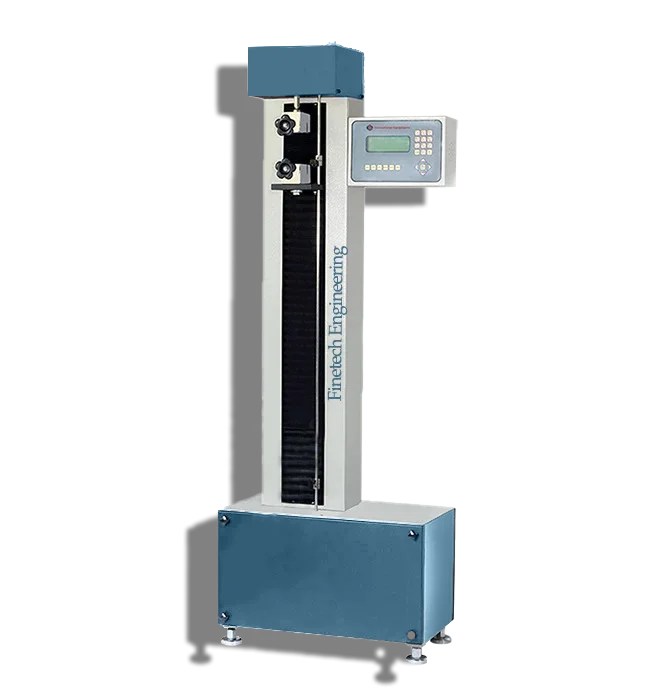
| Universal Testing Machine (UTM) | Tensile strength, elongation & flexural properties of plastics | ASTM D638, ASTM D790, ISO 37 | Mechanical property testing across all plastic types |
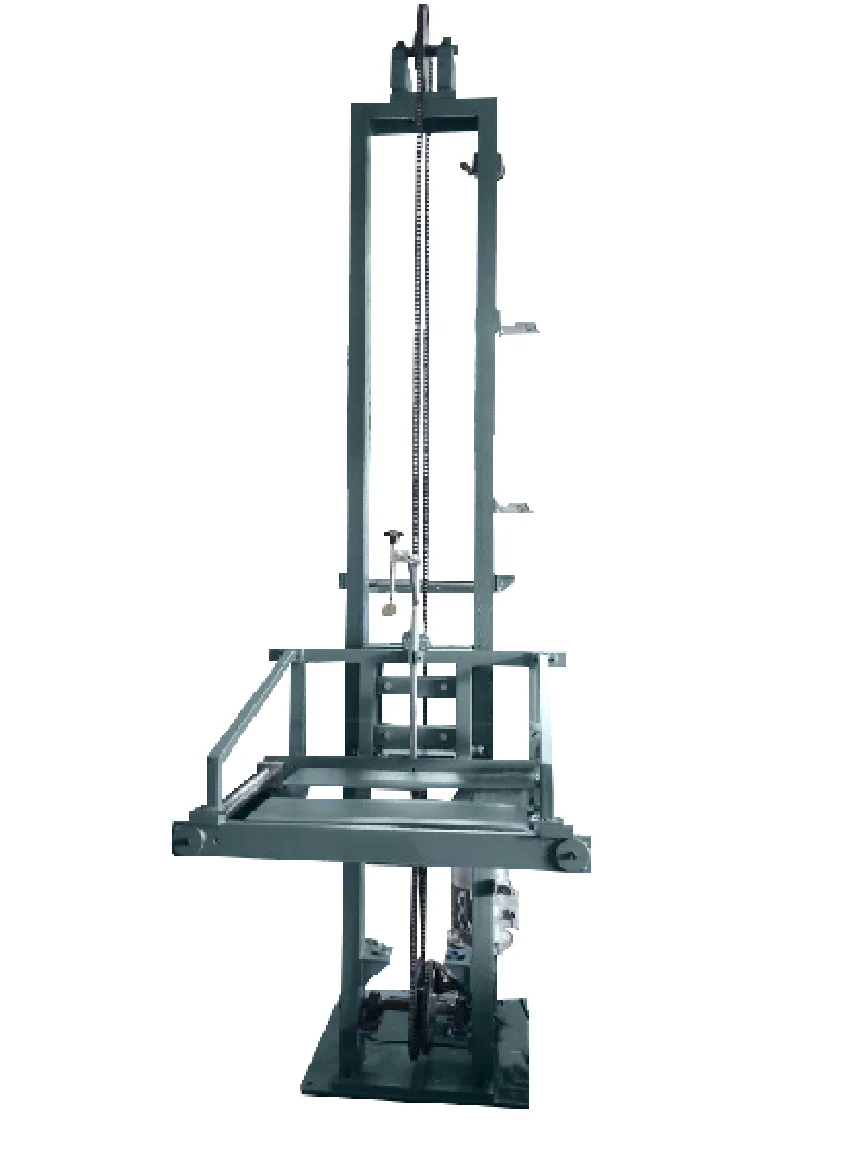
| Dart Impact Tester | Impact resistance of plastic film and thin sheet | ASTM D1709, ISO 7765 | Essential for packaging film, shrink wrap and agricultural film |
We dispatch and install from our Thane factory across Maharashtra’s plastics corridor: Wagle Estate Thane, Taloja MIDC, Rabale MIDC, Bhiwandi, Pimpri-Chinchwad, Pune MIDC, Chakan and Talegaon. As a Plastic Laboratory Testing Equipment supplier Maharashtra plastics plants have used, our on-site team handles installation, calibration, operator training and ongoing AMC.
Manufacturer, not a trader. Every instrument is designed, built and calibrated in our Wagle Estate, Thane facility. You deal directly with the maker – no dealer mark-up, no second-hand specifications.
ISO 9001 certified. ISO 9001 Plastic Laboratory Testing Equipment Maharashtra standard is what we hold. Our manufacturing is ISO 9001:2015 certified and our equipment is CE marked.
NABL-traceable calibration. NABL traceable Plastic Laboratory Testing Equipment Maharashtra – every instrument we supply can be calibrated to a traceable chain, supporting NABL-accredited labs and OEM audit requirements.
Built for Maharashtra’s plastics belt. Our factory in Thane puts us at the centre of the Plastic Laboratory Testing Equipment manufacturer Thane–Navi Mumbai–Pune MIDC belt, meaning same-week installation across Wagle Estate, Taloja, Rabale, Pimpri-Chinchwad and Pune MIDC.
Built to specific standards. ASTM D638, ASTM D648, ASTM D1238, ASTM D1525, ASTM D256, ASTM D1693, UL 94 – with IS/BIS methods supported alongside ASTM, so your Maharashtra lab stays audit-ready.
On-site installation, calibration and AMC. We commission, train operators and provide annual maintenance contracts – all serviced from Thane.


















All Equipments & specimen preparation products can be customised as per requirements.
Vicat softening point meaning - it is the temperature at which a flat-ended needle indenter penetrates 1 mm into a plastic specimen under a standard load, when heated at a controlled rate, per ASTM D1525. It represents the temperature at which the polymer begins to soften and lose dimensional stability. For semi-crystalline plastics like PVC, PE and PP used in pipes, bottles and containers across Maharashtra, the VSP is a standard grade-specification parameter - a product must achieve a minimum VSP to be approved for use at elevated ambient temperatures. The Vicat softening point meaning plastic processors need to remember is simple: it is the softening point, not the melting point - parts can still be usable above VSP for short excursions, but not for sustained load-bearing use.
How does HDT VSP apparatus work? The same instrument runs both tests. For HDT (ASTM D648): a specimen bar is supported at two points, a three-point bending load is applied, and the oil bath heats at 2°C/min until the specimen deflects 0.25 mm (Method A) or 0.455 mm (Method B) - that temperature is the HDT. For VSP (ASTM D1525): a needle indenter is loaded onto a specimen surface, the bath heats at 50°C/h or 120°C/h until 1 mm penetration occurs - that temperature is the VSP. Both tests use the same temperature-controlled oil bath; the specimen holder and indenter are changed between tests.
The melt flow index test procedure per ASTM D1238: plastic granules are loaded into a heated barrel, melted at the material-specific test temperature, and forced through a standard die (2.095 mm Ø, 8.00 mm length) by a standard piston weight. The mass of extrudate collected over 10 minutes - or calculated from timed cuts - is the melt flow index, reported in g/10 min. Higher MFI means more fluid melt (faster, thinner flow); lower MFI means stiffer melt (slower, thicker flow). Each resin grade has a published MFI specification range; batches outside this range will cause processing problems in the moulding machine.
We are a manufacturer. As a Plastic Laboratory Testing Equipment manufacturer Maharashtra operations trust, every instrument is designed and built in-house at our Wagle Estate, Thane factory - not resold from another manufacturer.
Yes. We are ISO 9001 Plastic Laboratory Testing Equipment Maharashtra certified - our manufacturing holds ISO 9001:2015 certification and our equipment is CE marked. We also supply instruments with NABL traceable Plastic Laboratory Testing Equipment Maharashtra calibration, meaning the calibration certificate we provide can be traced back to national measurement standards. This is required for NABL-accredited labs and is increasingly requested by OEM customers auditing their plastic component suppliers.
We install and service across the full Plastic Laboratory Testing Equipment manufacturer Thane–Navi Mumbai–Pune MIDC belt: Wagle Estate Thane, Taloja MIDC, Rabale MIDC, Bhiwandi, Pimpri-Chinchwad, Pune MIDC, Chakan and Talegaon. Dispatch is direct from our Thane factory.
HDT (heat deflection temperature, ASTM D648) measures the temperature at which a specimen deflects under a bending load - it is a measure of structural rigidity under combined thermal and mechanical stress. Vicat softening point meaning is subtly different: it measures the temperature at which a needle penetrates 1 mm into the surface under a compressive load, with no bending. HDT is more relevant for load-bearing structural plastic parts; VSP is more relevant for surface-softening behaviour in commodity plastics. Both run on the Finetech HDT/VSP apparatus. In short, the HDT vs VSP difference which test to use decision comes down to this: choose HDT for load-bearing structural parts, and VSP for surface-softening behaviour in commodity plastics.