







Step 1: Specimen Preparation
Step 2: Pre-Abrasion (Conditioning Run)
Step 3: Test Run on the DIN Abrasion Tester
Step 4: Calculate Results
|
Parameter |
Specification |
|
Product Name |
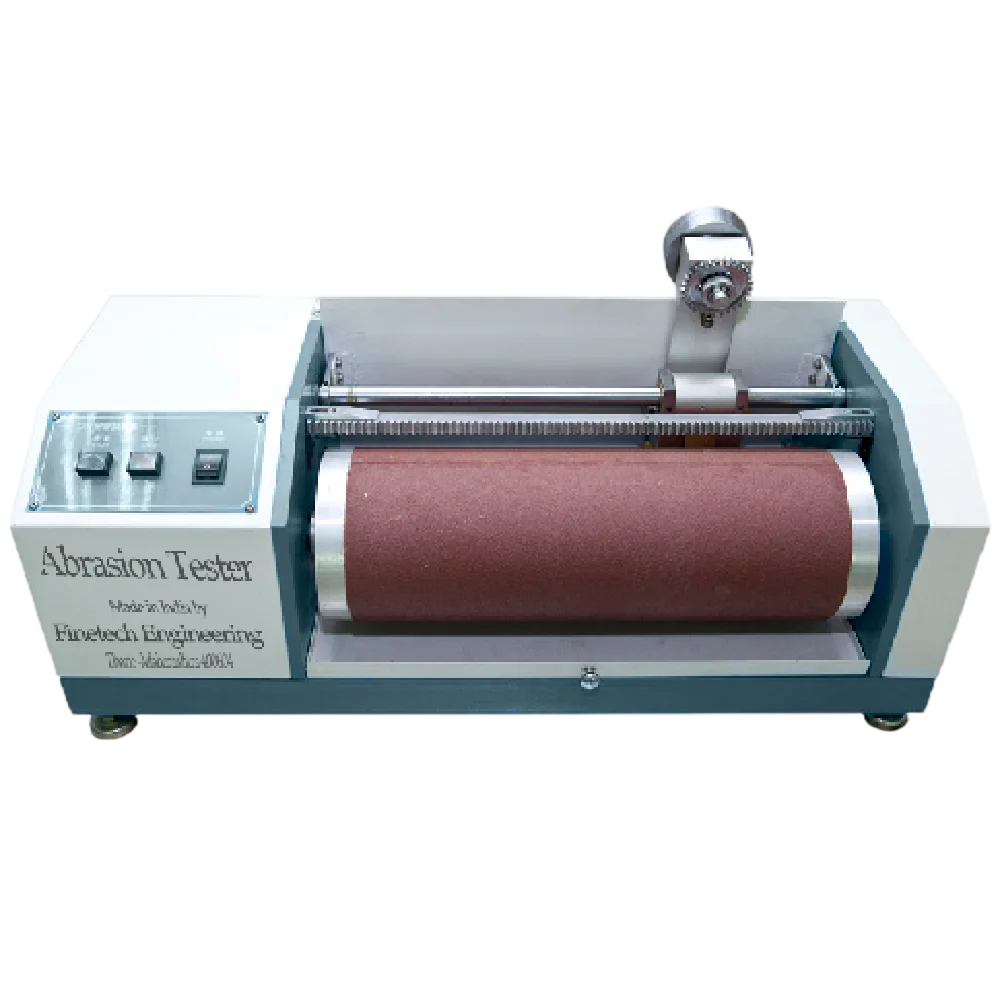
DIN Abrasion Tester (Rotary Drum Abrader) – DIN Abrasion Tester Manufacturer India, Finetech Engineering |
|
Standards |
DIN 53516 Abrasion Resistance Tester India, ISO 4649 Abrasion Tester Manufacturer (Method A & B), ASTM D5963, SATRA TM174, EN ISO 20344, IS 3400 Part 4 |
|
Test Method |
Rotating and non-rotating specimen holder |
|
Drum Diameter |
150mm |
|
Drum Length |
460mm |
|
Drum Speed |
40 +/-1 rpm |
|
Peripheral Speed |
0.32 m/s |
|
Abrasive Paper Grade |
P60 (60 grit aluminium oxide) |
|
Abrasion Distance |
40m (84 drum revolutions) or 20m (42 revolutions) selectable |
|
Lateral Feed |
4.2mm per drum revolution |
|
Contact Load |
10N (standard per ASTM D5963); 5N also available per ISO 4649 |
|
Specimen Diameter |
16 +/-0.2mm |
|
Specimen Thickness |
6-15mm (minimum 6mm) |
|
Power Supply |
230V AC, single phase, 50 Hz |
|
Certification |
ISO 9001:2015 certified manufacturing |
| Metric | Formula | What It Means |
| Volume Loss (mm³) | Mass Loss (mg) ÷ Density (g/cm³) | The volume of rubber worn away during the test. Lower = better abrasion resistance. |
| Abrasion Resistance Index (ARI %) | (Volume Loss of Reference ÷ Volume Loss of Test) × 100 | How the test rubber compares to the standard reference rubber. Higher = better. ARI of 100% means equal to reference; >100% means better than reference. |
| Relative Volume Loss | Volume Loss of Test ÷ Volume Loss of Reference | Ratio comparison. Values <1.0 indicate better abrasion resistance than reference. |
Typical volume loss values (for reference):
Both rotating and non-rotating as standard. Many competitors offer only non-rotating. The Finetech DIN abrasion tester supports both ISO 4649 Method A and Method B out of the box – no optional upgrades needed.
Complete specimen preparation from the same manufacturer. As your full-range abrasion resistance testing equipment manufacturer, we also supply the 16mm round specimen cutter, DIN abrasion mould, and hydraulic press. One supplier for the entire rubber wear testing machine India workflow.
Consumables supply. Standard reference rubber slabs and P60 abrasive paper – available directly from Finetech. No need to source from multiple suppliers for your DIN 53516 abrasion resistance tester India setup.
IS 3400 Part 4 compliance. In addition to DIN, ISO, and ASTM standards, our rubber abrasion tester India meets IS 3400 Part 4 – important for Indian government tenders and BIS-required testing.
Calibration and AMC support. Professional calibration of drum speed, contact load, and lateral feed, plus Annual Maintenance Contracts. As your DIN abrasion tester manufacturer India, we keep your machine audit-ready.
| Product | Why Related |
Cuts the 16mm cylindrical specimens for the Finetech DIN abrasion tester |
|
For direct moulding of cylindrical abrasion test specimens |
|
For pressing the round cutter through vulcanised rubber sheets |
|
Complementary rubber property testing |
|
Complementary flex crack resistance testing |
|
Complementary tensile and tear testing |
|
Browse all Finetech specimen preparation tools |


















All Equipments & specimen preparation products can be customised as per requirements.