






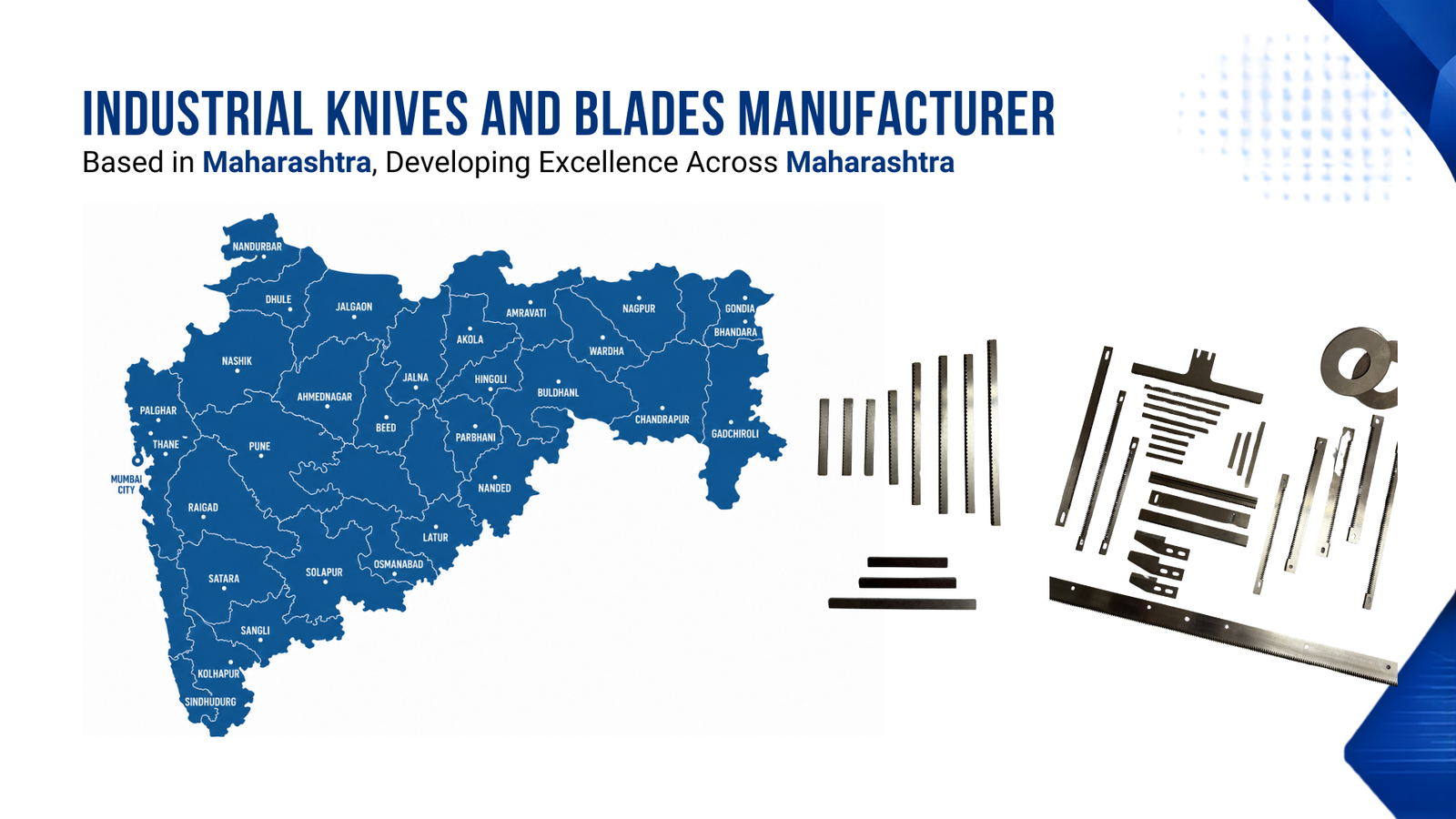
Maharashtra’s packaging, plastics, petrochemical and auto-component industries all depend on precision industrial cutting blades somewhere in their production line – slitting film, perforating packaging, shearing sheet stock, or trimming moulded parts. A blade that is the wrong steel grade, poorly ground, or incorrectly profiled causes downtime, ragged cuts, and premature wear. Finetech Engineering is an industrial blades manufacturer Maharashtra converters and manufacturers turn to because every blade we supply is matched to the material it will cut and the machine it will run in – not a generic off-the-shelf blank.
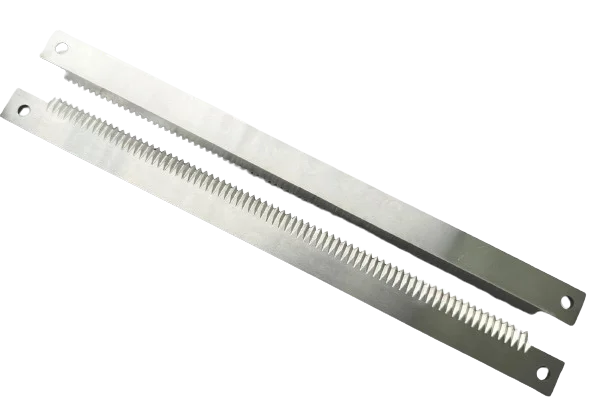
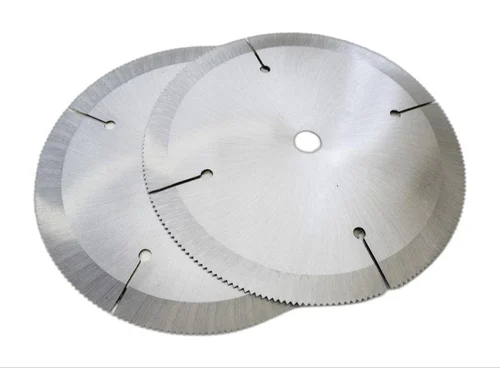
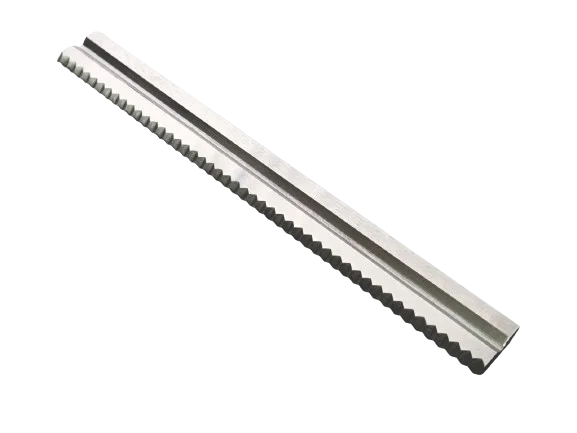
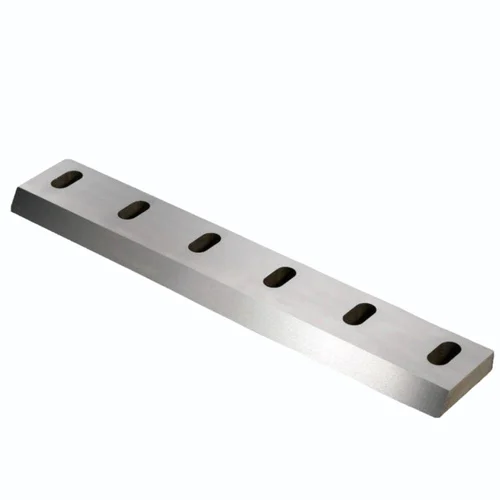
Our blade range splits by cutting application: straight and serrated blades for film and sheet slitting, perforating blades for creating tear lines in packaging, guillotine blades for sheet and board shearing, circular blades for rotary slitting and rewinding, shear knives for heavy-gauge material shearing, and paper cutting blades for paper and board converting. As an industrial blades supplier Maharashtra plants have sourced from since 2023, we supply the full range, ground to the tolerances and steel grade each application demands.
Our factory in Thane sits at the centre of the industrial blades manufacturer Thane-Navi Mumbai-Pune MIDC belt, meaning same-week delivery across Wagle Estate, Taloja and Bhiwandi, and short lead times to Pimpri-Chinchwad and Pune MIDC. NABL traceable industrial blades Maharashtra certification – covering blade hardness and dimensional verification – is available on request, supporting quality-audit and NABL-accredited lab documentation requirements.
Tip: Blade life and cut quality depend as much on correct steel grade and heat treatment as on the cutting edge geometry. Tell us the material you are cutting (film, board, rubber sheet, moulded plastic, or metal foil) and the machine it runs in, and we will recommend the right steel grade and edge profile – not just supply a generic replacement blade.
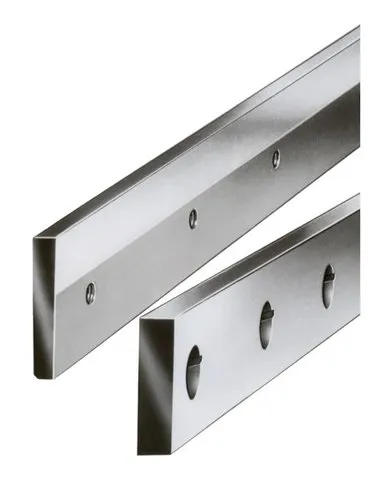
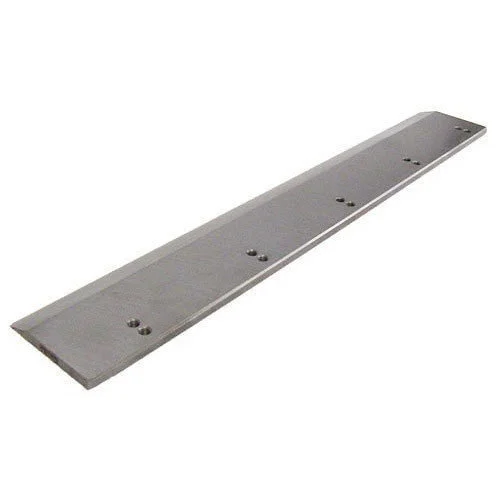
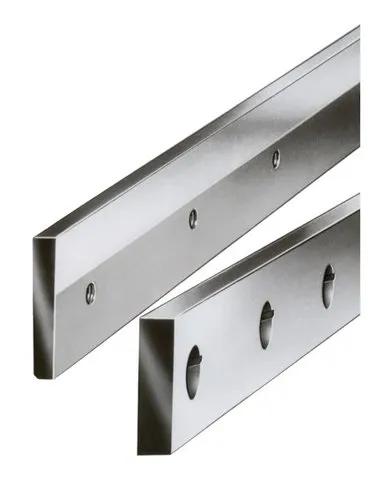
What is a guillotine blade used for is one of the most common questions from Maharashtra converters and packaging plants ordering their first sheet-cutting blade. A guillotine blade is a long, straight, angled cutting blade mounted in a guillotine-type shearing machine, where the blade descends in a single stroke to cut through a stack of sheet material – paper, board, plastic sheet, or thin metal – held stationary on a bed below.
Note: Guillotine blades wear fastest at the point where the shear angle first contacts the material – usually one end of the blade. Rotating or indexing the blade periodically, where the machine design allows, extends usable blade life significantly before a full re-sharpen or replacement is needed.
Industrial blade steel grades explained – the steel grade a blade is made from determines its hardness, edge retention, corrosion resistance and cost. Choosing the wrong grade for the application is one of the most common causes of premature blade failure in Maharashtra’s converting plants. Here are the grades we work with most:
Steel Grade | Typical Hardness | Key Properties | Best Suited For |
High Carbon Steel (e.g. 1075/1095) | 55-60 HRC | Good edge sharpness, economical, moderate wear resistance | General-purpose slitting and shearing of paper, film and soft board |
D2 Tool Steel | 58-62 HRC | High wear resistance, good edge retention, moderate toughness | High-volume slitting and perforating where blade life matters – packaging film, plastics |
Stainless Steel (e.g. 420/440C) | 54-58 HRC | Corrosion resistant, moderate wear resistance | Food-contact packaging, humid environments, applications needing rust resistance |
HSS (High-Speed Steel) | 62-66 HRC | Very high hardness and heat resistance | High-speed rotary and circular blade applications generating cutting heat |
A harder steel grade generally holds an edge longer but is more brittle and prone to chipping on shock loads; a softer grade is tougher and more forgiving but dulls faster. The right choice depends on the material being cut, the cutting speed, and how the machine loads the blade.
Tip: If you are cutting abrasive materials (coated papers, glass-filled plastics, rubber with mineral fillers), prioritise wear resistance (D2 or HSS) over raw hardness. If you are cutting clean film or paper at high speed with frequent blade changes anyway, a high-carbon steel blade is often the more economical choice.
The circular blade vs straight blade which to use decision comes down to the cutting motion your machine uses and the material format you are processing:
Feature | Circular Blade | Straight Blade |
Cutting motion | Rotates continuously against a mating blade or anvil | Moves in a single linear stroke (up-down or shear-angle guillotine motion) |
Typical machines | Slitting lines, rewinders, rotary die-cutters | Guillotine shears, flatbed cutters, hand-fed cutting tables |
Material format | Continuous web – film, foil, paper, textile rolls | Sheet stock, stacked material, or pre-cut lengths |
Cutting speed | High-speed continuous production, minimal stoppage | Stroke-by-stroke, generally slower per-cut but simple to set up |
Edge wear pattern | Wears evenly around the full circumference if indexed/rotated | Wears fastest at the point of first contact along the blade length |
Common Maharashtra use | Film and foil slitting/rewinding in packaging plants | Sheet and board shearing in packaging, printing and plastics sheet processing |
For continuous roll-to-roll processing – slitting plastic film, foil or paper on a rewinder – a circular blade is the correct choice. For sheet-fed or stack-cutting operations – board, pre-cut plastic sheet, or metal sheet – a straight or guillotine blade is the standard choice. Some plants run both: a circular blade upstream to slit a master roll into narrower rolls, and a straight or guillotine blade downstream to cut sheets to final length. For circular blades Maharashtra slitting rewinding lines depend on daily, indexing the blade periodically keeps wear even around the full circumference instead of concentrated at one contact point.
As an industrial blades supplier Maharashtra converters and manufacturers have used since 2023, Finetech Engineering manufactures the following blade range:
| Blade Type | Cutting Action | Typical Application |
| Straight Blades | Linear shearing / slitting edge | General-purpose cutting of film, sheet, board and rubber |
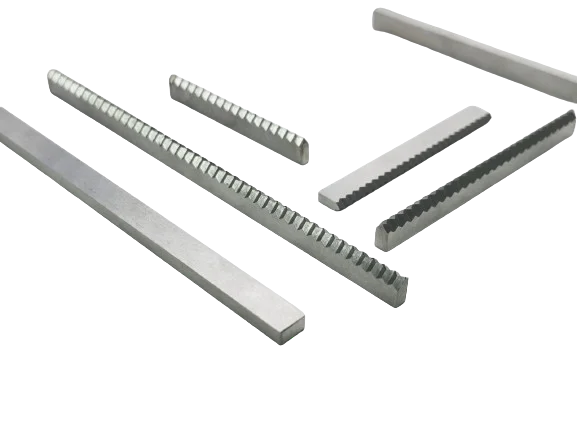
| Serrated Blades | Toothed edge for sawing/gripping cut | Cutting fibrous, textured or slip-prone materials – textiles, foam, some films |
| Perforating Blades | Intermittent tooth pattern creating a tear line | Tear-off packaging seals, ticket/coupon perforation, form separation |
| Packaging Blades | Precision slitting/trimming edge for packaging lines | Film slitting, carton trimming, flexible packaging converting |
| Guillotine Blades | Angled shear-stroke blade | Sheet and board shearing in packaging, printing and plastics processing |
| Circular Blades | Continuous rotary cutting edge | Roll-to-roll slitting and rewinding of film, foil and paper |
| Shear Knives | Heavy-duty shearing edge | Shearing thicker sheet, metal strip and heavy-gauge material |
| Paper Cutting Blades | Precision straight or guillotine edge for paper/board | Paper and board converting, printing and packaging finishing |
We dispatch from our Thane factory across Maharashtra’s converting and manufacturing belt: Wagle Estate Thane, Taloja MIDC, Bhiwandi, Pimpri-Chinchwad, Pune MIDC, Chakan and Talegaon. As an industrial blades manufacturer Maharashtra plants have relied on, we also provide blade inspection, re-sharpening and replacement service.
Manufacturer, not a trader. Every blade is precision-ground, heat-treated and inspected at our Wagle Estate, Thane factory – not resold from another manufacturer.
ISO 9001 certified. ISO 9001 industrial blades Maharashtra standard is what we hold – our manufacturing is ISO 9001:2015 certified.
NABL-traceable hardness and dimensional certification. NABL traceable industrial blades Maharashtra – blade hardness and dimensions verified and certified, supporting quality-audit and NABL-accredited lab documentation needs.
Built for Maharashtra’s converting corridor. Our factory in Thane puts us at the centre of the industrial blades manufacturer Thane-Navi Mumbai-Pune MIDC belt, with same-week delivery across Wagle Estate, Taloja, Bhiwandi and short lead times to Pimpri-Chinchwad and Pune MIDC.
Application-matched steel grades. We select the steel grade and heat treatment for the material you are cutting – not a generic blade blank – so you get the right balance of edge retention, toughness and cost.
Re-sharpening and replacement support. We offer blade re-sharpening and replacement to extend service life and maintain cut quality.















All Equipments & specimen preparation products can be customised as per requirements.
What is a guillotine blade used for - a guillotine blade is a long, angled shearing blade mounted in a guillotine-type cutting machine, used to cut through stacked sheet material (paper, board, plastic sheet, thin metal) in a single downward stroke. The blade's shear angle means the cut progresses point-by-point across the material width rather than striking the full edge at once, reducing the force required and producing a cleaner cut. Guillotine blades are widely used in Maharashtra's packaging, printing and plastics sheet-processing plants for sizing and trimming stacked material.
Industrial blade steel grades explained: common grades include high carbon steel (economical, good sharpness, moderate wear resistance - general-purpose cutting), D2 tool steel (high wear resistance and edge retention - high-volume production), stainless steel grades like 420/440C (corrosion resistant - humid or food-contact environments), and HSS/high-speed steel (very high hardness and heat resistance - high-speed rotary cutting). The right grade depends on the material being cut, cutting speed, and how much abrasive wear the blade will see.
The circular blade vs straight blade which to use choice depends on your machine's cutting motion. A circular blade rotates continuously and is used for roll-to-roll slitting and rewinding of film, foil or paper on high-speed continuous production lines. A straight blade moves in a single linear or shear-angle stroke and is used for sheet-fed or stack-cutting operations like guillotine shearing. Continuous web processing needs a circular blade; sheet and stack cutting needs a straight or guillotine blade.
We are a manufacturer. As an industrial blades manufacturer Maharashtra plants have used since 2023, every blade is precision-ground, heat-treated and inspected in-house at our Wagle Estate, Thane facility - not purchased from another manufacturer and resold.
Yes. We hold ISO 9001 industrial blades Maharashtra certification - our manufacturing is ISO 9001:2015 certified. We also provide NABL traceable industrial blades Maharashtra hardness and dimensional certification on request, verifying blade specifications against the agreed standard - useful documentation for quality audits and NABL-accredited lab requirements.
We deliver and support across the full industrial blades manufacturer Thane–Navi Mumbai–Pune MIDC belt: Wagle Estate Thane, Taloja MIDC, Bhiwandi, Pimpri-Chinchwad, Pune MIDC, Chakan and Talegaon. Dispatch is direct from our Thane factory.
Yes. We offer blade inspection, re-sharpening and replacement service to extend blade life and maintain consistent cut quality - a dull or chipped blade is one of the most common causes of ragged cuts and unplanned downtime on converting lines.