






Karnataka’s rubber component labs, concentrated around Bengaluru’s Peenya Industrial Area, mostly test rubber grommets, seals and vibration mounts for electronics and auto-component customers – a narrower, more specific application range than a general-purpose rubber testing lab. Finetech Engineering is a specimen cutter manufacturer Karnataka testing labs turn to because every cutter we build is dimensionally verified against its governing ASTM specification before it leaves our Wagle Estate, Thane factory.
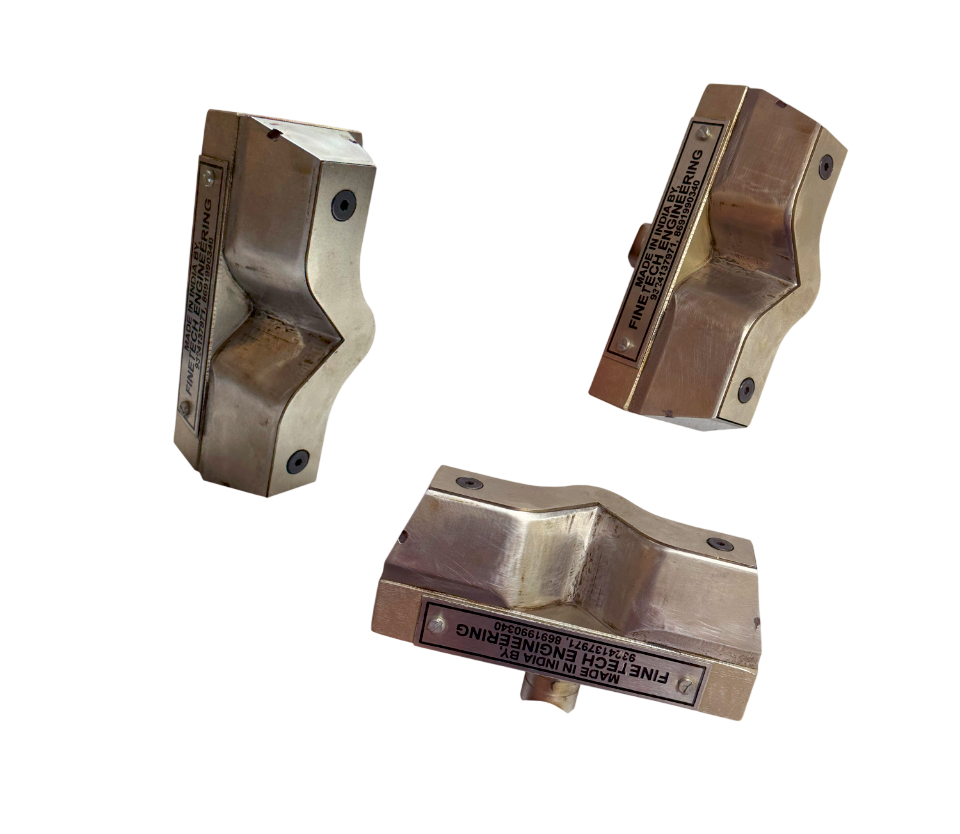
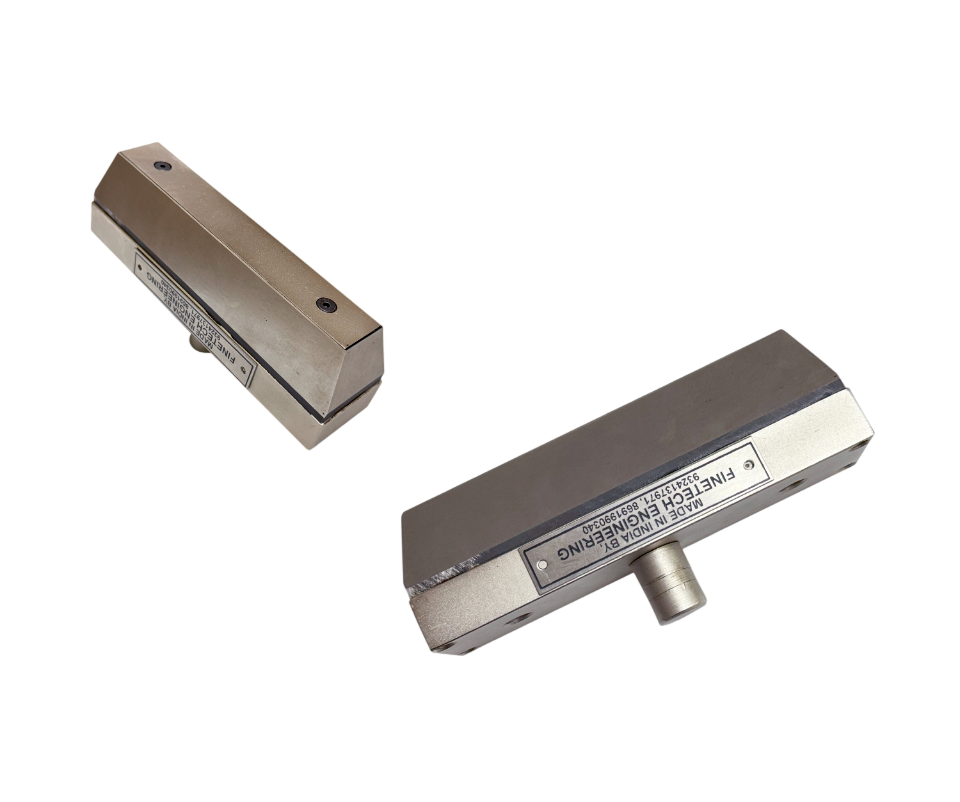
As a specimen cutter supplier Karnataka electronics and auto rubber component labs have used since 2023, the Dumbbell Cutter Karnataka labs order most prepares tensile specimens for the mechanical property testing that underlies almost every rubber grommet, seal and mount qualification – tensile strength and elongation are typically the first properties checked on any new compound.
Our factory in Thane dispatches directly to specimen cutter manufacturer Peenya Industrial Area, Bengaluru facilities, as well as the wider Karnataka industrial belt. NABL traceable specimen cutter Karnataka dimensional certification is available on every cutter, supporting labs that need to demonstrate specimen-preparation traceability during NABL and OEM supplier audits.
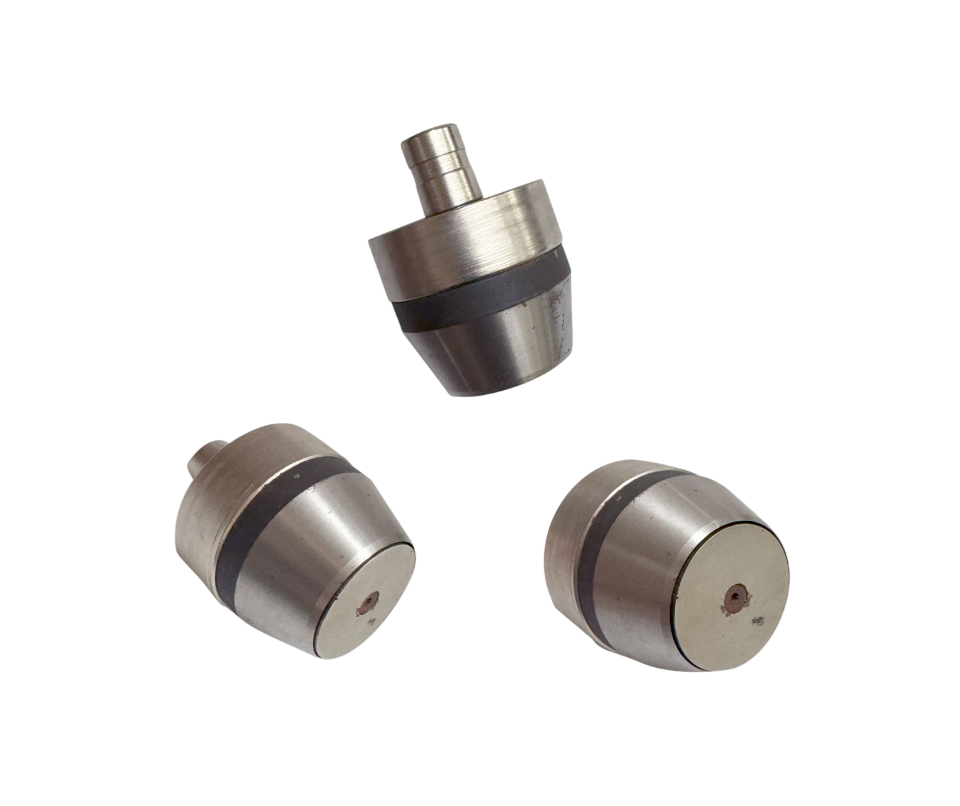
Tip: Karnataka’s electronics and auto rubber component labs typically need a dumbbell cutter and a round cutter as their first two purchases – dumbbell for tensile qualification, round for compression set and hardness discs on grommets and seals. Tear and crescent cutters are usually added as flex-critical applications (dynamic seals, boots) enter the test scope. This dumbbell round cutter starter set Karnataka electronics and auto rubber labs buy first covers the two properties – tensile strength and hardness/compression set – that underlie nearly every grommet and seal qualification.
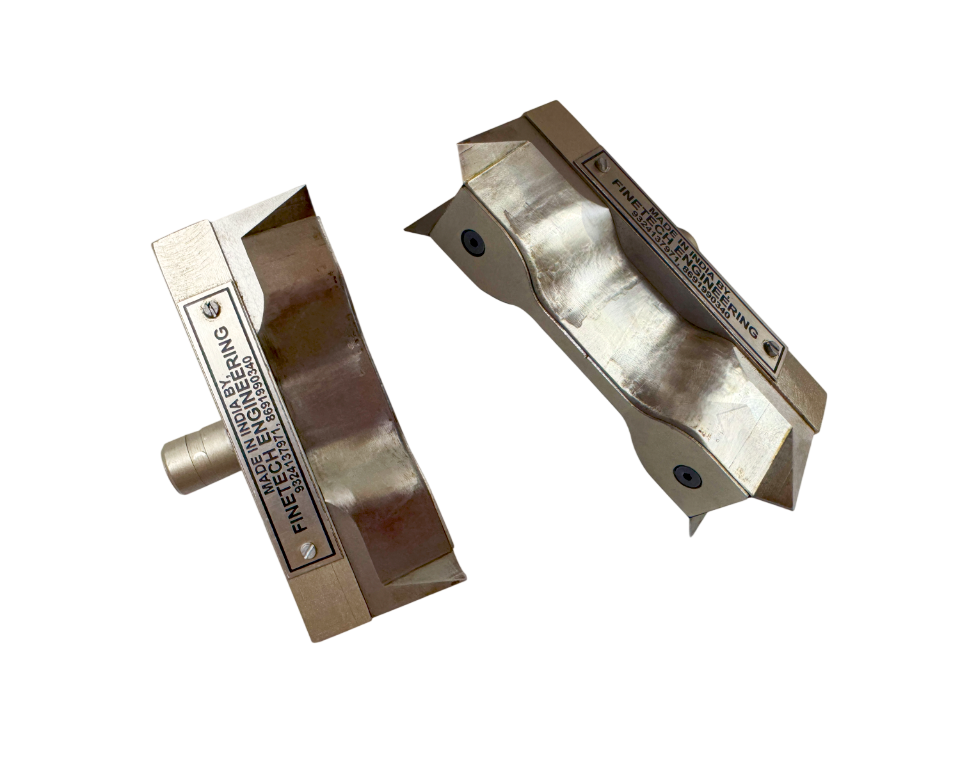
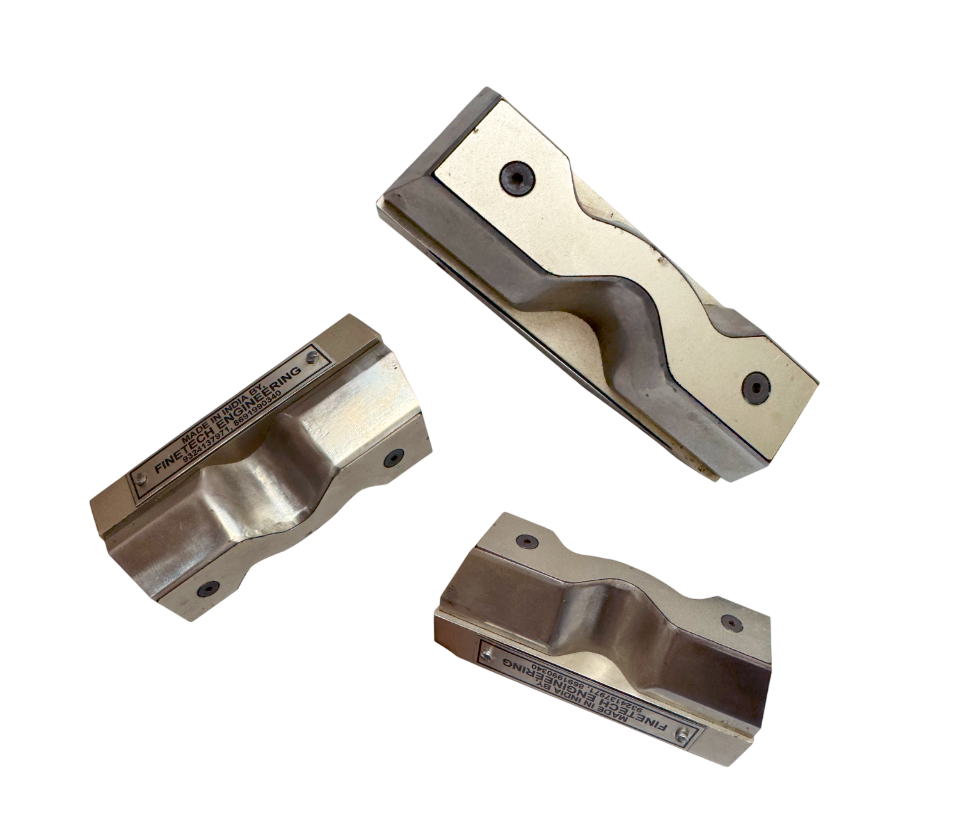
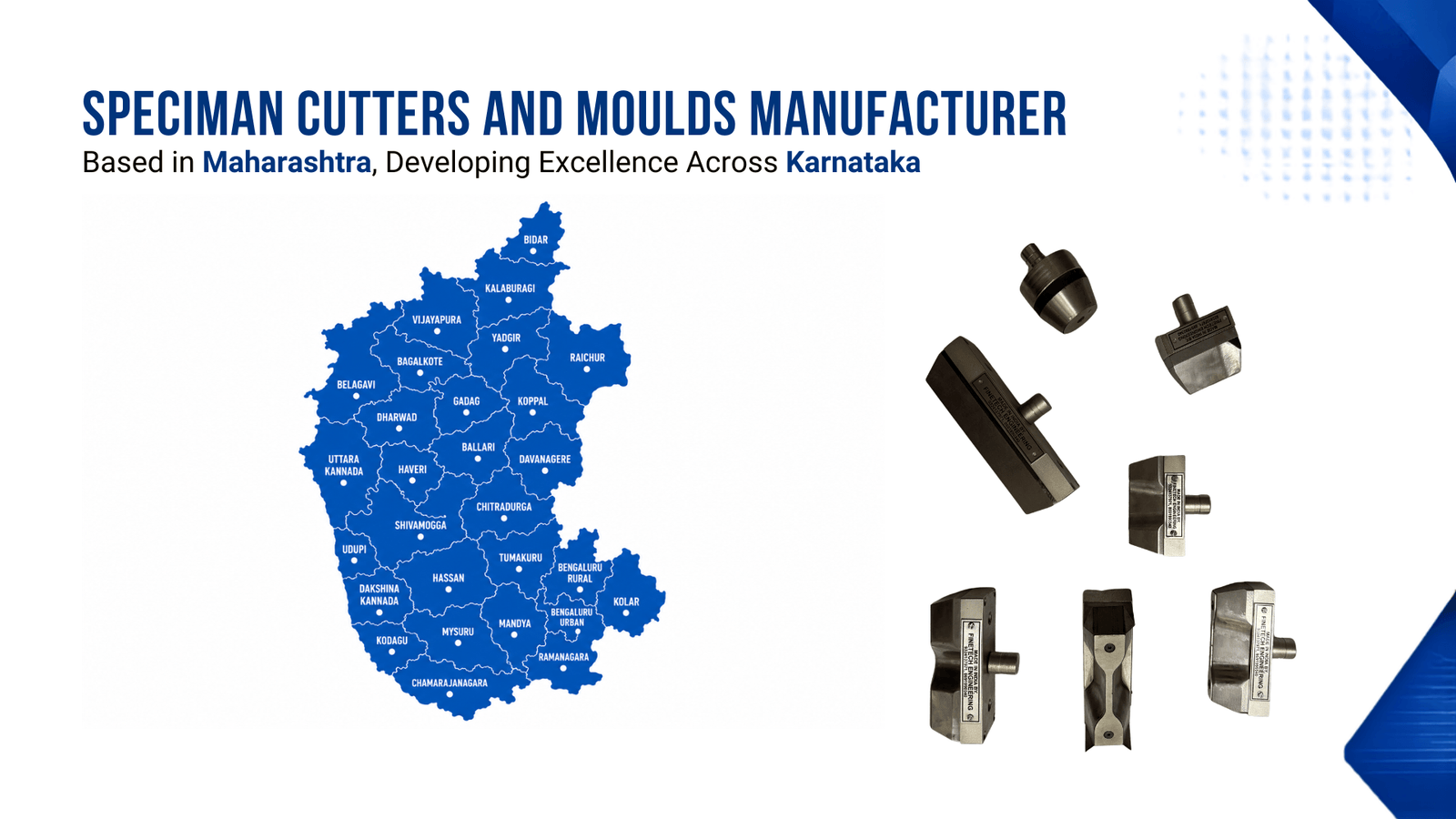
Types of specimen cutters for rubber electronics auto – here is the rubber-specific specimen cutter range, focused on the shapes and standards most relevant to Karnataka’s electronics and auto rubber component testing labs:
Cutter Type | Specimen Shape | Prepares Specimens For | Relevance to Electronics/Auto Rubber |
Dumbbell Cutter | Dumbbell / dog-bone strip | Tensile strength, elongation at break | Baseline mechanical qualification for every rubber grommet, seal and mount compound |
Round Cutter | Circular disc | Compression set, hardness | Sealing-force retention testing for grommets and gaskets; hardness QC on incoming compound |
Tear Cutter | Angle or nicked tear specimen | Tear resistance | Dynamic seals and boots subject to repeated flexing or handling stress |
Crescent Cutter | Crescent-shaped tear specimen | Tear resistance (softer compounds) | Softer grommet and seal compounds where an angle cutter may not initiate a clean tear |
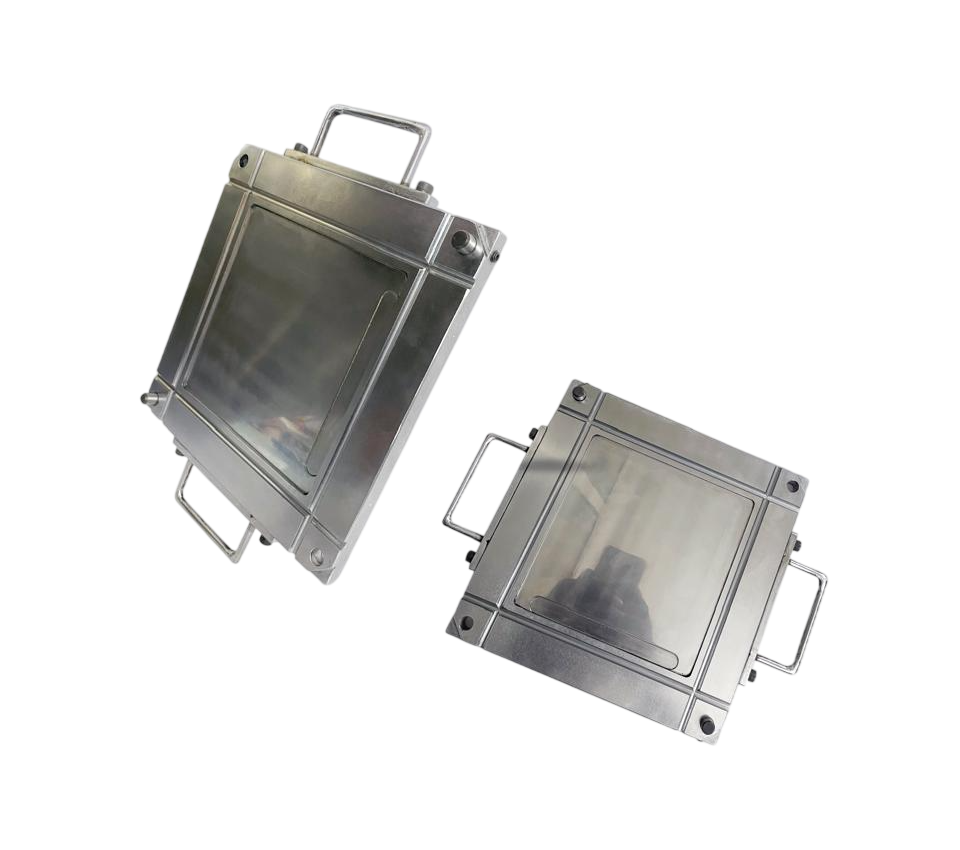
Test Specimen Moulds | Standard slabs / plaques | Pre-cutting moulding of compound into test sheet | Converting raw compound into sheet form before any of the above cutters are used |
For most Karnataka electronics and auto rubber component labs, the dumbbell and round cutters cover the majority of routine QC. Tear and crescent cutters become relevant specifically for components that flex repeatedly in service – dynamic seals, cable boots, and vibration-isolation mounts under continuous motion.
ASTM D412 dumbbell cutter guide die types – ASTM D412 defines four dumbbell die types for rubber tensile testing, and each is suited to different specimen sizes and rubber types. Here is a guide to all four, with guidance on which Karnataka electronics and auto rubber applications typically use each:
Die Type | Narrow Width | Gauge Length | Typical Use |
Die A | 6.0 mm | 25 mm | General-purpose rubber tensile testing – the most commonly specified die for standard-thickness grommet and seal compounds |
Die B | 12.5 mm | 25 mm | Wider specimen, used where more material is available or a wider gauge section is specified – less common for small electronics components |
Die C | 6.0 mm | 33 mm | Longer gauge length variant of Die A, used where a specification calls for this specific geometry |
Die D | 3.0 mm | 25 mm | Narrower specimen, useful for thin rubber sheet or small components where a full-width Die A specimen cannot be cut – relevant for compact electronics grommets and seals |
For Karnataka’s electronics rubber components – often smaller grommets, seals and gaskets than general industrial rubber goods – Die A remains the default starting point, but Die D becomes relevant where the component itself is too small or thin to yield a full Die A specimen. Auto-component labs testing larger structural rubber-hybrid parts more often stay with Die A or Die C. This ASTM D412 Die A vs Die D dimensions small components comparison is exactly the decision most Karnataka electronics labs face on their first order. Answering ‘which die type ASTM D412 electronics grommet seal’ components need most often: Die D, since its narrower 3.0 mm width fits where a full-width Die A specimen simply will not cut cleanly from a small, thin-walled part.
Note: Dimensions above are approximate reference values for the commonly cited version of ASTM D412. Confirm exact current dimensions against the latest published standard before finalising a cutter order.
How to prepare rubber specimens correctly, across tensile, hardness, compression set and tear testing alike, follows a consistent set of best practices that Karnataka labs should apply regardless of which specific test is being run:
Tip: For Karnataka’s electronics and auto rubber component labs working with smaller, more compact specimens than general industrial rubber goods, extra care in step positioning and edge inspection matters more – a small specimen has proportionally less margin for a defect or off-centre cut to affect results than a larger industrial specimen would.
As a specimen cutter supplier Karnataka testing labs have used since 2023, Finetech Engineering manufactures the following specimen-preparation range:
| Product | Specimen Prepared | Governing Standards |
| Dumbbell Cutter | Dumbbell / dog-bone tensile specimen (Die A/B/C/D) | ASTM D412, ISO 37 |
| Round Cutter | Circular disc specimen | ASTM D395, ASTM D2240 |
| Tear Cutter | Angle or nicked tear specimen (Die A/C) | ASTM D624, ISO 34-1 |
| Crescent Cutter | Crescent-shaped tear specimen (Die B) | ASTM D624 (Die B), ISO 34-1 |
| Rectangle Cutter | Rectangular strip specimen | ASTM D790, ASTM D1004 |
| Test Specimen Moulds | Standard compression-moulded slabs / plaques | ASTM D3182, ISO 23529 |
We dispatch from our Thane factory across Karnataka’s testing-lab corridor: the Peenya Industrial Area of Bengaluru and the wider Karnataka industrial belt. As a specimen cutter manufacturer Karnataka labs have relied on, we also provide blade inspection, re-sharpening and replacement to keep your specimen preparation consistent over time.
Manufacturer, not a trader. Every cutter is designed, precision-ground and dimensionally verified at our Wagle Estate, Thane factory – not resold from another manufacturer.
ISO 9001 certified. ISO 9001 specimen cutter Karnataka standard is what we hold – our manufacturing is ISO 9001:2015 certified and our equipment is CE marked.
NABL-traceable dimensional certification. NABL traceable specimen cutter Karnataka – cutter dimensions verified and certified against the governing ASTM specification, supporting NABL-accredited lab audits.
Built for Karnataka’s electronics and auto-component labs. We dispatch directly to specimen cutter manufacturer Peenya Industrial Area, Bengaluru facilities, plus the wider Karnataka industrial belt.
All four ASTM D412 die types available. From full-size Die A/C to compact Die D for smaller electronics components, we manufacture dedicated cutters for each die – matched to your specimen size and material availability.
Re-sharpening and replacement support. We offer blade re-sharpening and replacement service to keep your cutters producing clean, repeatable specimen edges.


















All Equipments & specimen preparation products can be customised as per requirements.
Types of specimen cutters for rubber electronics auto include the dumbbell cutter (tensile specimens, ASTM D412), round cutter (compression set and hardness discs, ASTM D395/D2240), tear cutter (angle or nicked tear specimens, ASTM D624), crescent cutter (curved tear specimens for softer compounds, ASTM D624 Die B), and test specimen moulds (for moulding raw compound into sheet before cutting). For Karnataka's electronics and auto rubber components, dumbbell and round cutters typically cover most routine QC, with tear and crescent cutters added for dynamic, flex-critical components.
ASTM D412 dumbbell cutter guide die types: Die A (6.0 mm narrow width, 25 mm gauge length) is the general-purpose default. Die B (12.5 mm width) suits wider specimens where more material is available. Die C (6.0 mm width, 33 mm gauge length) is a longer-gauge variant used where specified. Die D (3.0 mm width) is the narrowest, useful for thin rubber sheet or small components - relevant for compact electronics grommets and seals too small for a full Die A specimen.
How to prepare rubber specimens correctly: start from a uniform-thickness moulded or conditioned sheet, condition at standard temperature/humidity if required, select the correct cutter and die type for the specific test, cut away from sheet edges and defects, apply a single firm press rather than rocking or sawing, and inspect and measure the specimen (not nominal sheet thickness) before testing. These practices apply across tensile, tear, compression set and hardness specimen preparation alike.
We are a manufacturer. As a specimen cutter manufacturer Karnataka labs have used since 2023, every cutter is designed, precision-ground and dimensionally verified in-house at our Wagle Estate, Thane facility - not purchased from another manufacturer and resold.
Yes. We hold ISO 9001 specimen cutter Karnataka certification - our manufacturing is ISO 9001:2015 certified and our equipment is CE marked. We also provide NABL traceable specimen cutter Karnataka dimensional certification, verifying cutter dimensions against the governing ASTM specification.
Yes. We are a specimen cutter manufacturer Peenya Industrial Area, Bengaluru facilities have sourced from directly, alongside the wider Karnataka industrial belt. Dispatch is from our Thane factory.