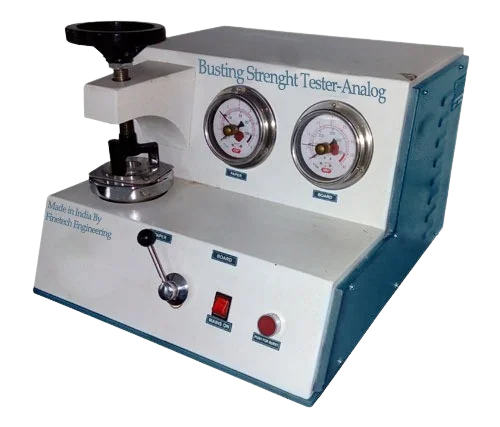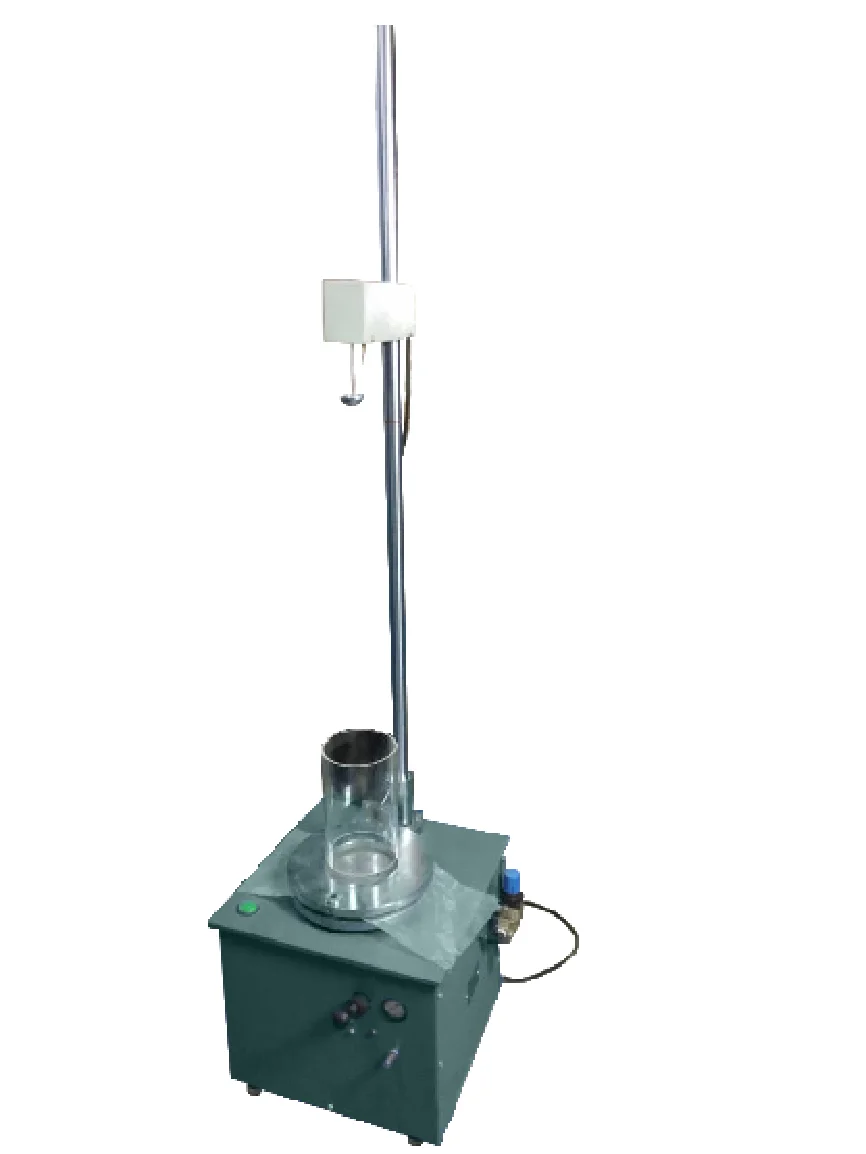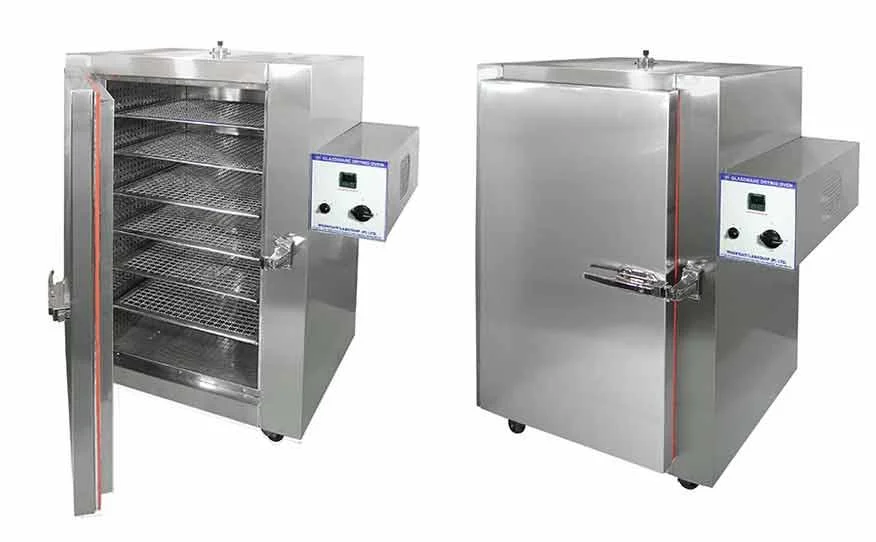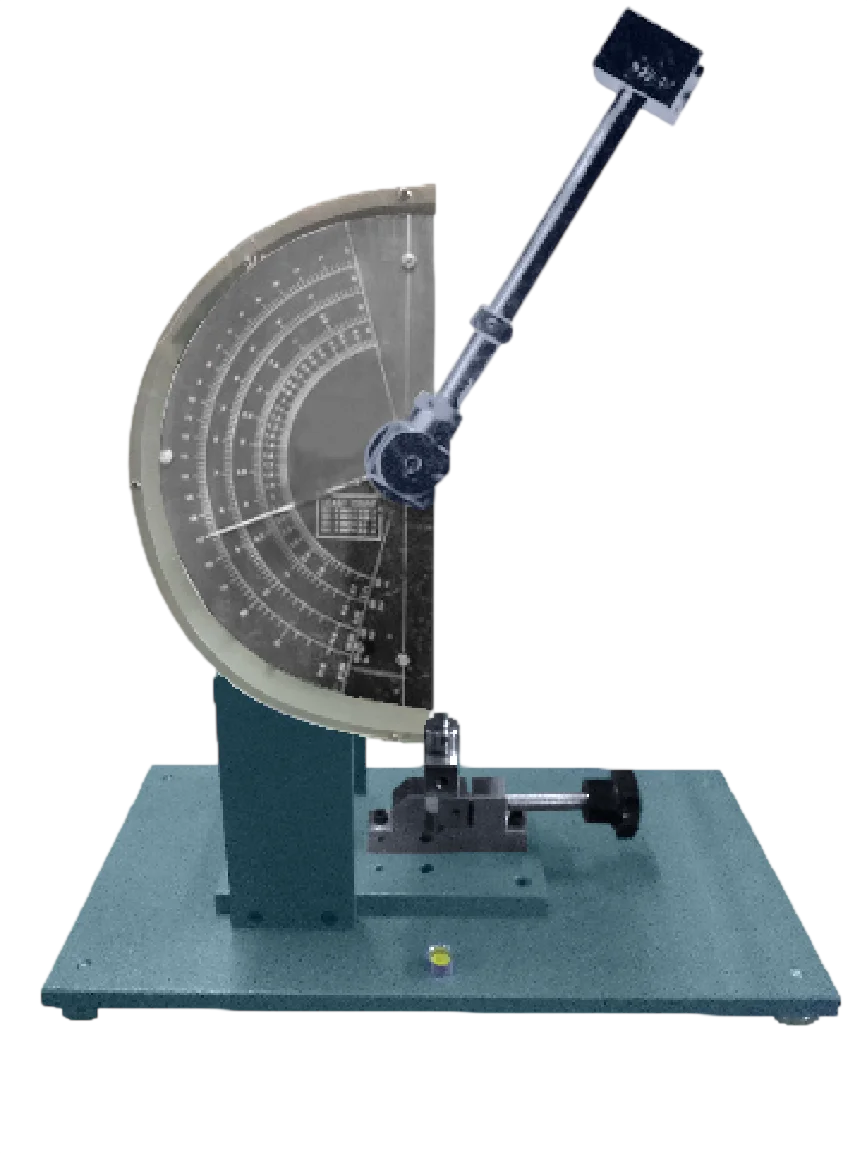






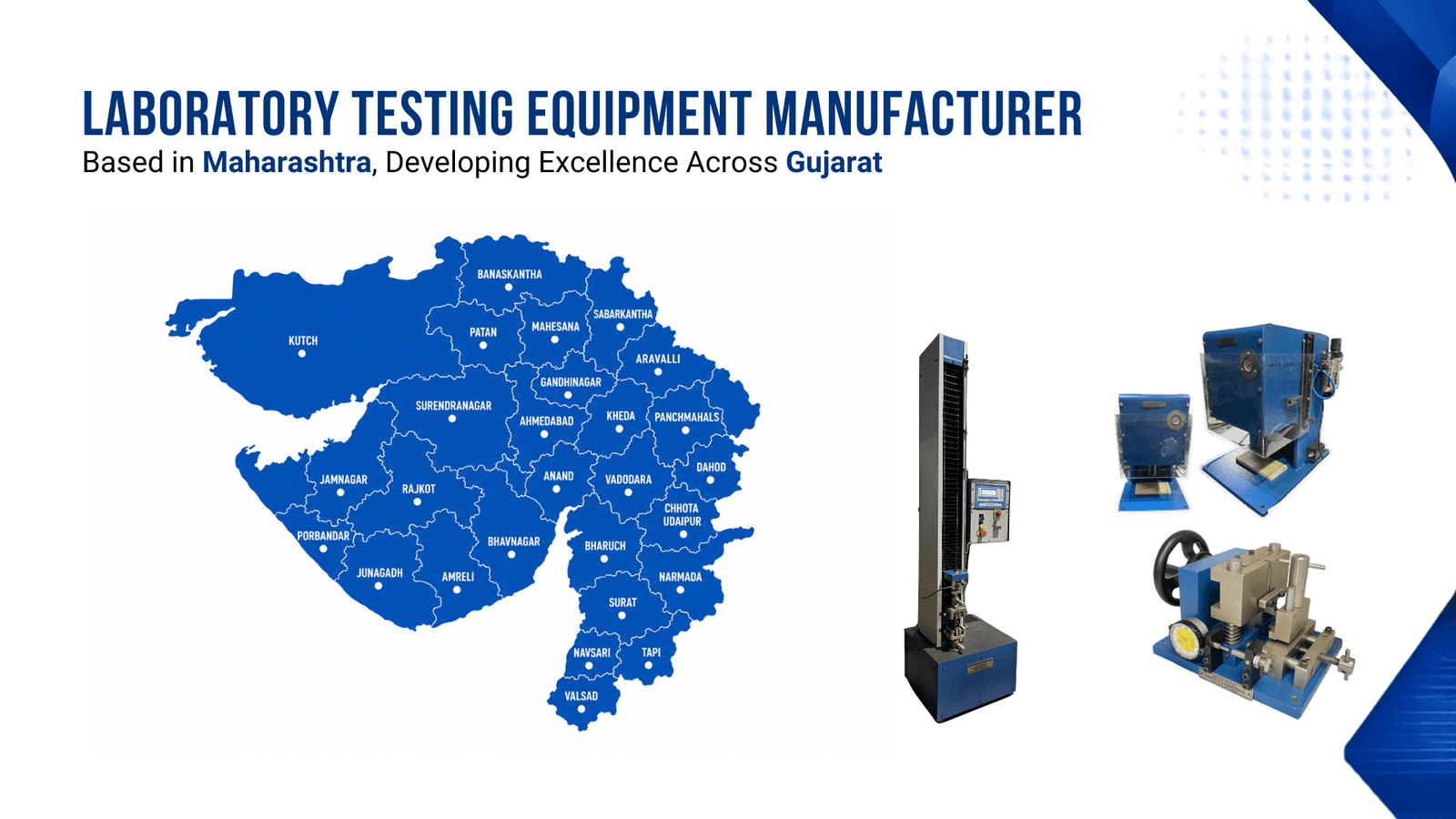
Gujarat is home to India’s largest concentration of petrochemical and PVC manufacturing, spanning the Ahmedabad-Vadodara-Surat GIDC industrial belt. This is a fundamentally different plastics testing context from most other states: Gujarat’s plants often include primary resin producers (making PE, PP and PVC resin itself) alongside downstream pipe, fitting and chemical-equipment manufacturers – meaning testing needs span from resin-grade classification all the way through to finished-product qualification. Finetech Engineering is a Plastic Laboratory Testing Equipment manufacturer Gujarat plants have sourced from since 2023, supplying the instruments that support this full value chain from our Wagle Estate, Thane factory.
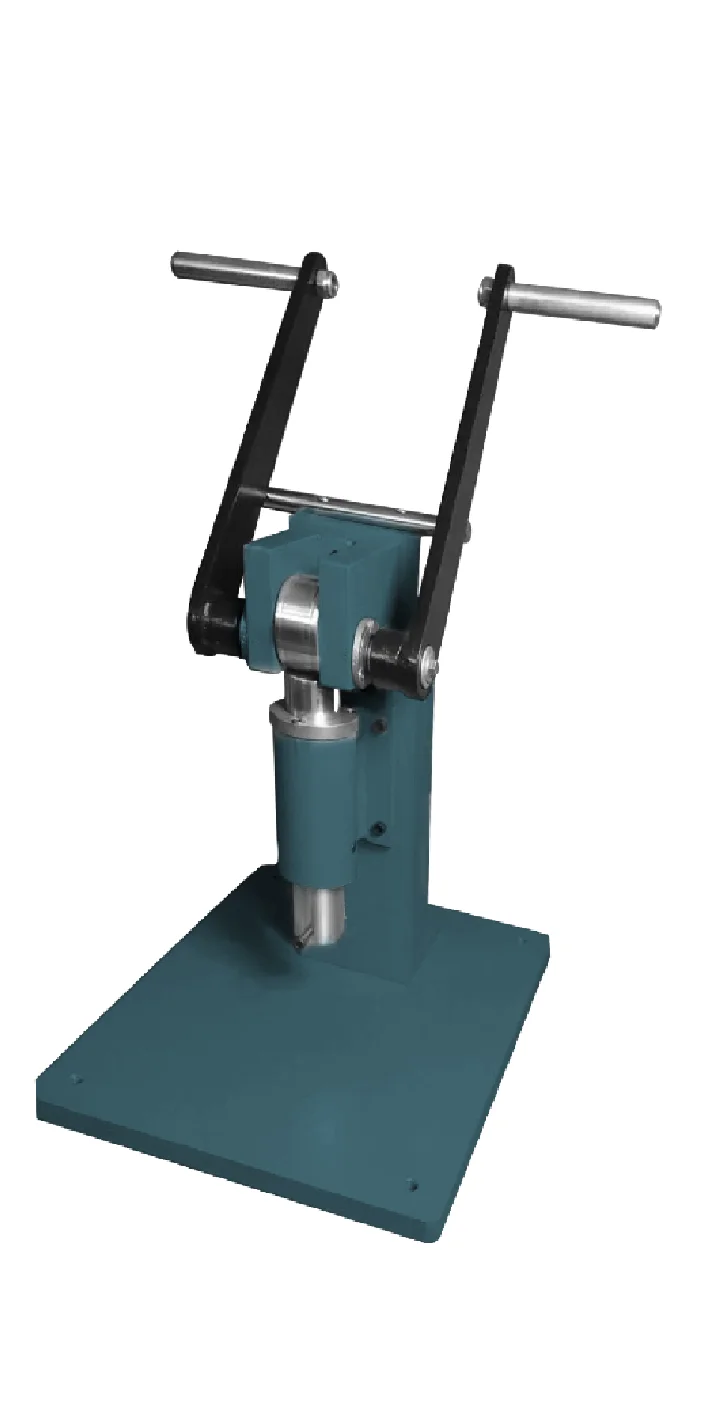
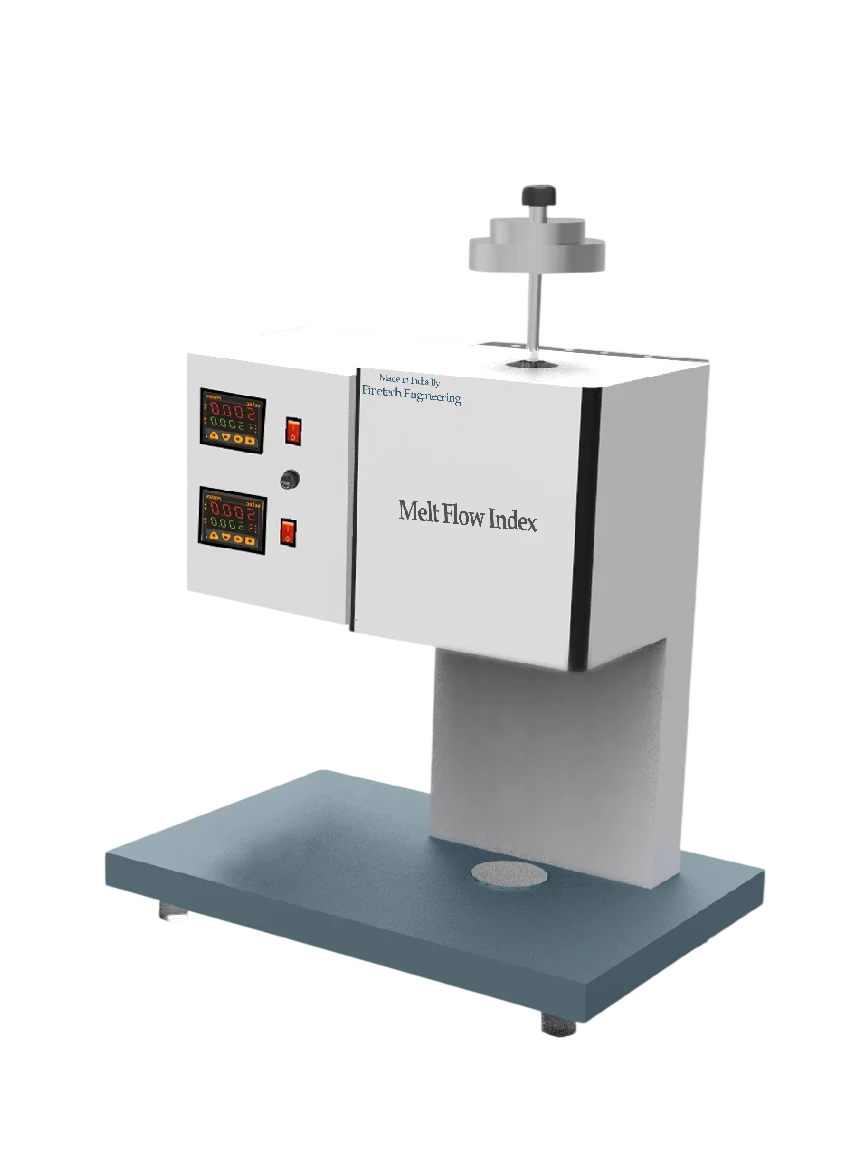
As a Plastic Laboratory Testing Equipment supplier Gujarat petrochemical and PVC manufacturers rely on, the ESCR Apparatus Gujarat plants order most is central to Gujarat’s large PVC and PE pipe manufacturing sector – environmental stress cracking resistance is one of the most critical long-term durability properties for buried and pressurised pipe. Alongside ESCR, melt flow and HDT testing support both primary resin QC and downstream pipe and fitting qualification.
We dispatch and install across the Plastic Laboratory Testing Equipment manufacturer Ahmedabad-Vadodara-Surat GIDC belt, with regular scheduled delivery routes covering this corridor and the wider Gujarat industrial area. NABL-traceable calibration is supplied with every instrument, supporting NABL-accredited labs and OEM supplier-audit requirements.
Gujarat’s PVC pipe and fitting manufacturers typically need ESCR, HDT and MFI data together for a single resin qualification – a PVC compound can pass tensile and burst-pressure specs and still fail in service from slow environmental stress cracking, heat softening in outdoor installations, or inconsistent extrusion from an out-of-spec resin batch. The three tests for PVC pipe resin qualification are ESCR, HDT and MFI, run on the same resin batch rather than treated as separate one-off checks.
Environmental stress cracking (ESC) is a failure mode where a plastic part cracks under a mechanical stress that alone would not cause failure, because the stress is combined with exposure to a chemical agent that accelerates crack formation. For Gujarat’s PVC pipe, fitting and petrochemical storage-equipment manufacturers, this failure mode is a genuine, well-known field risk rather than an abstract concern.
The mechanism: sustained mechanical stress causes microscopic crazes to form at weak points in the polymer. A stress-cracking agent – in Gujarat’s petrochemical and chemical-processing context, this can include process chemicals, solvents, oils, or cleaning agents in contact with pipe or equipment surfaces – lowers the surface energy needed to propagate these crazes into full cracks.
Why it matters for PVC pipe specifically: buried and pressurised PVC pipe experiences constant, long-term circumferential stress from internal pressure, often combined with soil chemistry or, for chemical-transfer piping, direct contact with the chemicals being conveyed – exactly the sustained-stress-plus-chemical-exposure combination that causes ESC. This is why a PVC pipe environmental stress cracking test is treated as a mandatory qualification step, not an optional check, across Gujarat’s pipe manufacturing sector.
Why it matters for petrochemical storage and process equipment: tanks, fittings and process equipment in petrochemical plants are frequently in prolonged contact with solvents, hydrocarbons and process chemicals under mechanical load from their own weight, pressure, or thermal cycling.
Why short-duration tests miss it: a part can pass tensile, impact and burst-pressure tests with no problem, since those tests do not combine sustained stress with chemical exposure over time – ESC failures often appear only after months or years in service. This is exactly why PVC pipe can fail from stress cracking despite passing tensile and burst-pressure specs – the short tests simply never apply sustained stress and chemical exposure together.
For pipe-specific ESCR qualification, Gujarat’s PVC and PE pipe manufacturers should note ASTM F1473 (the Notched Constant Ligament Stress / NCLS method), which is purpose-built for pressure pipe rather than the general ASTM D1693 bent-strip method. Confirm which standard your pipe specification names – Finetech’s ESCR Apparatus for Gujarat plants comes pre-configured for the NCLS test method.
Melt flow rate vs viscosity is a distinction with particular weight in Gujarat, where the industry includes both primary petrochemical resin producers and downstream processors – each group relies on this measurement differently.
Feature | Melt Flow Rate (MFR / MFI) | True Viscosity |
What it measures | A single-point measurement: flow through a standard die in 10 minutes, under one fixed temperature and load | How a fluid resists flow across a range of shear rates and temperatures – a continuous, multi-point property |
Role for resin producers | Primary grade-classification and certificate-of-analysis parameter reported to downstream customers | Full rheological characterisation used in resin development and grade differentiation |
Role for downstream processors | Incoming-batch QC check against the supplier’s certified MFR specification for the purchased grade | Used to troubleshoot processing problems when MFR alone does not explain a moulding or extrusion defect |
Why it matters in Gujarat specifically | With primary resin manufacturing present, MFR specification decisions at production level directly affect every downstream Gujarat processor purchasing that resin | Downstream processors troubleshooting a defect need to know that identical MFR does not guarantee identical high-shear processing behaviour |
Because Gujarat’s petrochemical sector includes both ends of the resin value chain, melt flow rate vs viscosity is relevant at two different points: resin producers use MFR as their primary grade-classification and QC parameter via the melt flow index tester, while downstream pipe, fitting and moulded-product manufacturers use it as an incoming-material check, sometimes escalating to full rheological characterisation when MFR alone does not explain a processing problem.
Tip for downstream Gujarat processors: if two resin lots with identical certified MFR process differently on your line, the difference likely lies in shear-rate-dependent viscosity behaviour that a single-point MFR test cannot detect – full rheological characterisation, not a repeat MFR test, is usually the way to diagnose it.
Rather than repeating the general test procedure, here is what HDT actually means for Gujarat’s PVC pipe and chemical-process equipment manufacturers specifically – since this industry faces genuine, practical heat-exposure scenarios that make the test result directly actionable.
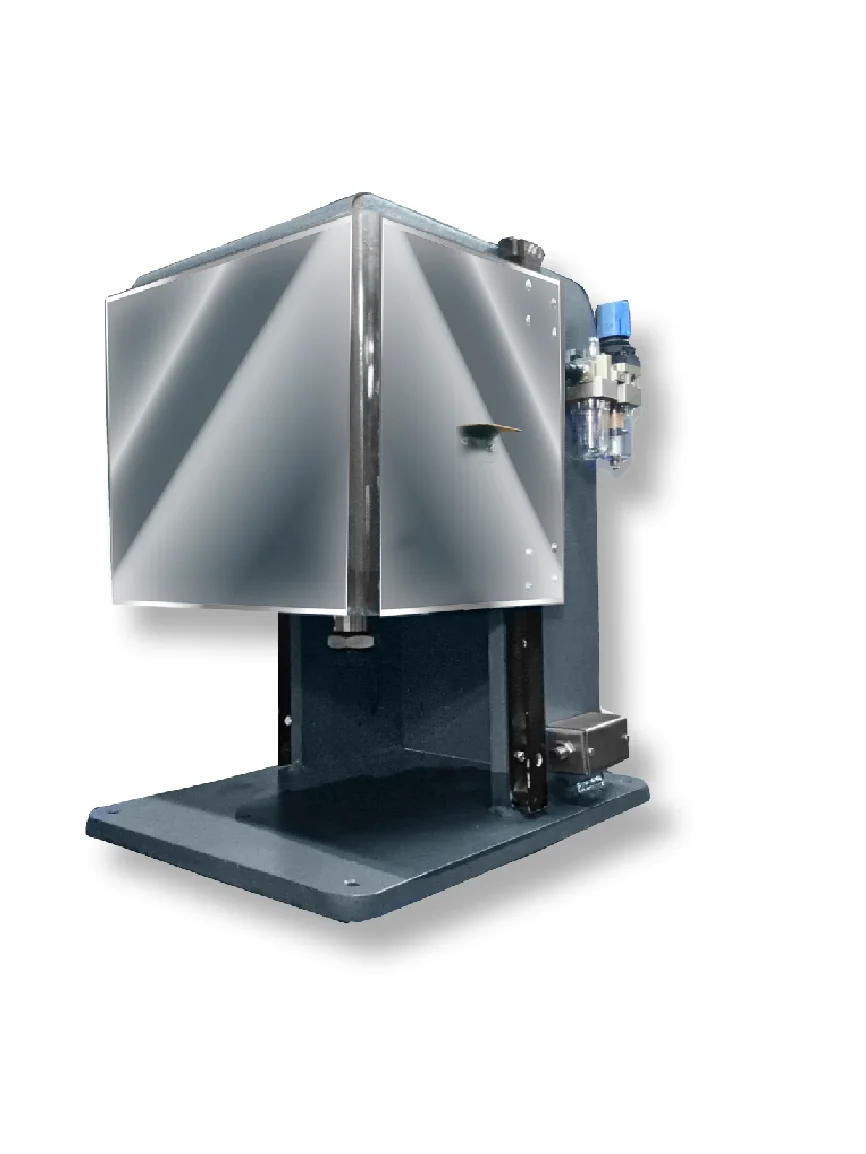
What HDT actually measures: the temperature at which a plastic specimen, under a fixed bending load, deflects a specified small amount – reflecting the point where the material’s stiffness has dropped enough that the applied load causes visible deformation.
Why it matters for PVC pipe: above-ground and exposed PVC pipe installations in Gujarat’s climate can reach significant surface temperatures under direct sun; HDT data tells installers and specifiers the temperature margin before the pipe wall begins to lose structural stiffness under its own working pressure and any external load. HDT is the figure that defines the PVC pipe outdoor sun exposure temperature margin for above-ground installations.
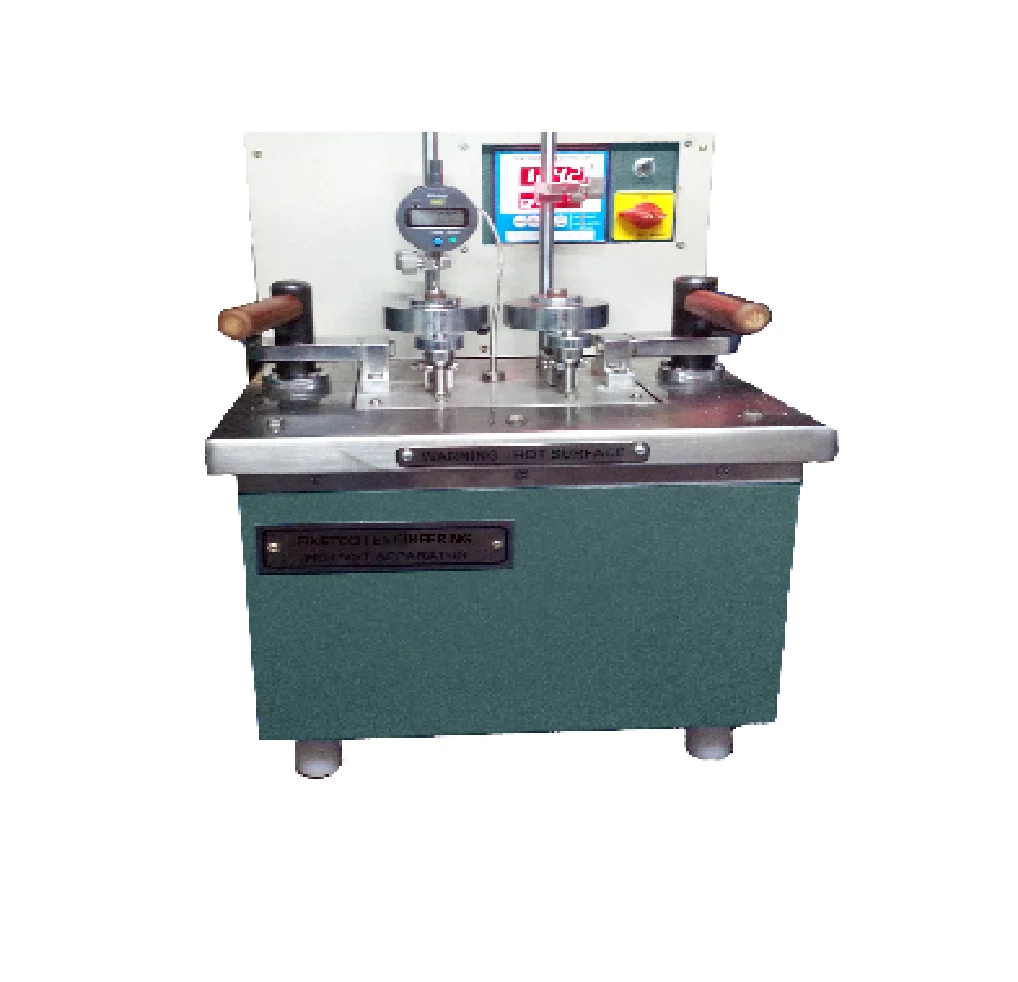
Why it matters for chemical process equipment: plastic linings, fittings and equipment components in chemical processing often operate at elevated process temperatures combined with mechanical load from process pressure or equipment weight – exactly the combined heat-and-load condition the HDT/VSP apparatus is designed to characterise.
Why the load selected matters: ASTM D648 offers two standard loads (1.82 MPa and 0.455 MPa); Gujarat’s structural PVC pipe and process equipment applications typically warrant the higher 1.82 MPa load, since these components carry genuine structural and pressure loads in service. HDT is a comparative, standardised engineering test – always compare results generated under the same test conditions, and confirm which load your pipe or equipment specification requires.
As a Plastic Laboratory Testing Equipment supplier Gujarat plants have used since 2023, Finetech Engineering supplies the following instruments, each built to the named ASTM/UL standard:
Instrument | What It Tests | Primary Standards | Why Gujarat Plants Need It |
Environmental stress cracking resistance of PE/PVC | ASTM D1693, ASTM F1473 | Long-term durability qualification for PVC/PE pipe, fittings and chemical storage equipment | |
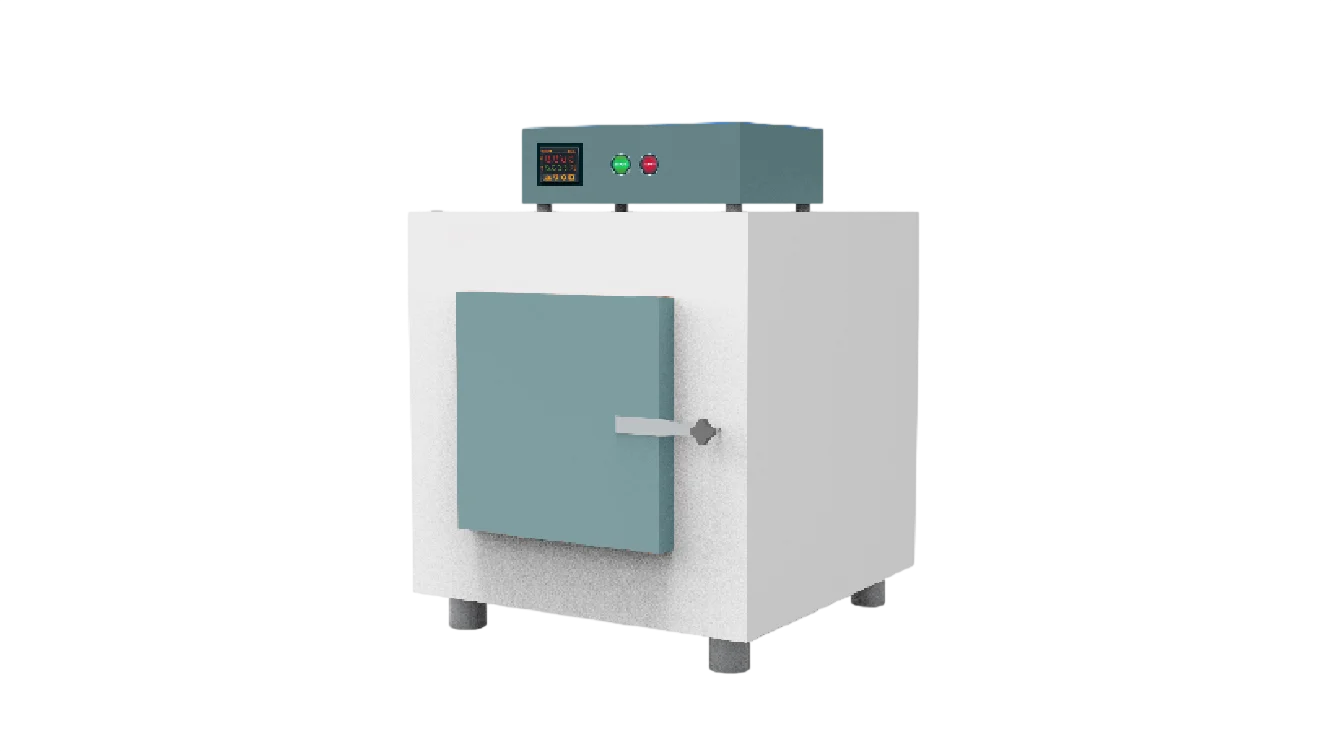
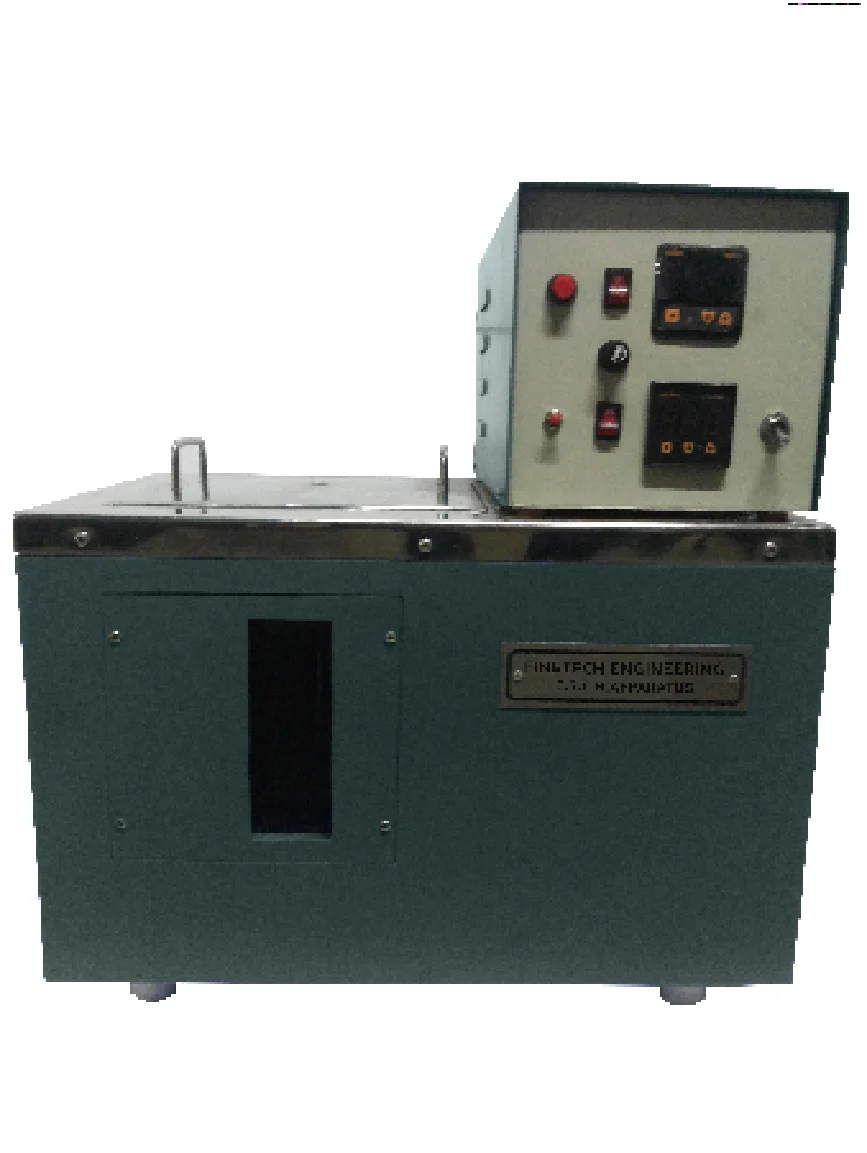
Heat deflection temperature and Vicat softening point | ASTM D648, ASTM D1525 | Structural stability qualification for PVC pipe and chemical process equipment under heat and load | |
Melt flow rate of thermoplastics | ASTM D1238, ISO 1133 | Resin grade classification for producers; incoming-batch QC for downstream processors | |
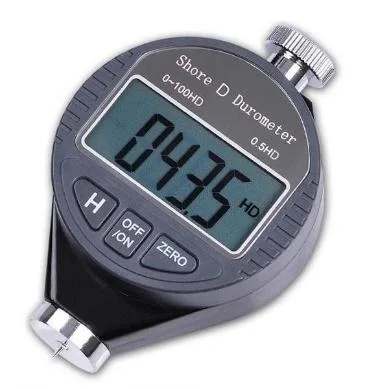
Indentation hardness of rigid plastics | ASTM D2240, IS 3400 | Final-part QC on PVC pipe, fittings and rigid chemical equipment components | |
UL 94 horizontal and vertical burning classification | UL 94, ASTM D635 | Required for plastics used in electrical and chemical-plant fire-safety-critical applications | |
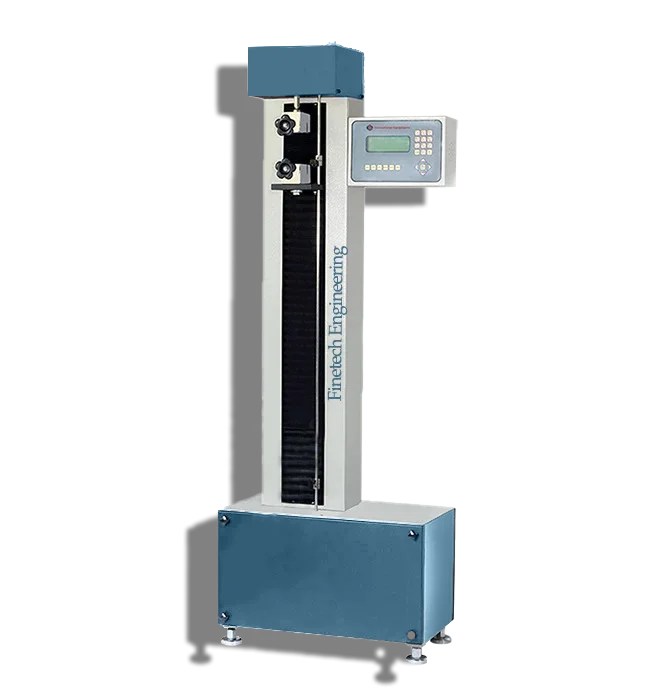
Tensile strength, elongation and flexural properties | ASTM D638, ASTM D790 | Fundamental mechanical property testing across all plastic and PVC grades |
Manufacturer, not a trader. Every instrument is designed, built and calibrated in our Wagle Estate, Thane factory. You deal directly with the maker – no dealer mark-up, no second-hand specifications.
ISO 9001 certified. Our manufacturing is ISO 9001:2015 certified and our equipment is CE marked – the standard Gujarat’s petrochemical and PVC sector expects.
NABL-traceable calibration. Calibration certificates traceable to national measurement standards, supporting NABL-accredited labs and OEM supplier audits.
Built for Gujarat’s petrochemical and PVC value chain. Our ESCR, HDT/VSP and MFI instruments serve both primary resin producers and downstream pipe and fitting manufacturers across the Ahmedabad-Vadodara-Surat GIDC belt.
Built to specific standards. ASTM D1693, ASTM F1473, ASTM D648, ASTM D1525, ASTM D1238 – with IS/BIS methods supported alongside ASTM, so your Gujarat lab stays audit-ready.
Installation, calibration and AMC. We commission, train operators and provide annual maintenance contracts across Gujarat.
We dispatch from our Thane factory and deliver across Gujarat’s petrochemical and plastics processing corridor: Ahmedabad, Vadodara, Surat and the wider GIDC industrial belt. As a Plastic Laboratory Testing Equipment manufacturer Gujarat plants have relied on, our team handles installation, calibration, operator training and ongoing AMC support. That makes Finetech the Ahmedabad-Vadodara-Surat GIDC testing equipment supplier local plants already call for installation, calibration and AMC support.
Tell us your plastic material and application (PVC pipe or fitting, petrochemical resin, chemical process equipment, or general moulded part), the standards or specifications you test to, and your location in Gujarat. Whether you need an ESCR apparatus configured for pipe or container testing, an HDT/VSP apparatus, a melt flow index tester for resin grade classification, or a full plastics testing suite, we will recommend the right configuration and send a quotation.
Phone / WhatsApp: +91 93241 37971
Email: info@finetechengineer.com
Factory and dispatch: C-1 New Kalwa Industrial Premises, Wagle Estate, Thane (W) 400604














All Equipments & specimen preparation products can be customised as per requirements.
Environmental stress cracking is a plastic failure mode where a part cracks under mechanical stress combined with exposure to a chemical stress-cracking agent - which accelerates crack growth at a molecular level without dissolving the plastic. For Gujarat's PVC pipe and petrochemical process equipment, this is a genuine field risk: buried pressure pipe under constant circumferential stress, and process equipment in prolonged contact with solvents or process chemicals, are both classic ESC scenarios. ASTM D1693 (general) and ASTM F1473 (pipe-specific NCLS) are the standard tests used to qualify resistance.
MFR (ASTM D1238) is a single-point flow measurement used by Gujarat's primary resin producers as the main grade-classification parameter on a certificate of analysis. True viscosity is a continuous, shear-rate-dependent property measured by a rheometer - used less often for routine QC but essential when troubleshooting a processing defect that identical MFR values do not explain. Gujarat's dual role as both resin producer and downstream processor state means both perspectives matter.
HDT measures the temperature at which a plastic specimen deflects a specified amount under a fixed bending load. For Gujarat's PVC pipe, this indicates the temperature margin before pipe wall stiffness drops under sun exposure and working pressure. For chemical process equipment, it indicates stability under combined process heat and mechanical load. The higher 1.82 MPa test load is typically the relevant one for these structurally loaded applications.
We are a manufacturer. As a Plastic Laboratory Testing Equipment manufacturer Gujarat operations trust, every instrument is designed and built in-house at our Wagle Estate, Thane factory - not purchased from another manufacturer and resold.
Yes. Our manufacturing is ISO 9001:2015 certified and our equipment is CE marked. We supply instruments with NABL-traceable calibration certificates, supporting NABL-accredited labs and OEM audit requirements across Gujarat.
Yes. We are a Plastic Laboratory Testing Equipment manufacturer Ahmedabad-Vadodara-Surat GIDC belt facilities have sourced from directly, alongside the wider Gujarat industrial corridor. Dispatch is from our Thane factory, with installation, calibration and AMC support provided on-site across Gujarat.