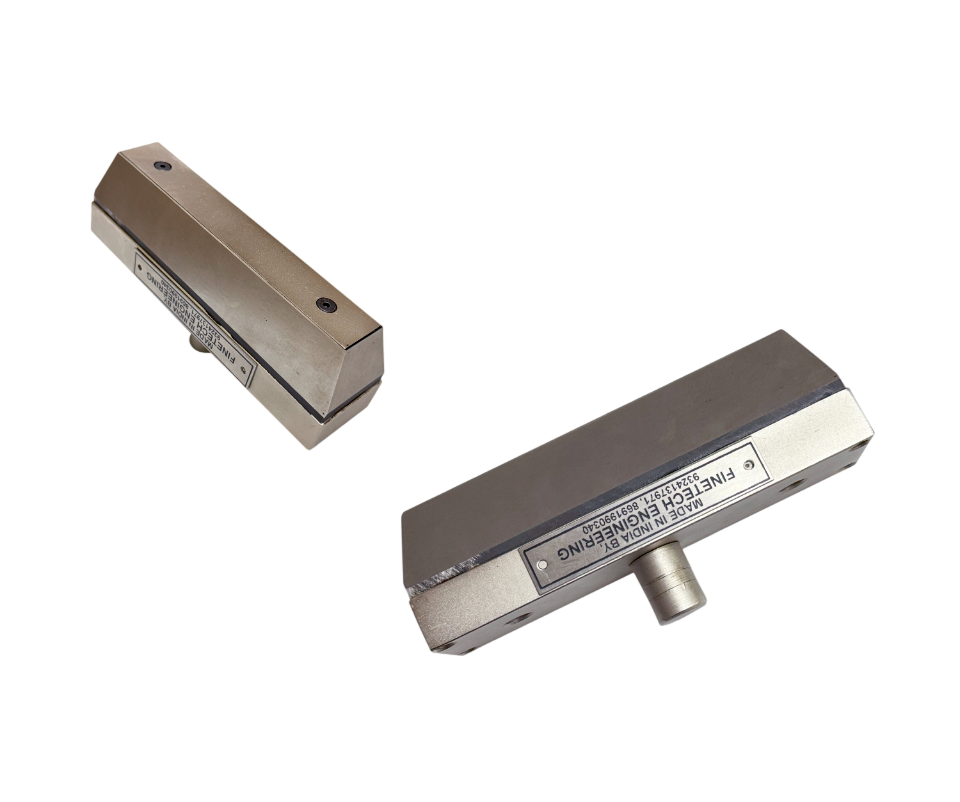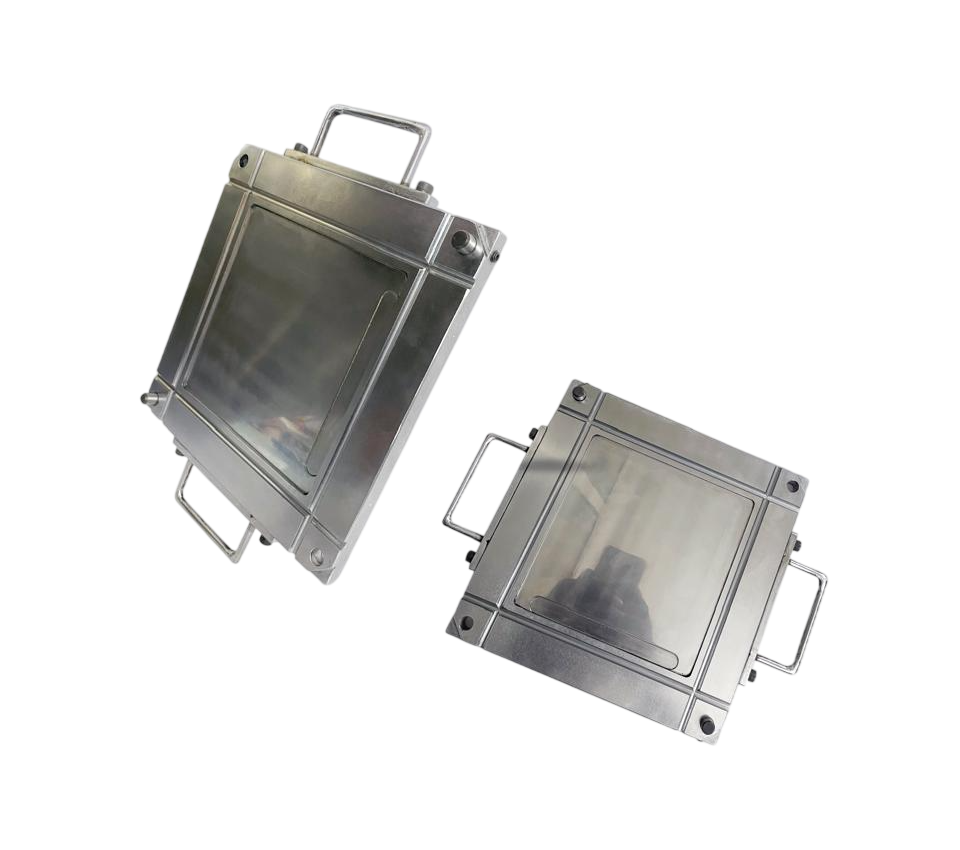







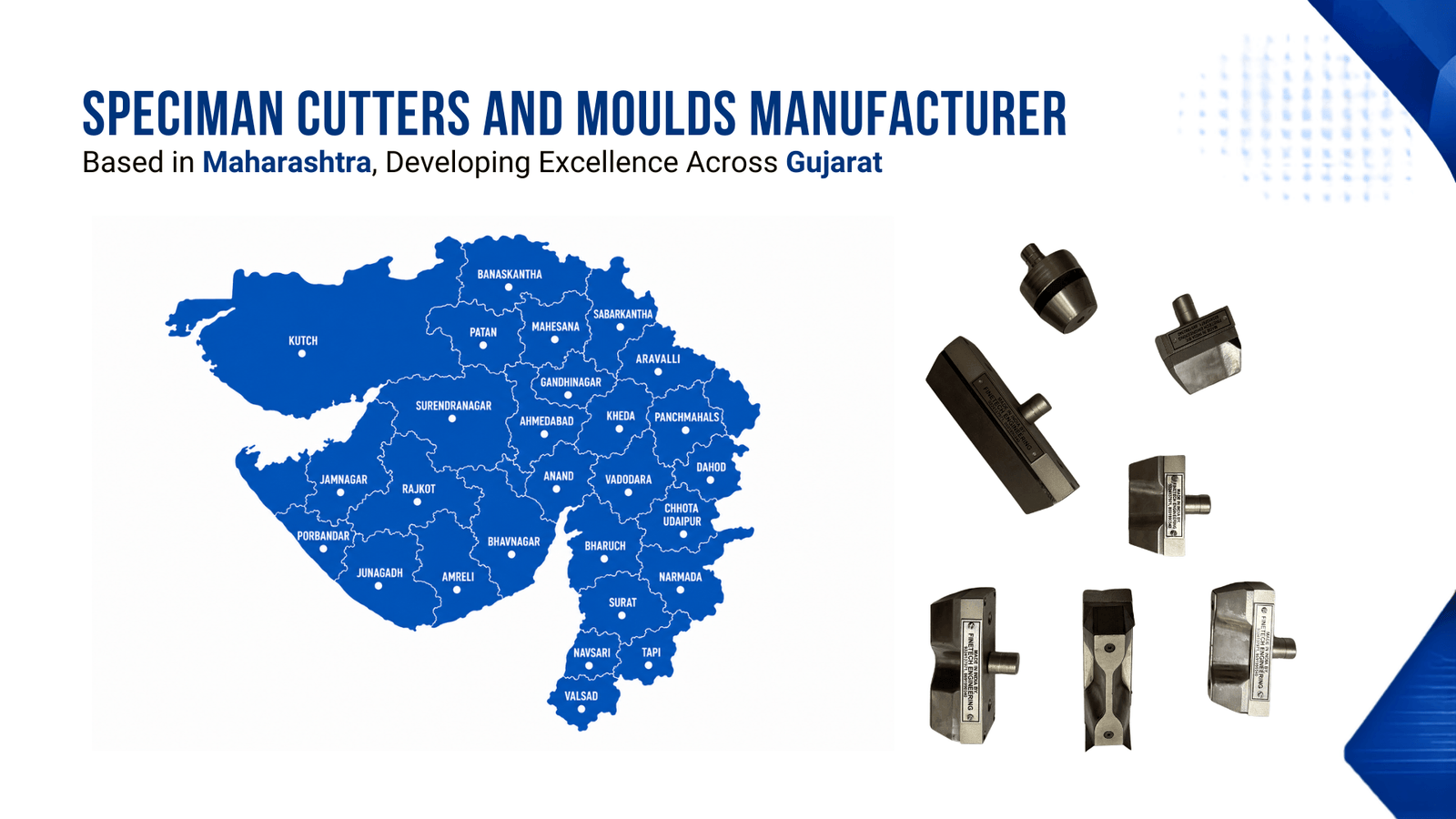
Gujarat’s petrochemical, PVC and chemical-processing labs, concentrated across the Ahmedabad-Vadodara-Surat GIDC belt, need specimen cutters spanning both plastics and rubber – dumbbell specimens from PVC pipe wall and petrochemical resin sheet for tensile qualification, and tear specimens from chemical-resistant rubber gaskets and seals for durability qualification. Finetech Engineering is a specimen cutter manufacturer Gujarat testing labs turn to because every cutter we build is dimensionally verified against its governing ASTM specification before it leaves our Wagle Estate, Thane factory. This PVC pipe wall petrochemical resin sheet dumbbell specimen prep is exactly the tensile-qualification workflow our factory dimensionally verifies before dispatch.
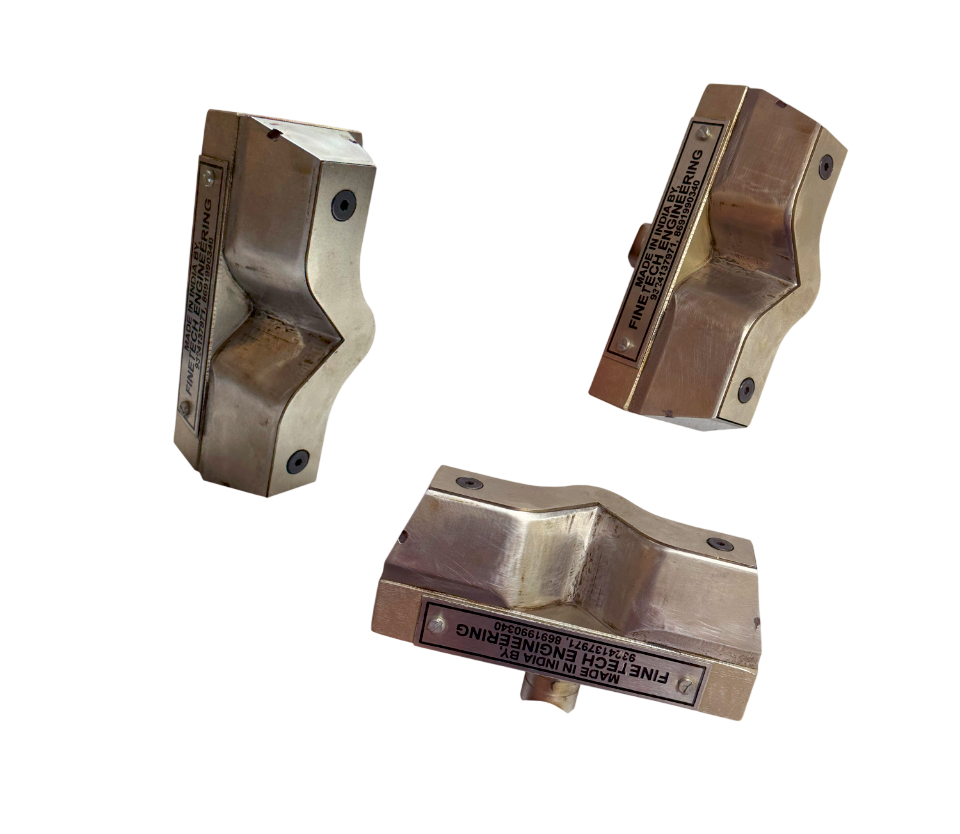
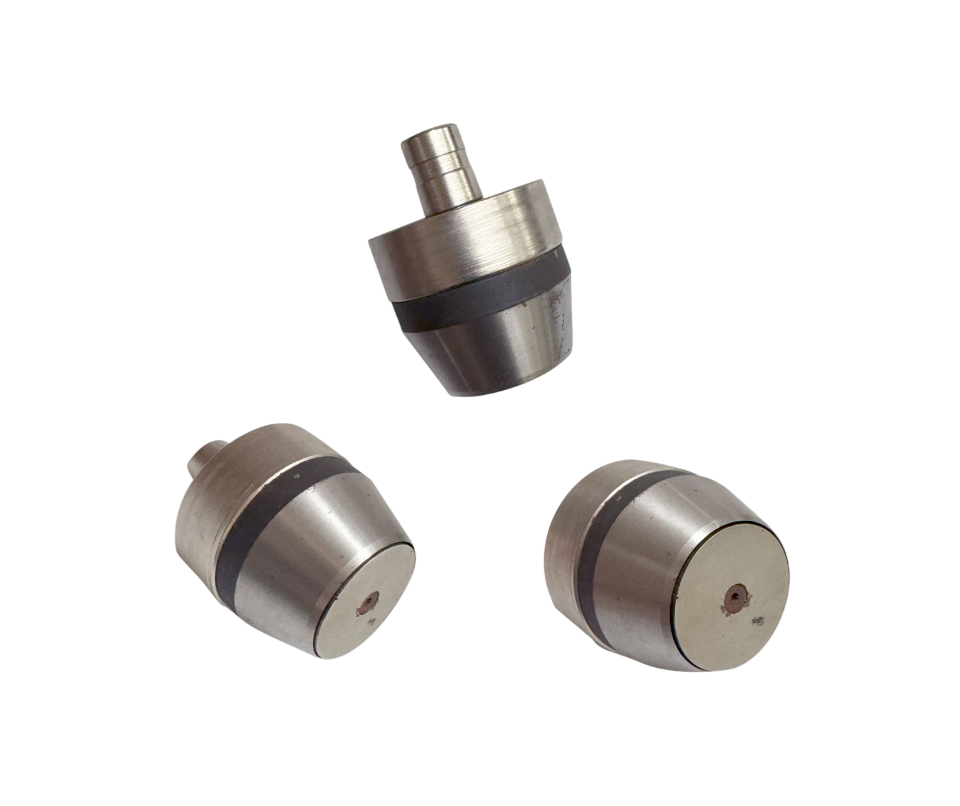
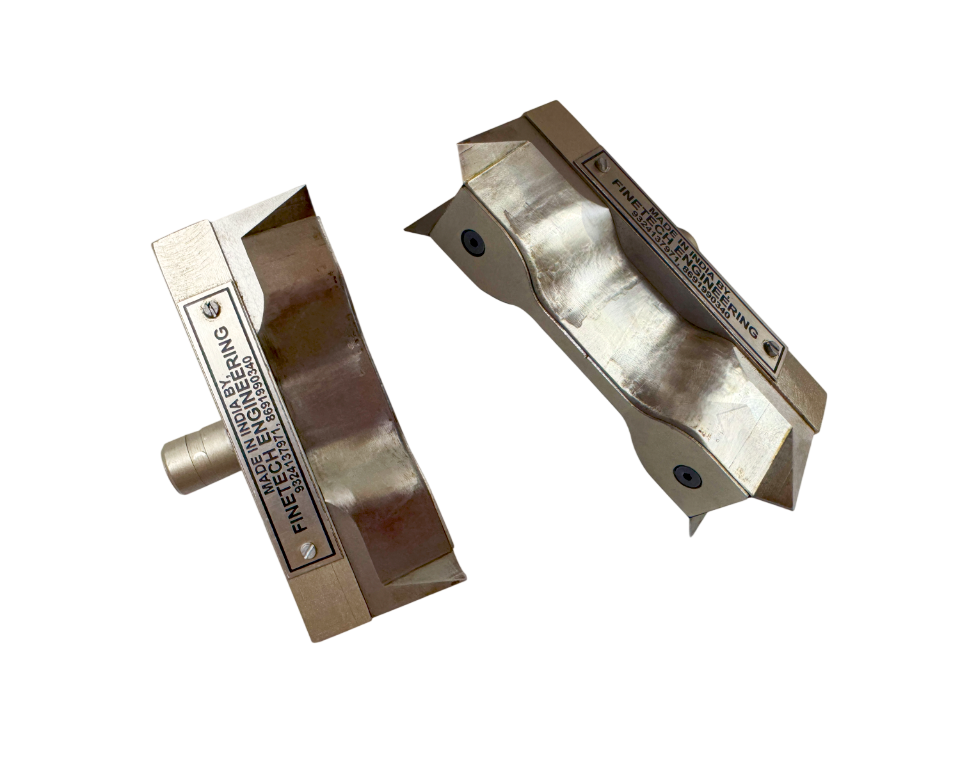
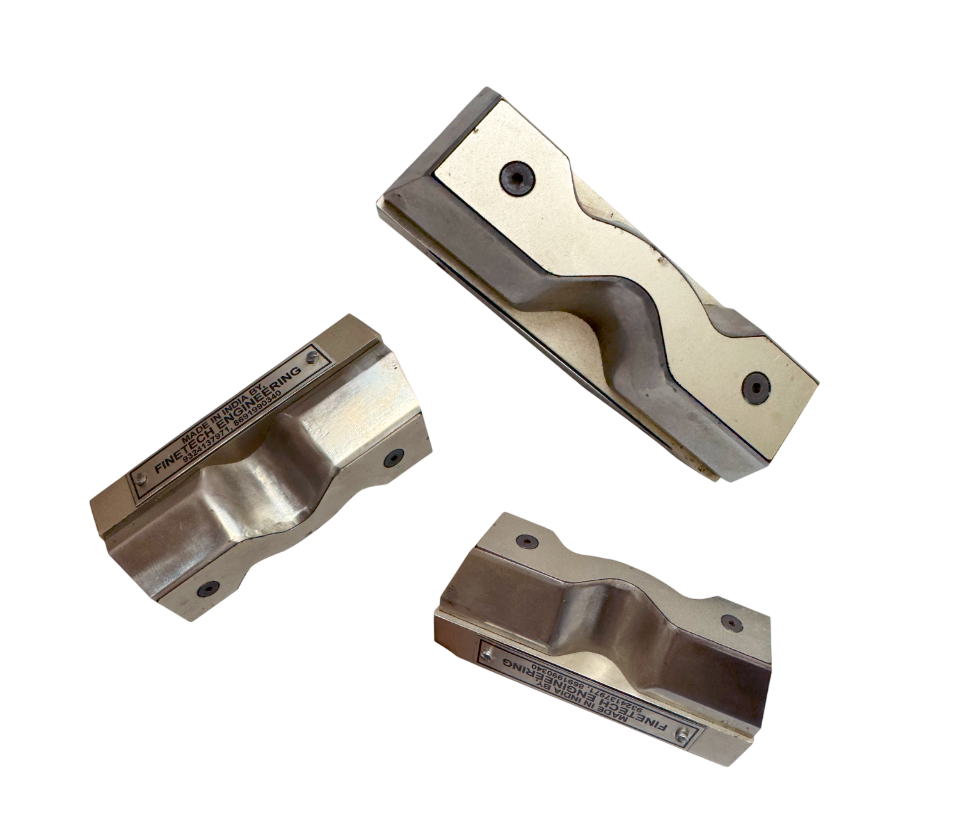
As a specimen cutter supplier Gujarat petrochemical and chemical-plant labs have used since 2023, the Crescent Cutter Gujarat labs specify prepares curved tear specimens for chemical-resistant rubber gaskets and seals used in process piping – an application where a reliable, repeatable tear-initiation point matters for evaluating gasket durability under the combined mechanical and chemical stress these components face.
Our factory in Thane dispatches directly to specimen cutter manufacturer Ahmedabad-Vadodara-Surat GIDC belt facilities, as well as the wider Gujarat industrial belt. NABL traceable specimen cutter Gujarat dimensional certification is available on every cutter, supporting labs that need to demonstrate specimen-preparation traceability during NABL and plant supplier audits.
Gujarat’s petrochemical and PVC labs typically need a dumbbell cutter (for both PVC/plastics and rubber gasket tensile specimens) and a crescent or tear cutter (for chemical-resistant gasket durability testing) as their core set. Round cutters are added for compression-set testing on gaskets and O-ring seals in process piping.
A crescent cutter punches a curved, crescent-moon-shaped tear specimen from a rubber sheet, corresponding to Die B under ASTM D624. For Gujarat’s petrochemical and chemical-plant rubber gasket and seal manufacturers, this is a specialised tool relevant specifically to softer, more chemically resistant elastomer compounds – such as EPDM, FKM/Viton, or nitrile grades commonly specified for chemical service – where an angle-shaped tear specimen may not reliably initiate a clean tear.
The geometry: unlike the sharp 90-degree angle of Die A or Die C, the crescent shape uses a continuously curved inner edge, with the narrowest point of the curve becoming the natural tear-initiation location. That geometry explains why soft chemical resistant elastomer grades need a crescent rather than angle dies – a sharp corner simply does not initiate a clean tear on these more extensible compounds.
Why softer chemical-resistant compounds need this: elastomers formulated for chemical resistance (EPDM, FKM, nitrile) are often softer and more extensible than general-purpose rubber, and a sharp angle specimen can distort or fail to initiate a tear cleanly before the specimen simply stretches – the crescent’s gradual, curved geometry gives a more reliable, repeatable result on these compounds. This is exactly the crescent cutter chemical resistant EPDM FKM gasket application Gujarat labs specify most, since these grades are precisely the ones a sharp-angle die struggles to tear cleanly.
What it produces: a crescent-shaped specimen with a defined minimum width at its narrowest point, used in the tear strength calculation.
Typical Gujarat use: gasket and seal compounds for petrochemical and chemical process piping, where softer, chemically resistant elastomer grades are standard.
Note: a crescent cutter produces only the Die B specimen shape and cannot be used interchangeably with Die A or Die C angle cutters – confirm which die type your gasket compound specification names before ordering.
For Gujarat’s PVC pipe, fitting and petrochemical resin producers, dumbbell tensile specimens are most often prepared to ASTM D638 (plastics) rather than the rubber-specific ASTM D412, though many Gujarat labs testing gasket and seal rubber alongside PVC and plastic products need both:
Standard / Type | Material | Overall Length | Narrow Width | Gauge Length |
ASTM D638 Type I | Rigid plastics (PVC, engineering resins) | 165 mm | 13 mm | 50 mm |
ASTM D638 Type II | Rigid to semi-rigid plastics | 165 mm | 6 mm | 50 mm |
ASTM D638 Type IV | Plastics (incl. semi-flexible PVC) | 115 mm | 6 mm | 25 mm |
ASTM D638 Type V | Thin plastic sheet/film | 63.5 mm | 3.18 mm | 9.53 mm |
ASTM D412 Die A | Rubber (gaskets, seals) | 115 mm | 6.0 mm | 25 mm |
ASTM D412 Die C | Rubber (gaskets, seals) | 115 mm | 6.0 mm | 33 mm |
ISO 37 Type 2 | Rubber (gaskets, seals) | 75 mm (approx.) | 4.0 mm | 20 mm |
The critical point for Gujarat is that rigid PVC pipe wall and petrochemical resin sheet need an ASTM D638 plastics die (Type I, II, IV or V depending on specimen thickness and rigidity), while rubber gaskets and seals used in the same piping systems need a separate ASTM D412 or ISO 37 rubber die. Gujarat labs serving both plastics and rubber components in the same petrochemical value chain often need dedicated cutters from both standards. In practice, this dumbbell cutter ASTM D638 PVC pipe petrochemical resin die is the one Gujarat’s resin producers and pipe manufacturers order most often.
NABL traceable cutter meaning is worth explaining clearly for Gujarat’s petrochemical and chemical-plant testing labs, since these facilities often operate under stringent regulatory and safety documentation requirements where specimen-preparation traceability is scrutinised alongside instrument calibration during audits.
What is actually verified: a specimen cutter does not take a measurement – what needs verification is that the cutter’s physical dimensions (blade length, width, radius, notch depth, overall specimen outline) match the governing standard’s specified dimensions within the standard’s stated tolerance.
How this is verified: the cutter’s dimensions are measured using calibrated dimensional metrology equipment that is itself NABL-traceable – meaning that equipment’s own calibration chain can be traced back to a national or international measurement standard.
Why it matters for Gujarat’s petrochemical and chemical plants specifically: material qualification data for pipe, fitting and gasket components in chemical and petrochemical service often feeds into safety-critical specifications – an out-of-tolerance cutter producing out-of-tolerance specimens compromises the validity of qualification data used to approve materials for pressure-piping or chemical-containment service. This is precisely the NABL traceable cutter safety critical pipe qualification context Gujarat’s plants operate under, where an out-of-tolerance specimen can undermine an entire material approval.
What documentation looks like: a NABL traceable specimen cutter is supplied with a dimensional verification certificate showing measured dimensions against the standard’s specified values and tolerances, with the measuring equipment’s own calibration traceability referenced.
Note: NABL accreditation applies to laboratories and calibration bodies, not directly to a manufactured product like a cutter. When we describe a specimen cutter as “NABL traceable,” we mean its dimensional verification was performed using equipment and a process traceable to national measurement standards – this supports your lab’s own NABL accreditation and plant supplier-audit requirements around specimen preparation equipment, not a claim that the cutter itself holds NABL accreditation.
As a specimen cutter supplier Gujarat testing labs have used since 2023, Finetech Engineering manufactures the following specimen-preparation range:
Product | Specimen Prepared | Governing Standards |
Dumbbell / dog-bone tensile specimen | ASTM D412 (Die A/B/C/D), ASTM D638, ISO 37 | |
Crescent-shaped tear specimen (Die B) | ASTM D624 (Die B), ISO 34-1 | |
Angle or nicked tear specimen (Die A/C) | ASTM D624, ISO 34-1 | |
Circular disc specimen | ASTM D395, ASTM D2240 | |
Rectangular strip specimen | ASTM D790, ASTM D1004 | |
Standard compression-moulded slabs / plaques | ASTM D3182, ISO 23529 |
Manufacturer, not a trader. Every cutter is designed, precision-ground and dimensionally verified at our Wagle Estate, Thane factory – not resold from another manufacturer.
ISO 9001 certified. ISO 9001 specimen cutter Gujarat standard is what we hold – our manufacturing is ISO 9001:2015 certified and our equipment is CE marked.
NABL-traceable dimensional certification. NABL traceable specimen cutter Gujarat – cutter dimensions verified and certified against the governing ASTM specification, supporting NABL-accredited lab and plant supplier audits.
Built for Gujarat’s petrochemical, PVC and chemical labs. We dispatch directly to specimen cutter manufacturer Ahmedabad-Vadodara-Surat GIDC belt facilities, plus the wider Gujarat industrial belt.
Both plastics and rubber cutter standards covered. From ASTM D638 plastics dies to ASTM D412/ISO 37 rubber dies, we manufacture dedicated cutters for the full range Gujarat’s petrochemical value chain needs.
Re-sharpening and replacement support. We offer blade re-sharpening and replacement service to keep your cutters producing clean, repeatable specimen edges.
We dispatch from our Thane factory across Gujarat’s petrochemical and plastics processing corridor: Ahmedabad, Vadodara, Surat and the wider GIDC industrial belt. As a specimen cutter manufacturer Gujarat labs have relied on, we also provide blade inspection, re-sharpening and replacement to keep your specimen preparation consistent over time. That makes Finetech the Ahmedabad-Vadodara-Surat GIDC specimen cutter supplier local labs already call for re-sharpening and replacement support.
Tell us which material you are testing (PVC pipe, petrochemical resin sheet, chemical-resistant rubber gasket, or general plastics), which test standard you work to, and your location in Gujarat. Whether you need a Crescent Cutter Gujarat labs specify for gasket tear testing, a dumbbell cutter matched to ASTM D638 or D412, or a full specimen-preparation set, we will recommend the right configuration and send a quotation.
Phone / WhatsApp: +91 93241 37971
Email: info@finetechengineer.com
Factory and dispatch: C-1 New Kalwa Industrial Premises, Wagle Estate, Thane (W) 400604


















All Equipments & specimen preparation products can be customised as per requirements.
A crescent cutter punches a crescent-moon-shaped tear specimen from rubber sheet, corresponding to Die B under ASTM D624. For Gujarat's petrochemical and chemical-plant gasket manufacturers, this suits softer, chemically resistant elastomer compounds (EPDM, FKM, nitrile) where an angle-shaped tear specimen may not reliably initiate a clean tear - the crescent's curved geometry gives a more repeatable result on these more extensible compounds.
Dumbbell cutter dimensions ASTM for PVC and petrochemical resin sheet typically follow ASTM D638 (Types I, II, IV or V depending on specimen thickness and rigidity), while rubber gaskets and seals in the same piping systems need a separate ASTM D412 or ISO 37 rubber die. Gujarat labs testing both plastics and rubber components across the petrochemical value chain often need dedicated cutters from both standards.
NABL traceable cutter meaning: since a cutter does not take a measurement, traceability refers to verifying its physical dimensions against the governing standard's specification, using measurement equipment that is itself calibrated and traceable to national standards. For Gujarat's petrochemical and chemical plants, where material qualification data often feeds safety-critical piping and containment specifications, this dimensional traceability supports the rigorous documentation these facilities require - though the cutter itself does not hold NABL accreditation, which applies to laboratories.
We are a manufacturer. As a specimen cutter manufacturer Gujarat labs have used since 2023, every cutter is designed, precision-ground and dimensionally verified in-house at our Wagle Estate, Thane facility - not purchased from another manufacturer and resold.
Yes. We hold ISO 9001 specimen cutter Gujarat certification - our manufacturing is ISO 9001:2015 certified and our equipment is CE marked. We also provide NABL traceable specimen cutter Gujarat dimensional certification, verifying cutter dimensions against the governing ASTM specification.
Yes. We are a specimen cutter manufacturer Ahmedabad-Vadodara-Surat GIDC belt facilities have sourced from directly, alongside the wider Gujarat industrial corridor. Dispatch is from our Thane factory, with blade inspection, re-sharpening and replacement support provided across Gujarat.