





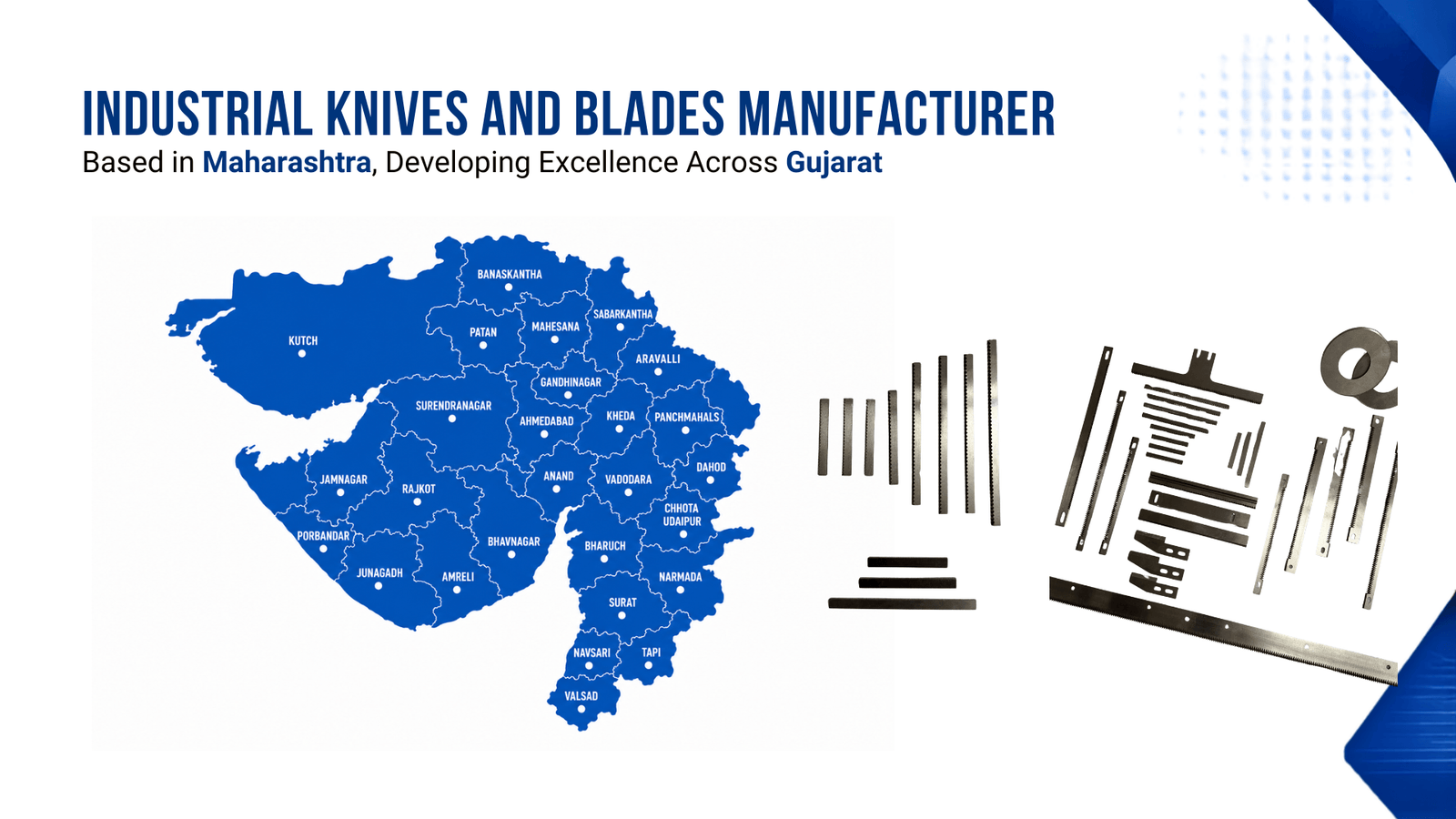
Gujarat’s petrochemical, PVC and chemical-processing plants, concentrated across the Ahmedabad-Vadodara-Surat GIDC belt, run blades in demanding conditions most other industries do not face together: highly abrasive PVC and filled-compound cutting, and sustained exposure to process chemicals and humid coastal-industrial air that accelerates blade corrosion. Finetech Engineering is an industrial blades manufacturer Gujarat converters turn to for blade guidance that accounts for both factors, not just generic wear-and-tear advice.
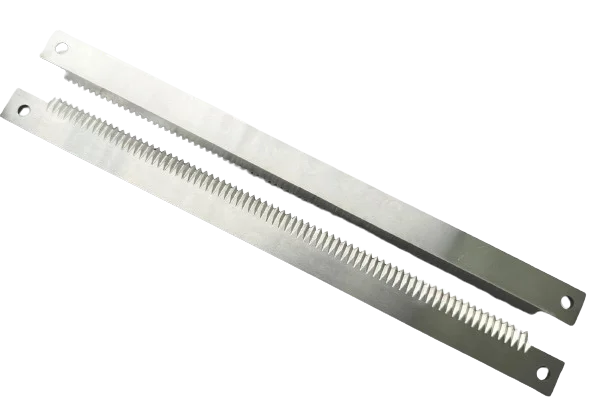
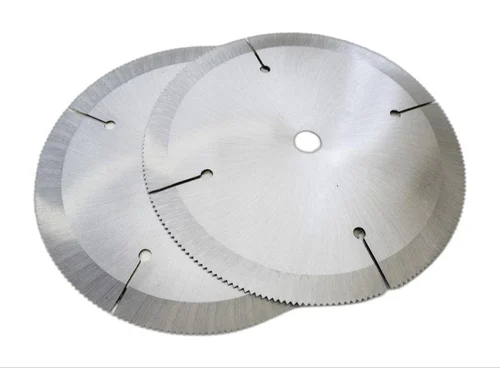
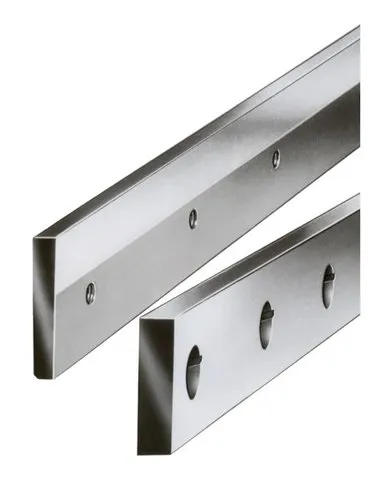
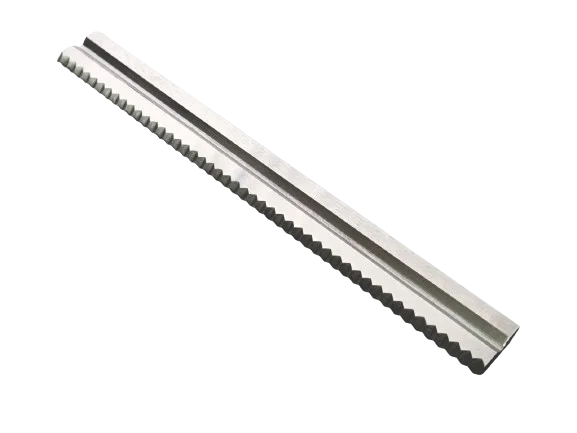
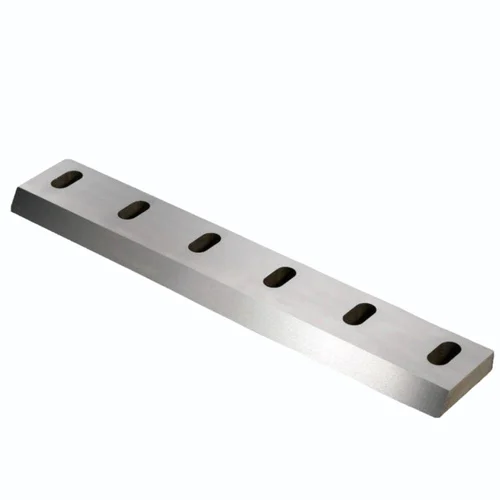
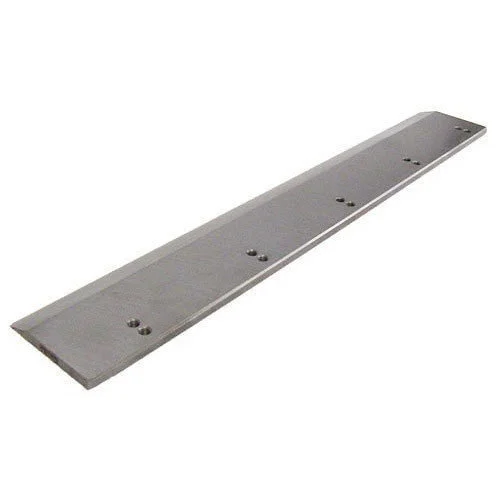
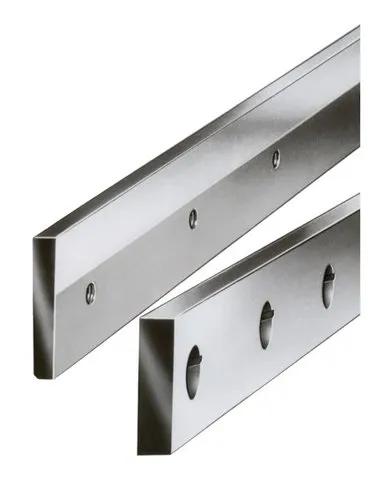
As an industrial blades supplier Gujarat plants have sourced from since 2023, the Guillotine Blades Gujarat converters order most are used for PVC pipe and profile shearing, and plastic sheet cutting in petrochemical processing lines. We also supply straight, serrated, perforating and circular blades, shear knives and paper cutting blades – and we help Gujarat converters navigate blade material and lifecycle decisions shaped by abrasive compounds and chemical exposure.
Our factory in Thane dispatches directly to industrial blades manufacturer Ahmedabad-Vadodara-Surat GIDC belt facilities, as well as the wider Gujarat industrial corridor. NABL-traceable industrial blades Gujarat certification – covering blade hardness and dimensional verification – is available on request, supporting quality-audit documentation requirements.
In Gujarat’s petrochemical and chemical-processing environments, blade corrosion from chemical exposure and humidity often becomes the limiting factor on service life well before the cutting edge itself dulls through wear – the opposite pattern from a clean, dry packaging line elsewhere. This is the exact blade corrosion vs wear which limits service life question Gujarat’s petrochemical converters run into constantly.
How often to replace industrial blades in Gujarat’s petrochemical and PVC processing context depends on factors that differ from a typical clean packaging line – abrasive compound wear and chemical-exposure corrosion both compete as the limiting factor on blade life:
Factor | Effect on Blade Life in Gujarat’s Context |
PVC and filled-compound abrasiveness | PVC and mineral-filled petrochemical compounds wear blade edges significantly faster than clean, unfilled plastics or film – often the dominant wear factor on pipe and profile shearing lines |
Chemical and humidity exposure | Sustained contact with process chemicals, solvents, or humid coastal-industrial air accelerates corrosion on unprotected carbon steel blades, sometimes limiting service life before cutting-edge wear does |
Cutting speed and duty cycle | Continuous high-speed PVC pipe and profile lines generate more heat and wear per shift than intermittent, lower-speed cutting |
Steel grade and coating | Higher-hardness steels (D2, HSS) resist abrasive wear better; stainless or coated grades resist chemical and humidity corrosion better – Gujarat applications often need to balance both properties together |
Cut quality requirements | Applications needing precise, burr-free PVC pipe or profile edges require blade attention sooner than applications tolerant of a slightly duller edge |
Rather than a fixed schedule, Gujarat converters get better results tracking two separate warning signs: increasing cutting force or ragged edges (indicating abrasive wear), and visible pitting, discoloration or rust spots (indicating chemical and humidity corrosion) – these two failure modes call for different responses, since a corroding blade may still be sharp, and a worn blade may show no corrosion at all. This is precisely why abrasive PVC filled compound blade wear resistance matters more in Gujarat than in a typical clean-plastics line.
Tip: track blade replacement reason (wear vs. corrosion) alongside replacement frequency. If corrosion is consistently the trigger before the cutting edge itself dulls, switching to a stainless or coated steel grade – even at a higher unit cost – often extends overall service life more than any change to the cutting-edge hardness. A stainless coated blade in a coastal humid chemical exposure environment like Gujarat’s GIDC belt is exactly the scenario this switch is designed to solve.
Perforating blade vs shear knife in Gujarat’s petrochemical and PVC processing context maps to two quite different production needs:
Feature | Perforating Blade | Shear Knife |
Cutting action | Intermittent tooth pattern creating a partial, dashed cut line – not a complete separation | Continuous, full-thickness shearing edge that completely separates material |
Purpose | Creates a controlled tear line for later separation – not intended to fully cut through during production | Fully separates material during the production process itself |
Typical application in Gujarat | Chemical packaging tear-open features, PVC sheet or film tear-line scoring | Heavy-gauge PVC pipe and profile shearing, thick petrochemical sheet or laminate cutting |
Edge geometry | Precisely spaced teeth with defined cut/skip ratio | Continuous straight or shear-angle edge for clean full separation |
Typical Gujarat use | Chemical drum liner or packaging tear-open features | PVC pipe and profile manufacturing lines shearing to length |
For Gujarat’s PVC pipe and petrochemical processors, the perforating blade vs shear knife choice usually favours shear knives for the bulk of production – pipe and profile shearing to length is a full-separation operation – with perforating blades reserved for specific packaging or tear-open features on the finished product or its packaging. For a Gujarat pipe line specifically, this shear knife vs perforating blade PVC pipe shearing decision almost always comes down in favour of the shear knife.
Blade sharpening vs replacement decisions in Gujarat’s petrochemical and chemical-processing plants need to weigh corrosion alongside the usual wear-pattern and cost considerations, since a chemically pitted or corroded blade cannot always be restored to a reliable edge through re-sharpening alone:
Consideration | Favours Re-Sharpening | Favours Replacement |
Wear pattern | Even, gradual dulling from abrasive cutting, with no corrosion | Chipping, cracking, or corrosion pitting that grinding cannot fully remove |
Corrosion condition | No visible pitting or surface corrosion on the blade body | Visible pitting or corrosion – grinding away a pitted surface may not leave enough sound material for a reliable edge |
Blade material remaining | Sufficient thickness remains for multiple future re-sharpenings | Blade already near minimum usable thickness, especially if corrosion has reduced effective material further |
Cost comparison | Re-sharpening cost meaningfully lower than replacement, with acceptable turnaround | Replacement cost comparable to re-sharpening once corrosion-related grinding time and reduced service life are factored in |
Application criticality | Application tolerates minor edge geometry variation from repeated sharpening | PVC pipe and profile dimensional tolerance needs a guaranteed, consistent edge every time |
For Gujarat’s chemical and petrochemical plants specifically, blade sharpening vs replacement decisions should treat corrosion as a separate trigger from wear – a blade with pitted or corroded surface material often cannot be reliably restored by grinding alone, since the pitting may extend below the depth a standard re-sharpen removes. In these cases, replacement with a more corrosion-resistant steel grade is usually the better long-term choice over repeated attempts to re-sharpen a corrosion-affected blade.
Note: if you are seeing blades fail from corrosion faster than they dull from cutting wear, the issue is material selection, not maintenance frequency – switching to a stainless or coated steel grade addresses the root cause rather than simply increasing how often you sharpen or replace a corrosion-prone blade. The question of why a corroding blade limits service life before dulling is a diagnostic question, not just a maintenance-log entry, and switching steel grade is the fix.
As an industrial blades supplier Gujarat converters and manufacturers have used since 2023, Finetech Engineering manufactures the following blade range:
Blade Type | Cutting Action | Typical Application |
Angled shear-stroke blade | PVC pipe and profile shearing and plastic sheet cutting in petrochemical processing lines | |
Linear shearing and slitting edge | General-purpose cutting of plastic film, sheet and board | |
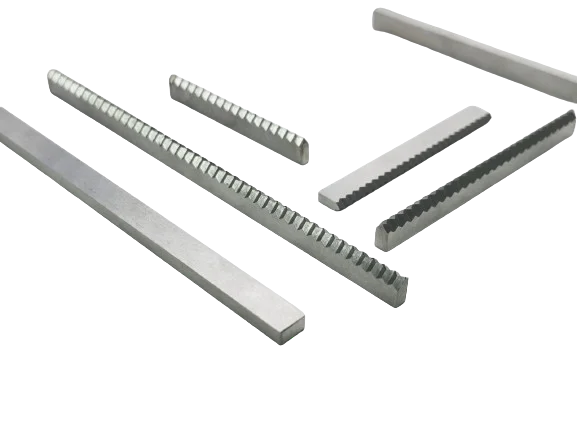
Toothed edge for sawing and gripping cut | Fibrous or textured chemical and industrial packaging materials | |
Intermittent tooth pattern creating a tear line | Chemical packaging tear-open features, PVC sheet scoring | |
Continuous rotary cutting edge | Roll-to-roll slitting of plastic film and sheet | |
Heavy-duty full-separation shearing edge | Heavy-gauge PVC pipe, profile and petrochemical sheet shearing | |
Precision straight or guillotine edge for paper and board | Packaging carton and board converting |
Manufacturer, not a trader. Every blade is precision-ground, heat-treated and inspected at our Wagle Estate, Thane factory – not resold from another manufacturer.
ISO 9001 certified. Our manufacturing is ISO 9001:2015 certified – the standard Gujarat’s petrochemical and PVC sector expects.
NABL-traceable hardness and dimensional certification. Blade hardness and dimensions verified and certified, supporting quality-audit documentation needs.
Built for Gujarat’s petrochemical and chemical-processing belt. We dispatch directly to industrial blades manufacturer Ahmedabad-Vadodara-Surat GIDC belt facilities, plus the wider Gujarat industrial corridor.
Corrosion-aware material guidance. We help you select steel grades that balance abrasive-wear resistance with chemical and humidity corrosion resistance – not just generic hardness recommendations.
Re-sharpening and replacement support. We offer blade re-sharpening and replacement to extend service life and maintain cut quality.
We dispatch from our Thane factory and deliver across Gujarat’s petrochemical and chemical-processing corridor: Ahmedabad, Vadodara, Surat and the wider GIDC industrial belt. As an industrial blades manufacturer Gujarat plants have relied on, we also provide blade inspection, re-sharpening and replacement service. That makes Finetech the Ahmedabad-Vadodara-Surat GIDC industrial blade supplier local converters already call for blade inspection and replacement.
Tell us the material you are cutting (PVC pipe and profile, petrochemical sheet, chemical packaging, or general plastics), your chemical exposure or corrosion concerns, and your location in Gujarat. Whether you need Guillotine Blades Gujarat converters specify, corrosion-resistant blade material guidance, or a full blade replacement programme, we will recommend the right configuration and send a quotation.
Phone / WhatsApp: +91 93241 37971
Email: info@finetechengineer.com
Factory and dispatch: C-1 New Kalwa Industrial Premises, Wagle Estate, Thane (W) 400604












All Equipments & specimen preparation products can be customised as per requirements.
How often to replace industrial blades in Gujarat's PVC and petrochemical context depends on two competing factors: abrasive wear from PVC and filled compounds, and corrosion from chemical and humidity exposure. Track both separately - increasing cutting force or ragged edges indicate wear, while pitting or discoloration indicate corrosion. These call for different responses: wear is addressed with a harder steel grade, corrosion with a stainless or coated grade.
For Gujarat's PVC pipe and profile manufacturing, shear knives are the primary tool - pipe and profile shearing to length is a full-separation operation needing a continuous shearing edge. Perforating blades are used for specific tear-open features on chemical packaging or PVC sheet scoring, not for the main pipe-cutting operation itself.
If corrosion pitting is visible, re-sharpening alone often cannot restore a reliable edge, since the pitting may extend below what standard grinding removes. Replacement with a more corrosion-resistant steel grade (stainless or coated) is usually the better long-term choice over repeated attempts to sharpen a corrosion-affected blade - addressing the material selection root cause rather than just the symptom.
We are a manufacturer. As an industrial blades manufacturer Gujarat plants have used since 2023, every blade is precision-ground, heat-treated and inspected in-house at our Wagle Estate, Thane facility - not purchased from another manufacturer and resold.
Yes. Our manufacturing is ISO 9001:2015 certified. We also provide NABL-traceable industrial blades Gujarat hardness and dimensional certification on request, supporting quality-audit documentation requirements.
Yes. We are an industrial blades manufacturer Ahmedabad-Vadodara-Surat GIDC belt facilities have sourced from directly, alongside the wider Gujarat industrial corridor. Dispatch is from our Thane factory, with blade inspection, re-sharpening and replacement support provided across Gujarat.