






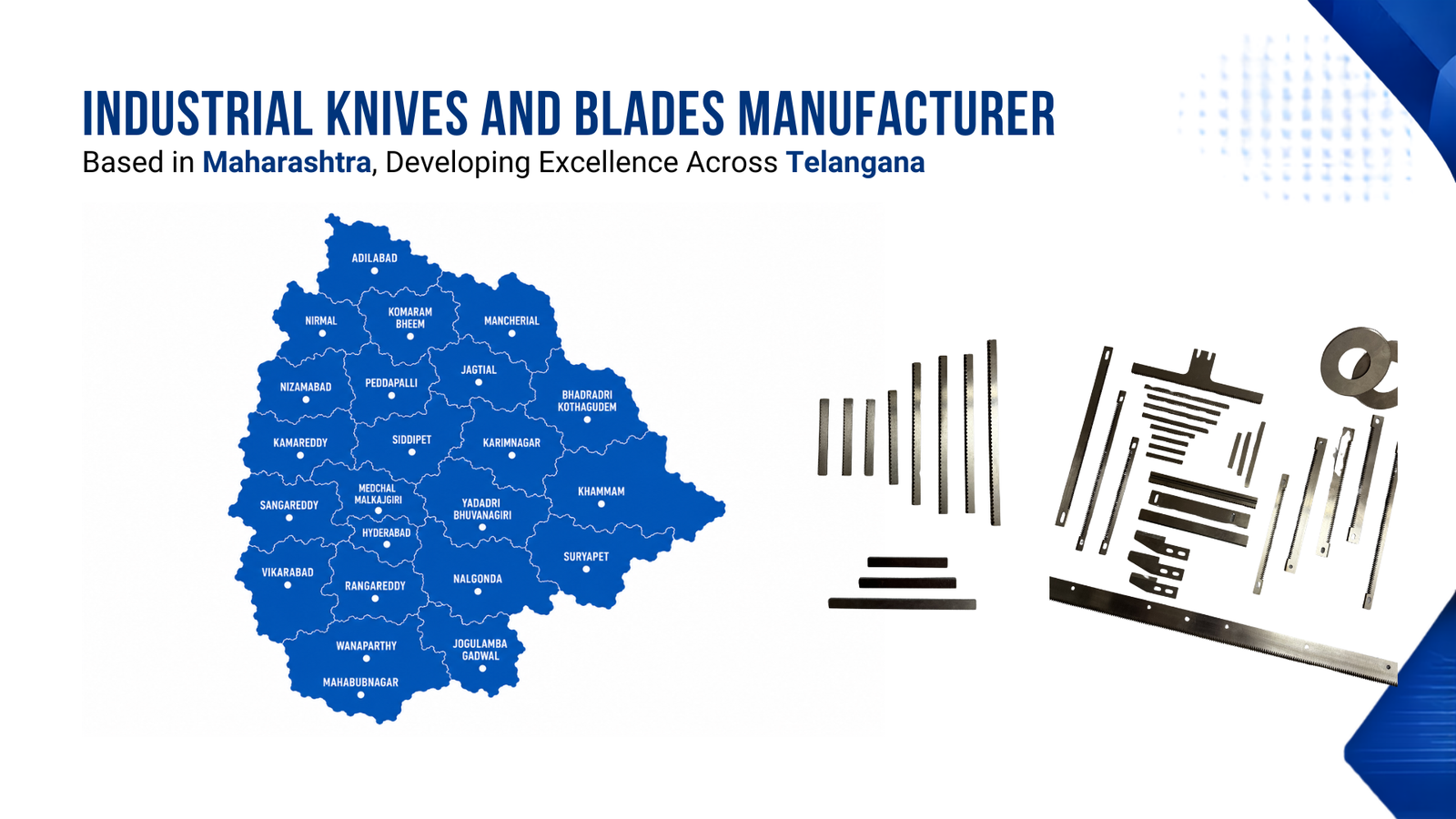
Telangana’s pharma packaging and plastics processing plants, concentrated around Hyderabad’s Jeedimetla and Pashamylaram industrial areas, run blades continuously across sheet shearing, film slitting and packaging finishing operations. Beyond simply supplying the right blade, one of the most common questions we get from these plants is practical: how long should a blade last, when should it be re-sharpened versus replaced, and which blade type actually fits a given cutting job. Finetech Engineering is an industrial blades manufacturer Telangana converters turn to for straight answers on all three, not just blade supply.
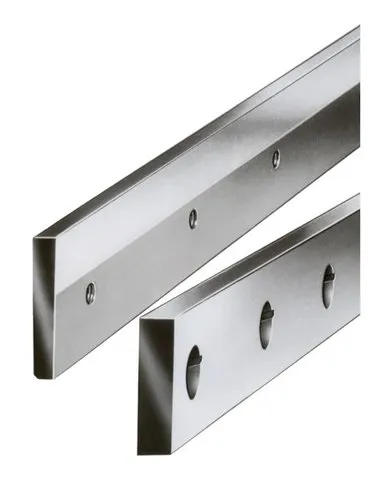
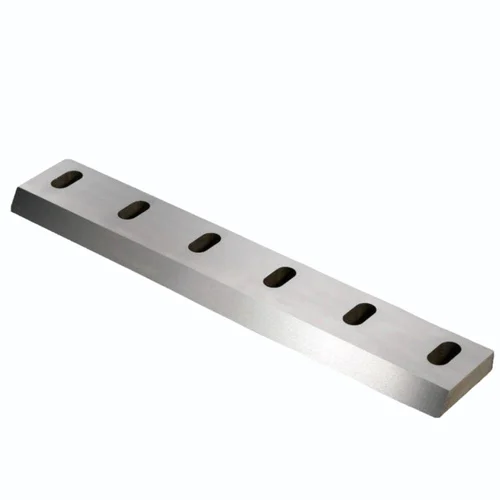
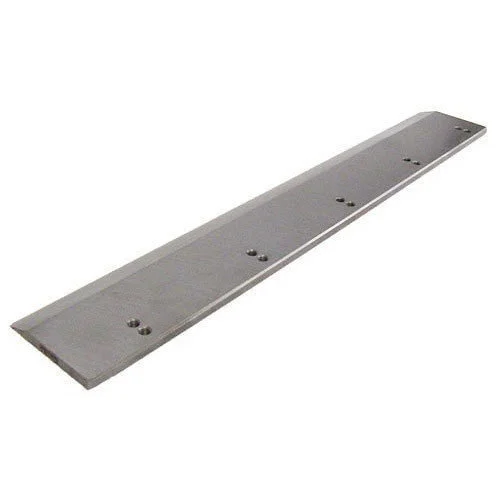
As an industrial blades supplier Telangana plants have sourced from since 2023, the Guillotine Blades Telangana sheet board shearing converters order most are used for sheet and board shearing in packaging finishing lines. We also supply straight, serrated, perforating, packaging and circular blades, shear knives and paper cutting blades – and we help Telangana converters get the most service life from every blade through proper maintenance guidance.
Our factory in Thane dispatches directly to industrial blades manufacturer Jeedimetla-Pashamylaram, Hyderabad facilities, as well as the wider Telangana industrial corridor. NABL traceable industrial blades Telangana certification – covering blade hardness and dimensional verification – is available on request, supporting quality-audit documentation requirements for pharma packaging operations.
Tip: Blade lifecycle costs are often underestimated when only the purchase price is considered. Factor in downtime for blade changes, cut-quality degradation as a blade dulls, and re-sharpening costs when comparing blade options – the cheapest blade per unit is not always the lowest total cost per year. This blade lifecycle cost downtime resharpening comparison is exactly the calculation we walk Telangana converters through before recommending a blade grade or a maintenance schedule.
How often to replace industrial blades does not have one universal answer – blade life depends on the material being cut, cutting speed, duty cycle, and steel grade. Rather than a fixed schedule, here are the factors that actually determine replacement frequency:
Factor | Effect on Blade Life |
Material abrasiveness | Abrasive materials (filled plastics, coated papers, some rubber compounds) wear blade edges much faster than clean film or unfilled plastics |
Cutting speed / duty cycle | Continuous high-speed operations generate more heat and wear per shift than intermittent, lower-speed cutting |
Steel grade and hardness | Higher-hardness steels (D2, HSS) hold an edge longer under the same conditions than high-carbon steel, at the cost of being more brittle |
Cut quality requirements | Applications needing a very clean, precise edge (pharma film sealing surfaces) require blade replacement or re-sharpening sooner than applications tolerant of a slightly duller edge |
Maintenance practices | Blades kept clean, properly stored, and not subjected to unnecessary impact or misuse last measurably longer than poorly maintained blades |
Rather than watching a calendar, most Telangana converters get better results tracking practical warning signs: increasing force required to complete a cut, ragged or torn edges instead of clean cuts, visible nicks or chips under magnification, or a measurable increase in downstream defect rates (poor pharma packaging seals, torn film edges). These signs indicate a blade needs attention regardless of how long it has been in service. These warning signs blade needs replacement industrial operators should watch for are far more reliable than any fixed calendar interval, since actual wear depends on the job, not the date.
Tip: Track blade changes against production output (cuts made, metres of film processed, or hours run) rather than calendar time. This gives a far more accurate, comparable measure of expected blade life across different production lines and shifts, and helps predict when the next change is due. Knowing how to track blade replacement schedule production output supports is exactly the difference between guessing at the next change and predicting it with confidence.
Perforating blade vs shear knife difference is a question that comes up when a Telangana converter is specifying a new cutting station and needs to choose between these two quite different blade types:
Feature | Perforating Blade | Shear Knife |
Cutting action | Intermittent tooth pattern that creates a partial, dashed cut line – not a complete separation | Continuous, full-thickness shearing edge that completely separates material |
Purpose | Creates a controlled tear line for the end user to separate later | Fully separates material during the production process itself |
Typical application | Pharma packaging tear-off seals, coupon and ticket perforation, form separation lines | Heavy-gauge sheet shearing, thick board or laminate cutting, general-purpose heavy material separation |
Edge geometry | Precisely spaced teeth with defined cut-to-skip ratio, engineered for consistent tear force | Continuous straight or shear-angle edge, engineered for clean full separation with minimal force |
Typical Telangana use | Pharma packaging lines creating tear-open features on blister packs and sachets | Packaging finishing lines shearing board, laminate or heavy film to size |
The perforating blade vs shear knife difference comes down to what you want the material to do: if you want the end user to tear the material open later, you need a perforating blade’s intermittent tooth pattern. If you need the material fully separated during production, a shear knife’s continuous edge is the right tool. Using a shear knife where a perforation is needed – or vice versa – simply will not produce the intended result.
Blade sharpening vs replacement decision is one Telangana converters face regularly, and getting it right affects both cost and cut quality. Here is a practical framework:
Consideration | Favours Re-Sharpening | Favours Replacement |
Wear pattern | Even, gradual dulling across the edge | Chipping, cracking, or localised damage that grinding cannot fully remove |
Blade material remaining | Blade still has enough material thickness for multiple future re-sharpenings without weakening the edge | Blade has already been re-sharpened close to its minimum usable thickness |
Cost comparison | Re-sharpening cost is meaningfully lower than a new blade, and turnaround time fits your production schedule | Replacement cost is close to or lower than re-sharpening once labour, freight and downtime are included |
Application criticality | Application tolerates the slightly altered edge geometry that repeated sharpening can introduce over time | Application (e.g. pharma packaging seal quality) needs a guaranteed like-new edge profile every time |
Turnaround urgency | Production schedule allows time for the sharpening cycle | Line cannot afford downtime waiting for a blade to be re-sharpened and returned |
As a rough guide, most industrial blades can be re-sharpened multiple times before reaching a replacement point, provided the wear is even and the blade has not chipped or cracked. Answering ‘how many times can industrial blade be resharpened’ directly: most blades tolerate several sharpening cycles before the remaining material thickness or edge geometry margin runs out – the exact number depends on the original blade thickness and how aggressively each sharpening removes material. The blade sharpening vs replacement decision usually shifts toward replacement once a blade has been through several sharpening cycles – at that point the remaining material thickness and edge geometry margin for error narrows, and the risk of an inconsistent edge increases.
Note: For pharma packaging applications where seal quality is critical, some Telangana converters standardise on replacement rather than re-sharpening past a defined cycle count, accepting a slightly higher blade cost in exchange for guaranteed, consistent edge geometry on every blade in service. This is a reasonable risk-management choice where seal failure has significant downstream cost.
As an industrial blades supplier Telangana converters and manufacturers have used since 2023, Finetech Engineering manufactures the following blade range:
| Blade Type | Cutting Action | Typical Application |
| Guillotine Blades | Angled shear-stroke blade | Sheet and board shearing in pharma packaging and plastics processing finishing lines |
| Straight Blades | Linear shearing / slitting edge | General-purpose cutting of film, sheet and board |
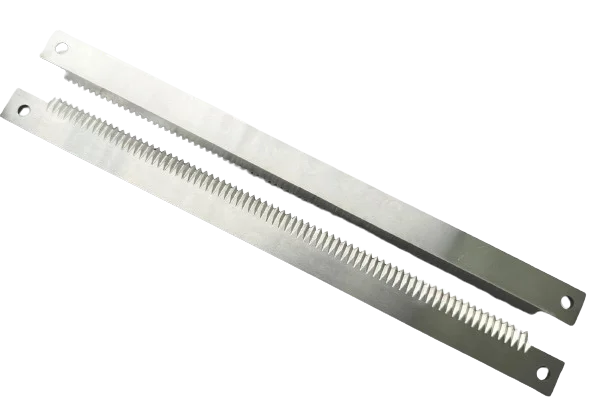
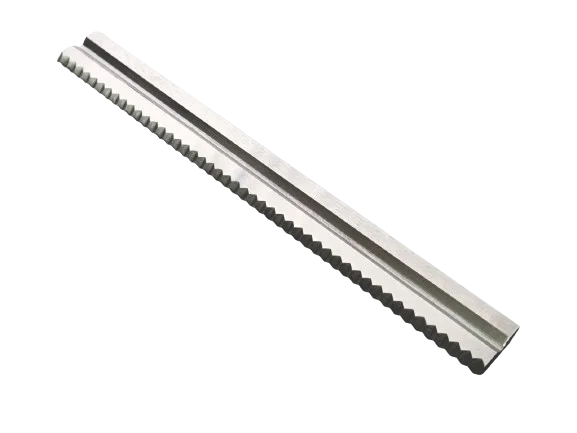
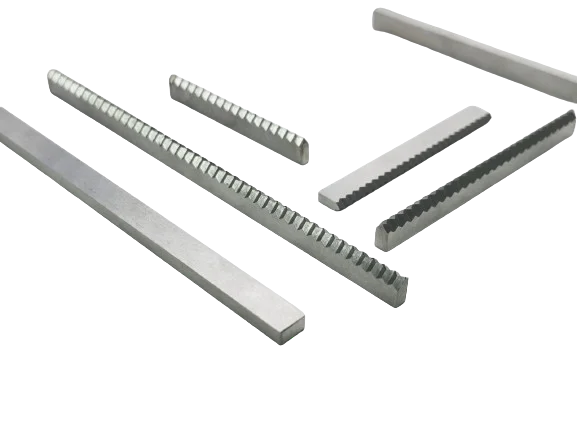
| Serrated Blades | Toothed edge for sawing/gripping cut | Fibrous or slip-prone materials |
| Perforating Blades | Intermittent tooth pattern creating a tear line | Pharma packaging tear-off seals, blister pack perforation |
| Packaging Blades | Precision slitting/trimming edge for packaging lines | Pharma film slitting, carton trimming |
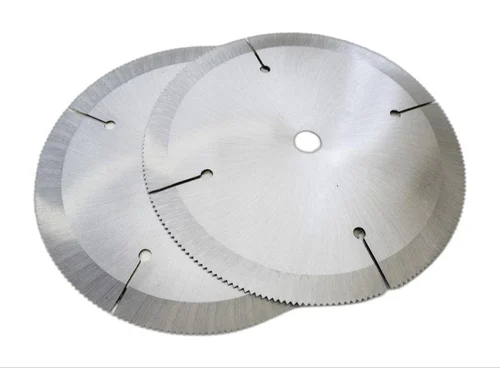
| Circular Blades | Continuous rotary cutting edge | Roll-to-roll slitting of pharma packaging film and plastics sheet |
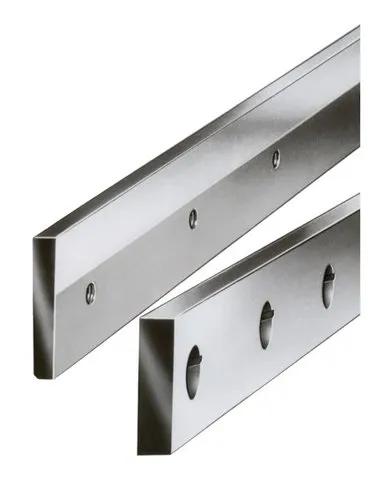
| Shear Knives | Heavy-duty full-separation shearing edge | Heavy-gauge sheet and board shearing |
| Paper Cutting Blades | Precision straight or guillotine edge for paper/board | Pharma packaging carton and board converting |
We dispatch from our Thane factory and deliver directly to the Jeedimetla and Pashamylaram industrial areas of Hyderabad, as well as the wider Telangana industrial belt. As an industrial blades manufacturer Telangana plants have relied on, we also provide blade inspection, re-sharpening and replacement service.
Manufacturer, not a trader. Every blade is precision-ground, heat-treated and inspected at our Wagle Estate, Thane factory – not resold from another manufacturer.
ISO 9001 certified. ISO 9001 industrial blades Telangana standard is what we hold – our manufacturing is ISO 9001:2015 certified.
NABL-traceable hardness and dimensional certification. NABL traceable industrial blades Telangana – blade hardness and dimensions verified and certified, supporting quality-audit and pharma regulatory documentation needs.
Built for Telangana’s pharma and plastics belt. We dispatch directly to industrial blades manufacturer Jeedimetla-Pashamylaram, Hyderabad facilities, plus the wider Telangana industrial corridor.
Lifecycle guidance, not just blade supply. We help you decide when to re-sharpen versus replace, and track blade life against your actual production output – not just sell a blade and move on.
Re-sharpening and replacement support. We offer blade re-sharpening and replacement to extend service life and maintain cut quality.












All Equipments & specimen preparation products can be customised as per requirements.
How often to replace industrial blades depends on material abrasiveness, cutting speed, duty cycle, steel grade and required cut quality - there is no single universal schedule. Track practical warning signs instead: increasing cutting force, ragged or torn edges, visible nicks or chips, or rising downstream defect rates. Tracking blade changes against production output (cuts made or metres processed) rather than calendar time gives a more accurate, comparable measure of expected blade life.
Perforating blade vs shear knife difference: a perforating blade has an intermittent tooth pattern that creates a partial, dashed cut line for the end user to tear open later - used for pharma packaging tear-off seals and similar features. A shear knife has a continuous edge that fully separates material during production - used for heavy-gauge sheet or board shearing. Choosing the wrong one will not produce the intended result: a shear knife cannot create a controlled tear line, and a perforating blade cannot fully separate material.
Blade sharpening vs replacement decision depends on the wear pattern, remaining blade material, cost comparison, and application criticality. Even, gradual wear on a blade with plenty of material remaining favours re-sharpening; chipping, cracking, or a blade already near its minimum usable thickness favours replacement. For critical applications like pharma packaging seal quality, some converters standardise on replacement after a defined number of sharpening cycles to guarantee consistent edge geometry.
We are a manufacturer. As an industrial blades manufacturer Telangana plants have used since 2023, every blade is precision-ground, heat-treated and inspected in-house at our Wagle Estate, Thane facility - not purchased from another manufacturer and resold.
Yes. We hold ISO 9001 industrial blades Telangana certification - our manufacturing is ISO 9001:2015 certified. We also provide NABL traceable industrial blades Telangana hardness and dimensional certification on request.
Yes. We are an industrial blades manufacturer Jeedimetla-Pashamylaram, Hyderabad facilities have sourced from directly, alongside the wider Telangana industrial belt. Dispatch is from our Thane factory.