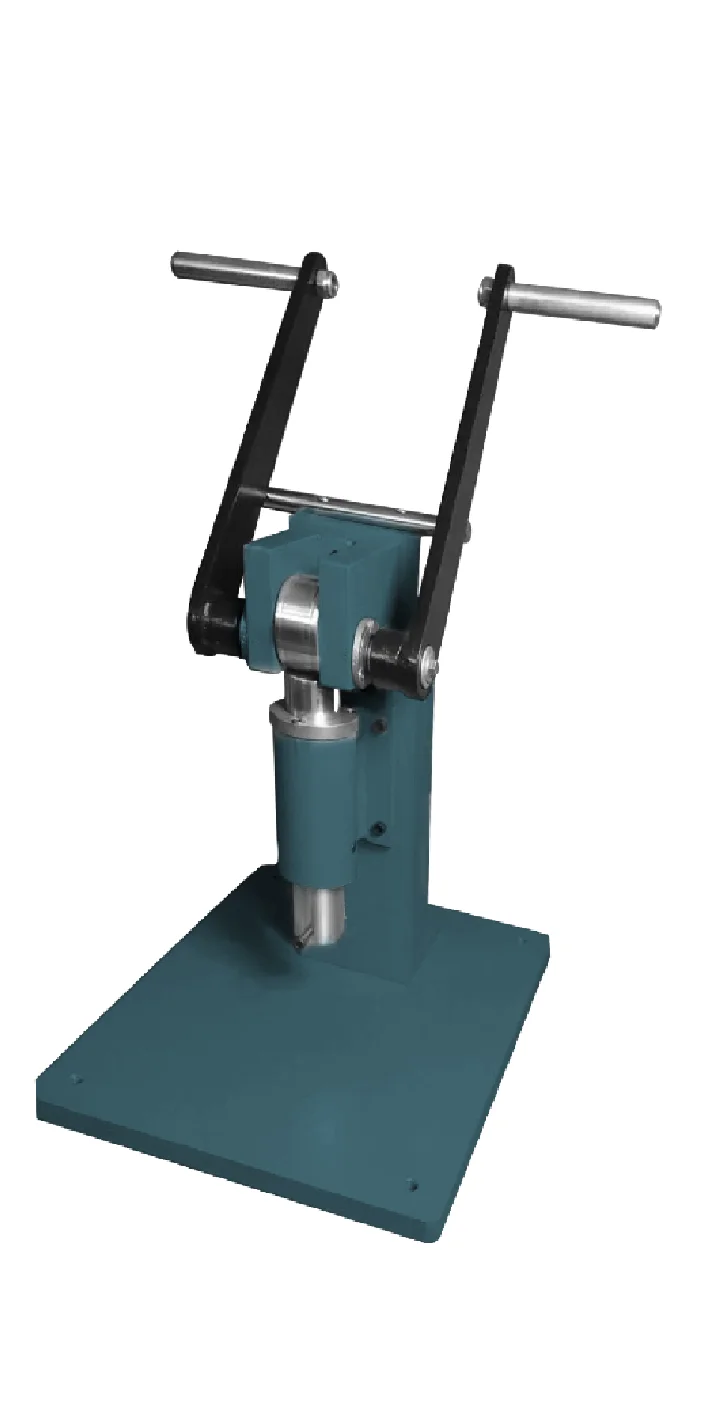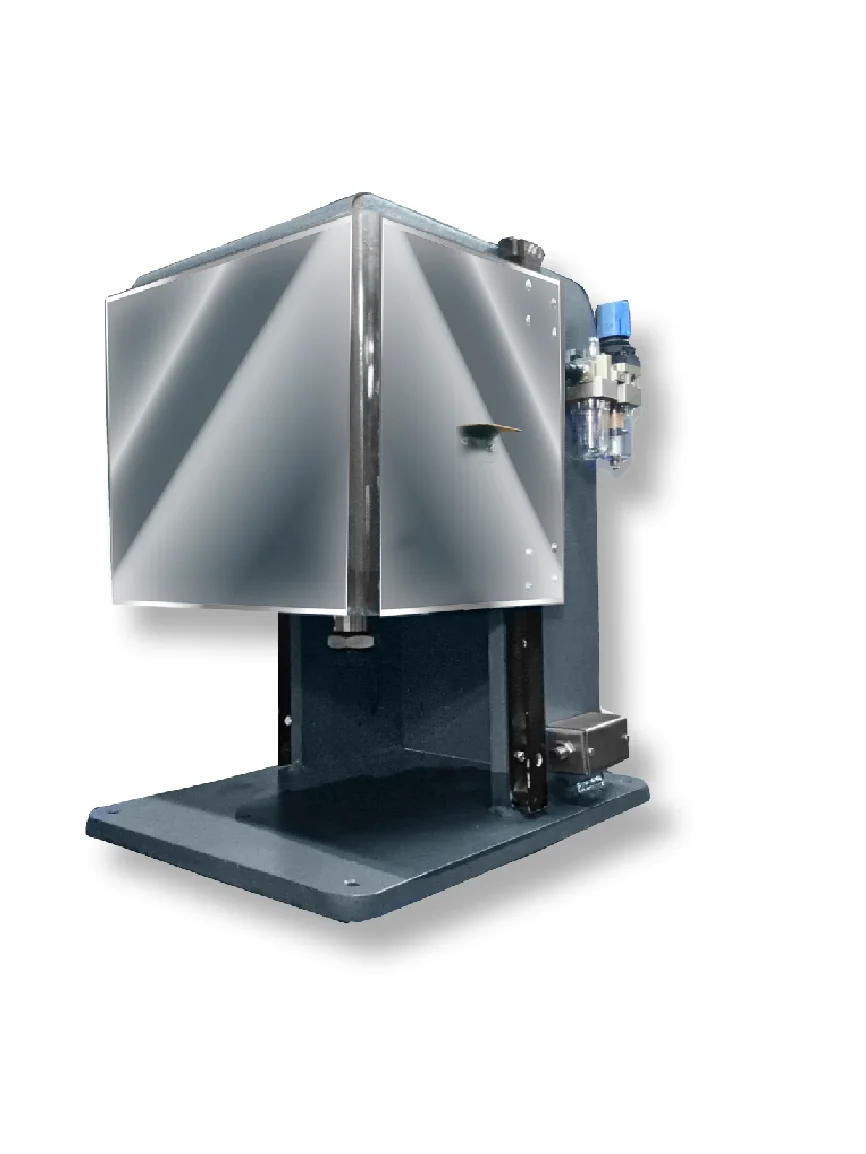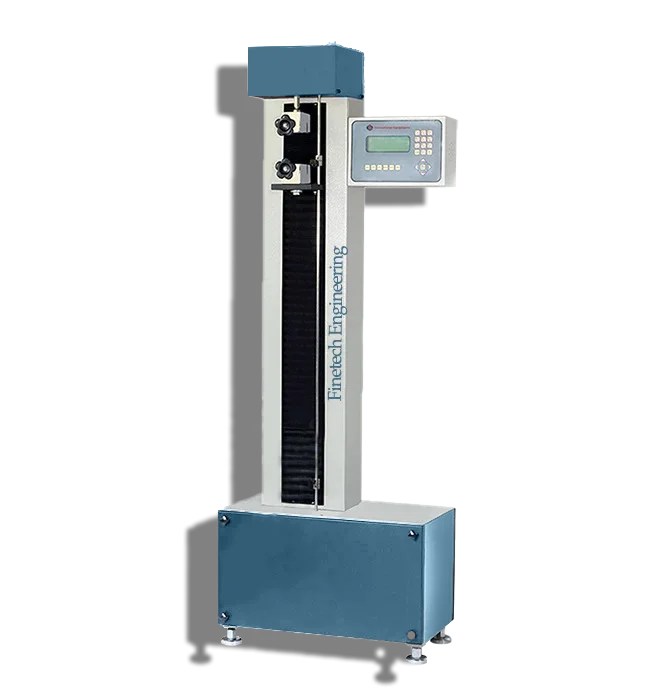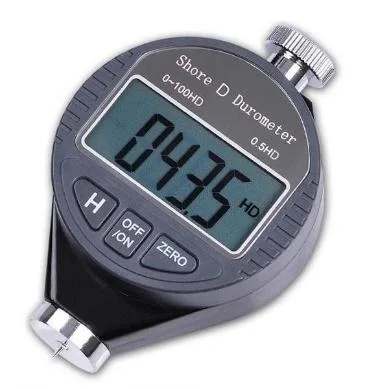







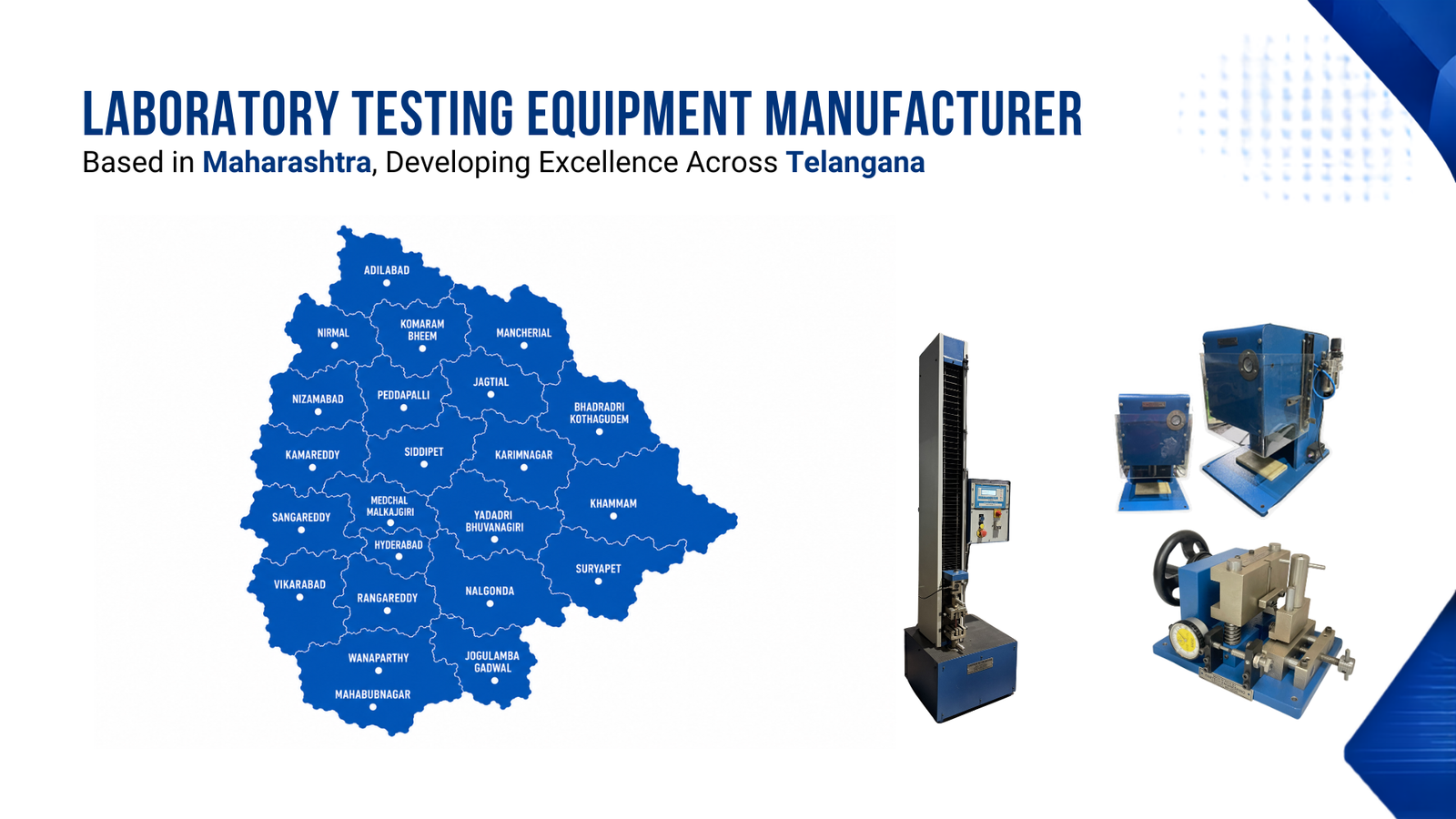
Telangana’s plastics testing needs are shaped by two industries concentrated around Hyderabad’s Jeedimetla and Pashamylaram industrial areas: pharma packaging, and general plastics processing supplying components and containers across multiple sectors. Both industries share a common concern with long-term material reliability – will a container resist cracking in service, will a resin batch process consistently, and will a moulded part hold its shape under heat. Finetech Engineering is a Plastic Laboratory Testing Equipment manufacturer Telangana plants have sourced from since 2023, supplying the instruments that answer these questions from our Wagle Estate, Thane factory.
As a Plastic Laboratory Testing Equipment supplier Telangana pharma packaging and plastics processing plants rely on, the ESCR Apparatus Telangana plants order most addresses one of the most common and least understood plastic failure modes – environmental stress cracking – which we cover in depth below, alongside the relationship between melt flow rate and true viscosity, and what actually happens inside a plastic material during heat deflection testing.
We dispatch and install across the Plastic Laboratory Testing Equipment manufacturer Jeedimetla-Pashamylaram, Hyderabad corridor, with regular scheduled delivery routes covering this belt and the wider Telangana industrial area. NABL traceable Plastic Laboratory Testing Equipment Telangana calibration is supplied with every instrument, supporting NABL-accredited labs and the regulatory audit requirements pharma packaging manufacturers face.
Tip: Environmental stress cracking is one of the most common causes of unexplained field failures in plastic containers and components – parts that pass every standard tensile and impact test can still fail months later from ESCR. If your plastics processing or pharma packaging line has seen unexplained cracking failures after a tensile spec was already met, ESCR is often the missing test.
What is environmental stress cracking plastic – environmental stress cracking (ESC) is a failure mode in plastics, particularly polyethylene, where a part cracks under a mechanical stress that would not cause failure on its own, because the stress is combined with exposure to a chemical agent that accelerates crack formation. It is fundamentally different from simple mechanical overload failure, and understanding the mechanism is important for Telangana’s pharma packaging and plastics processing plants.
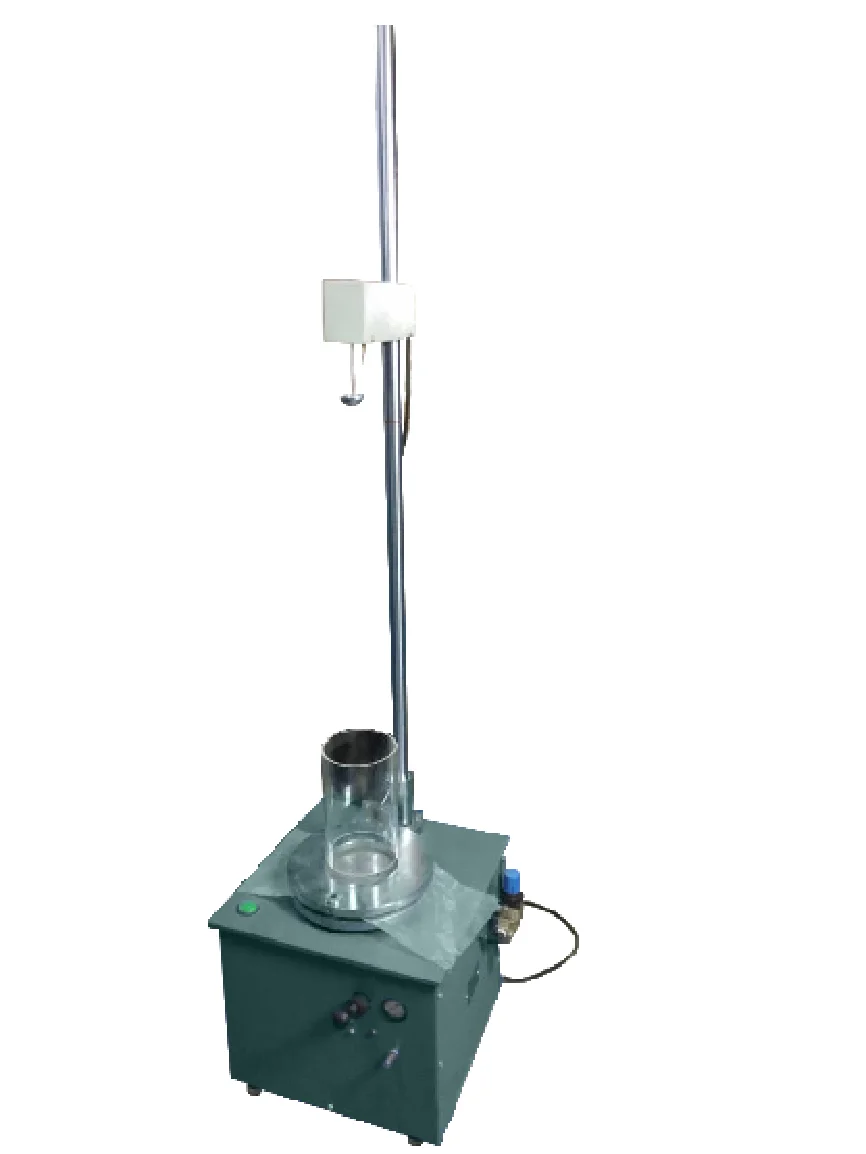
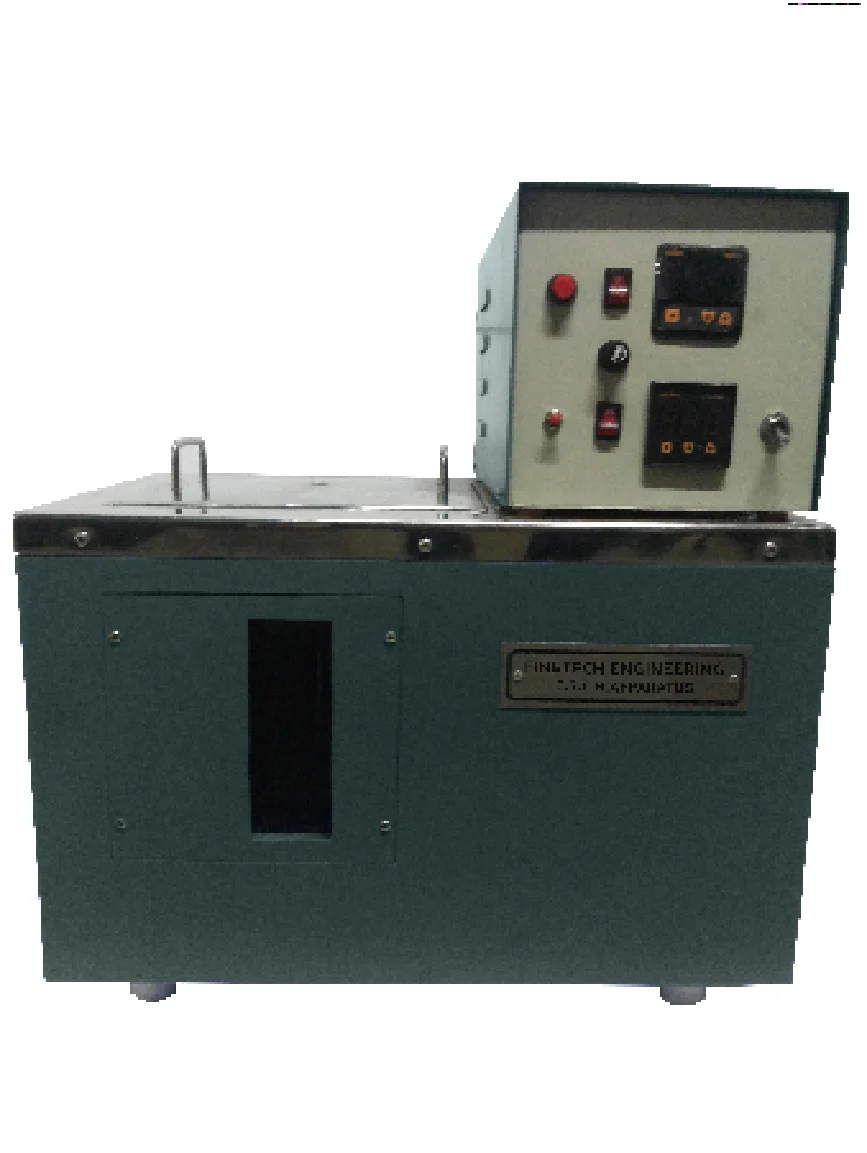
The ESCR apparatus (ASTM D1693) is the standard instrument for evaluating a material’s resistance to this failure mode – a notched, bent specimen under constant stress is immersed in a standard stress-cracking agent and monitored over time for crack appearance, giving a realistic, accelerated prediction of long-term field performance.
Note: Environmental stress cracking is a physical phenomenon (craze propagation accelerated by surface-energy reduction), not a chemical attack – the stress-cracking agent does not dissolve or chemically degrade the polymer. This distinction matters when diagnosing a field failure: ESC and chemical degradation look superficially similar but have different root causes and different fixes. Answering ‘why does plastic crack without chemical attack’ directly: the stress-cracking agent lowers surface energy and helps existing microscopic crazes grow into full cracks – it never dissolves or chemically breaks down the polymer itself.
Melt flow rate vs viscosity difference is a distinction that trips up many QC technicians new to plastics testing. The two are related but not the same measurement, and confusing them leads to misinterpreted resin QC data:
Feature | Melt Flow Rate (MFR / MFI) | True Viscosity |
What it measures | A single-point measurement: how much molten polymer flows through a standard die in 10 minutes, under one fixed temperature and load | How a fluid resists flow across a range of shear rates and temperatures – a continuous, multi-point property |
Test method | Melt flow index tester, per ASTM D1238 – simple, fast, one result per test | Capillary or rotational rheometer – measures viscosity across a range of shear rates, producing a full flow curve |
Relationship | MFR is inversely related to viscosity at the specific shear rate the MFR test happens to apply – higher MFR generally means lower viscosity at that condition | Viscosity varies with shear rate for most polymer melts (shear-thinning behaviour) – a single MFR number cannot capture this |
What it’s good for | Fast, low-cost batch-to-batch QC screening; catching gross resin variability | Full characterisation of processing behaviour across the shear rates a part actually experiences during moulding or extrusion |
What it misses | Cannot show how viscosity changes at the much higher shear rates seen in injection moulding or extrusion – two resins with identical MFR can behave very differently in the mould | N/A – a proper flow curve captures this, but the equipment and test time cost significantly more |
For most incoming-resin batch QC, melt flow rate vs viscosity difference comes down to practicality: MFR testing is fast and inexpensive, making it the standard daily QC check for Telangana’s plastics processors and pharma packaging resin approval. True viscosity characterisation via a rheometer is reserved for troubleshooting processing problems, new resin qualification, or cases where MFR alone does not explain an observed moulding defect.
Tip: If two resin batches show the same MFR but process differently on your moulding line, the difference is likely in shear-rate-dependent viscosity behaviour that a single-point MFR test cannot detect – this is a common and often confusing troubleshooting scenario. A full viscosity/rheology characterisation, not just a repeat MFR test, is usually the way to diagnose it. That is really why does resin same MFR process differently moulding behaviour comes down to: two batches can share an identical single-point MFR number while behaving completely differently at the higher shear rates your mould actually sees.
HDT test ASTM D648 explained physics – rather than repeating the step-by-step test procedure, here is what is actually happening to the plastic material during a heat deflection temperature test, and why the result matters for Telangana’s pharma packaging and plastics processing plants.
Note: HDT is a comparative, standardised engineering test, not a fundamental material constant like melting point. The same material tested at a different load, specimen thickness, or heating rate can give a different HDT number – always compare HDT results generated under the same test conditions.
As a Plastic Laboratory Testing Equipment supplier Telangana plants have used since 2023, Finetech Engineering supplies the following instruments, each built to the named ASTM/UL standard:
| Instrument | What It Tests | Primary Standards | Why Telangana Plants Need It |
| ESCR Apparatus | Environmental stress cracking resistance of PE | ASTM D1693 | Predicts long-term field cracking failures that short-duration tests cannot catch – critical for pharma packaging containers |
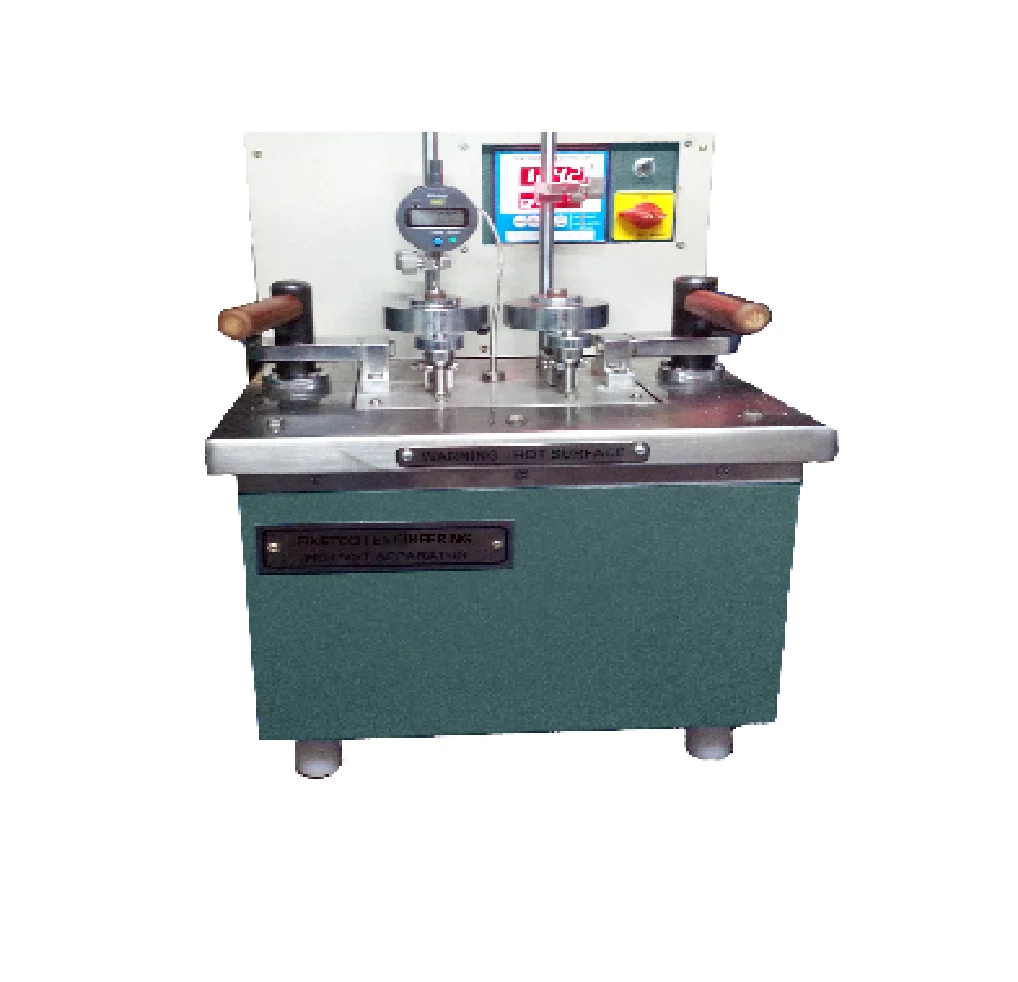
| HDT / VSP Apparatus | Heat deflection temperature & Vicat softening point | ASTM D648, ASTM D1525 | Verifies dimensional stability under thermal load for packaging and general plastics components |
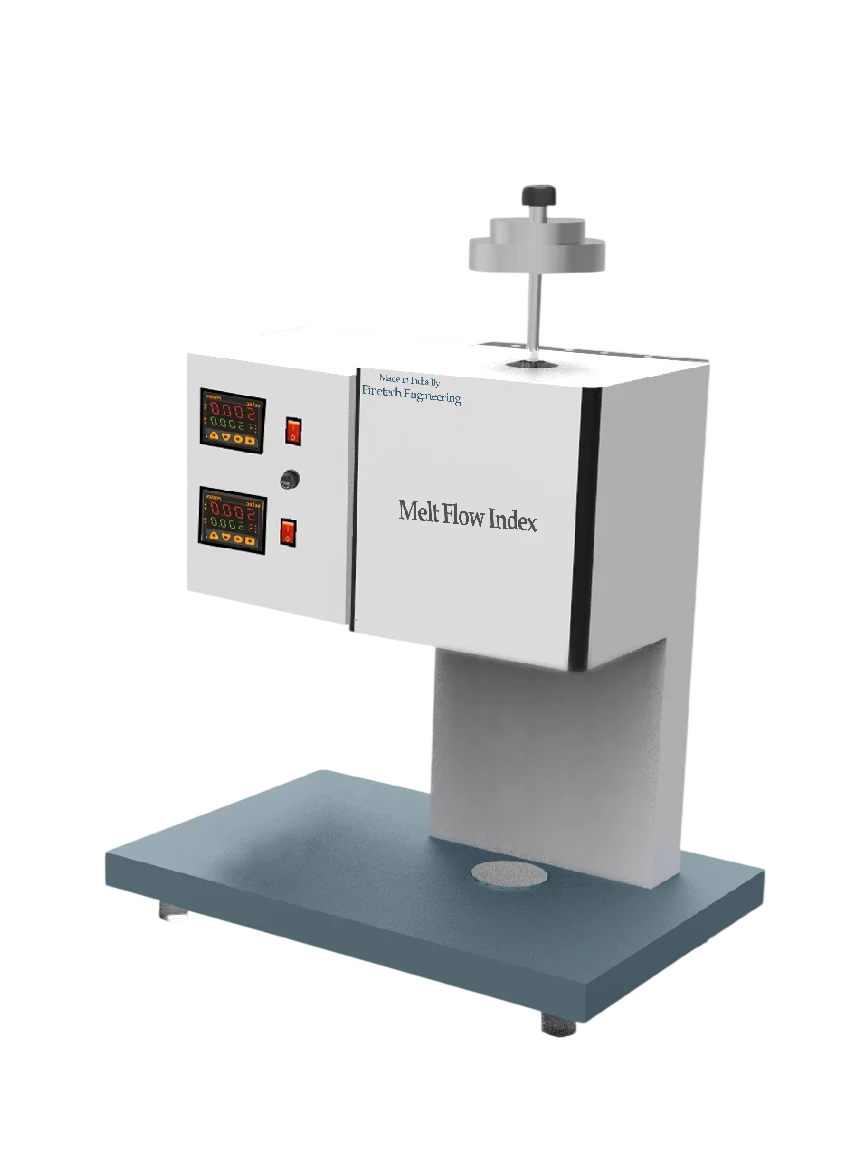
| Melt Flow Index Tester | Melt flow rate of thermoplastics | ASTM D1238, ISO 1133 | Fast, routine incoming-resin batch-QC screening |
| Shore D Hardness Tester | Indentation hardness of rigid plastics | ASTM D2240, IS 3400 | Quick final-part QC on moulded components |
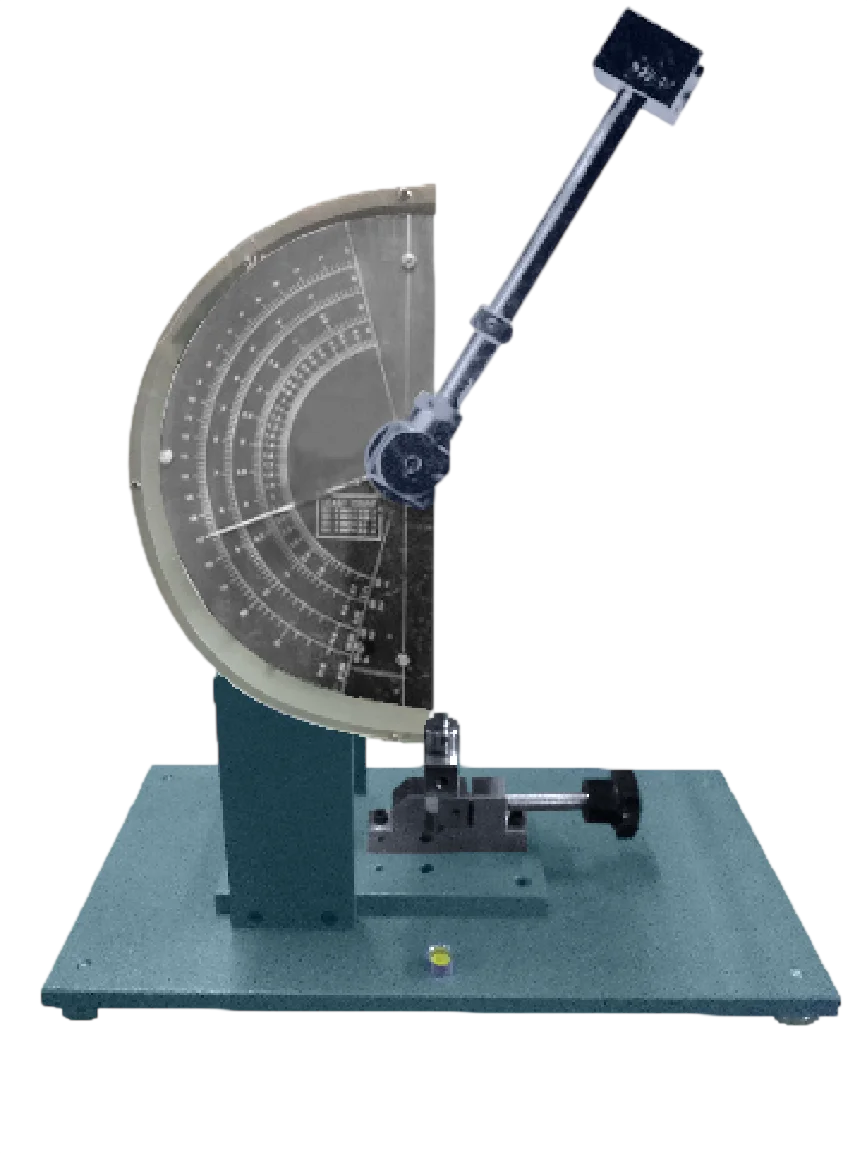
| Izod & Charpy Impact Tester | Notched impact strength of plastics | ASTM D256, ISO 179/180 | Toughness qualification for structural plastic parts |
| Universal Testing Machine (UTM) | Tensile strength, elongation & flexural properties | ASTM D638, ASTM D790 | Fundamental mechanical property testing across all plastic grades |
We dispatch from our Thane factory and deliver directly to the Jeedimetla and Pashamylaram industrial areas of Hyderabad, as well as the wider Telangana industrial belt. As a Plastic Laboratory Testing Equipment manufacturer Telangana plants have relied on, our team handles installation, calibration, operator training and ongoing AMC support.
Manufacturer, not a trader. Every instrument is designed, built and calibrated in our Wagle Estate, Thane factory. You deal directly with the maker – no dealer mark-up, no second-hand specifications.
ISO 9001 certified. ISO 9001 Plastic Laboratory Testing Equipment Telangana standard is what we hold – our manufacturing is ISO 9001:2015 certified and our equipment is CE marked.
NABL-traceable calibration. NABL traceable Plastic Laboratory Testing Equipment Telangana – calibration certificates traceable to national measurement standards, supporting NABL-accredited labs and pharma regulatory audits.
Built for Telangana’s pharma and plastics corridor. Our ESCR, HDT/VSP and MFI instruments cover the qualification tests pharma packaging and plastics processors specify most, serving the Plastic Laboratory Testing Equipment manufacturer Jeedimetla-Pashamylaram, Hyderabad belt directly.
Built to specific standards. ASTM D1693, ASTM D648, ASTM D1525, ASTM D1238, ASTM D256, UL 94 – with IS/BIS methods supported alongside ASTM, so your Telangana lab stays audit-ready.
Installation, calibration and AMC. We commission, train operators and provide annual maintenance contracts across Telangana.


















All Equipments & specimen preparation products can be customised as per requirements.
What is environmental stress cracking plastic - it is a plastic failure mode where a part cracks under a mechanical stress that alone would not cause failure, because the stress is combined with exposure to a chemical stress-cracking agent (such as a detergent, oil, or the packaged product itself). The agent accelerates crack growth at a molecular level by reducing the surface energy needed to propagate micro-cracks, without chemically dissolving the plastic. It is a major cause of unexplained field failures in HDPE containers and components that pass all standard tensile and impact tests.
Melt flow rate vs viscosity difference: melt flow rate (MFR/MFI) is a single-point measurement of how much polymer flows through a standard die under one fixed temperature and load, per ASTM D1238. True viscosity is a continuous property that varies with shear rate, properly characterised using a rheometer across a full flow curve. MFR is fast and useful for routine batch QC, but two resins with identical MFR can behave very differently under the higher shear rates seen in actual moulding or extrusion - a limitation only full rheological characterisation can reveal.
HDT test ASTM D648 explained physics: HDT measures the temperature at which a plastic specimen deflects a specified amount under a fixed bending load, as the material is heated. It reflects the point where the material's stiffness has dropped enough for the load to cause visible deformation - related to the glass transition temperature for amorphous plastics. Because ASTM D648 offers two standard loads (1.82 MPa and 0.455 MPa), HDT is a comparative engineering measurement, not a fixed material constant - always compare results from the same test conditions.
We are a manufacturer. As a Plastic Laboratory Testing Equipment manufacturer Telangana operations trust, every instrument is designed and built in-house at our Wagle Estate, Thane factory - not purchased from another manufacturer and resold.
Yes. We hold ISO 9001 Plastic Laboratory Testing Equipment Telangana certification - our manufacturing is ISO 9001:2015 certified and our equipment is CE marked. We supply instruments with NABL traceable Plastic Laboratory Testing Equipment Telangana calibration, supporting NABL-accredited labs and pharma regulatory audit requirements.
Yes. We are a Plastic Laboratory Testing Equipment manufacturer Jeedimetla-Pashamylaram, Hyderabad facilities have sourced from directly, alongside the wider Telangana industrial belt. Dispatch is from our Thane factory, with installation and support delivered on-site.