







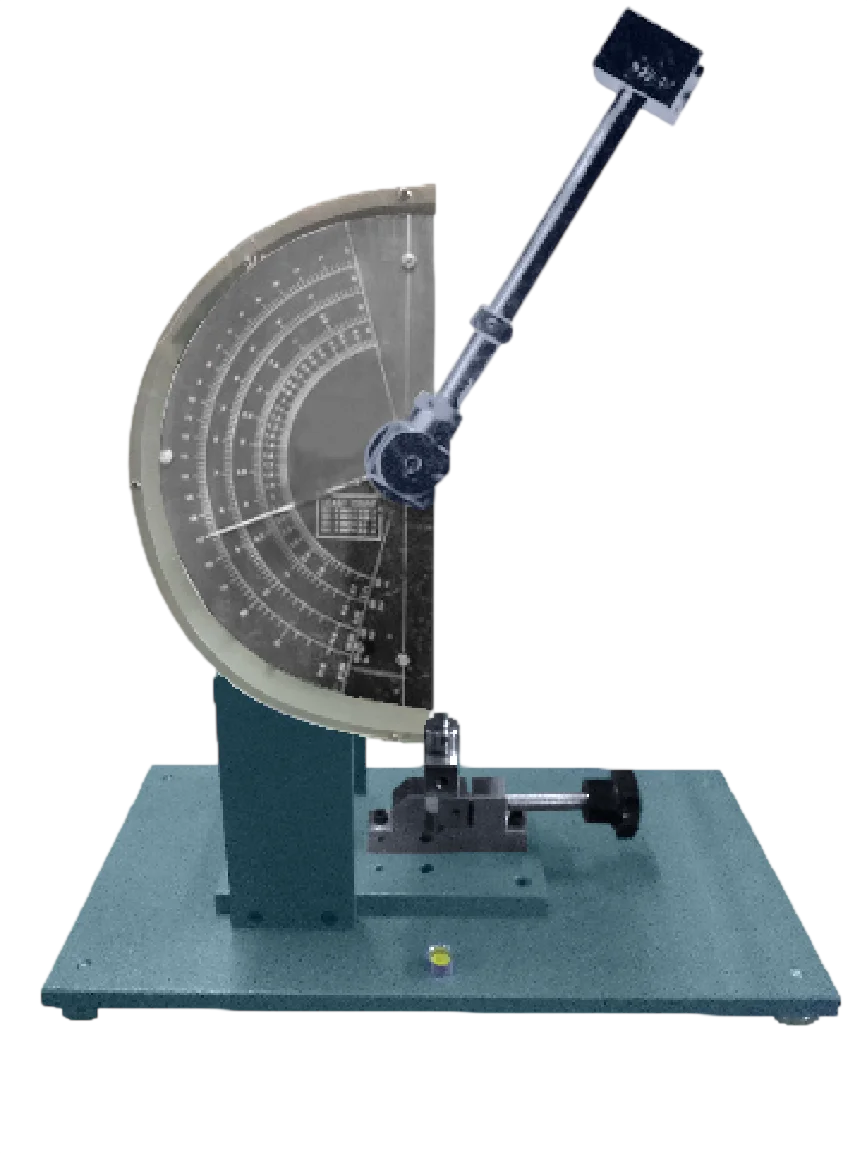
Drop a plastic bottle cap on a hard floor. Flick a plastic clip too hard. Hit a plastic pipe fitting with a wrench by accident. What happens? The good plastic bounces back. The bad plastic cracks or shatters. The difference between those two outcomes is what this machine measures – impact resistance.
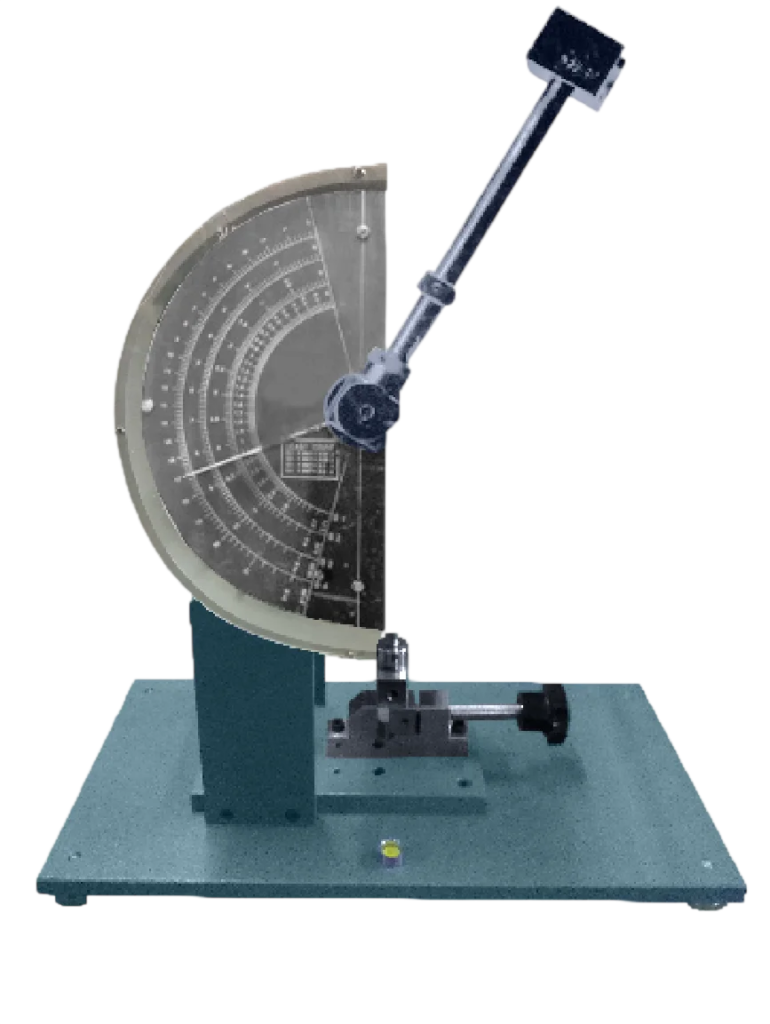
The Finetech Engineering Izod Charpy impact tester manufacturer India product is a pendulum impact testing machine manufacturer India. It works like a heavy swing: a metal pendulum hammer is raised to a fixed height, released, and swings down to hit a plastic specimen. How much energy the specimen absorbs before breaking is the impact strength. A specimen that absorbs a lot of energy = tough plastic. One that absorbs very little = brittle plastic.
As a trusted impact tester for plastics manufacturer India, Finetech Engineering builds this as a combined machine – one that handles both the ASTM D256 Izod impact tester manufacturer India test (where the specimen stands vertically, clamped at the bottom) and the ISO 179 Charpy impact tester manufacturer India test (where the specimen lies horizontally, supported at both ends). You do not need to buy two separate machines – swap the specimen holder and you switch between tests.
As an Izod impact tester manufacturer India and Charpy impact tester manufacturer India in one, the Finetech Engineering machine covers every market: ASTM D256 for North America and Indian domestic specifications, and ISO 179 for European, Asian, and international export customers. One machine serves all your customers.
The V-notch is not arbitrary. It serves a precise mechanical function: creating a controlled stress concentration that forces the specimen to fracture at a known point. Without the notch, the impact energy would be distributed across the entire specimen. With a precisely cut notch from the Finetech V notch cutter for impact testing India, the test primarily measures the material’s resistance to crack propagation – the property that matters for real-world durability.
|
Feature |
Izod Test |
Charpy Test |
|
How the specimen is held |
Standing straight up – clamped at the bottom like a flag in the ground. The top is free to be hit. |
Lying flat – supported at both ends like a bridge. The middle is hit from below. |
|
Where the notch points |
The notch faces the hammer – the hammer hits directly into the notch side. |
The notch faces away from the hammer – the hammer hits the opposite side and the notch opens under tension. |
|
ASTM standard |
ASTM D256 Izod impact tester manufacturer India – ASTM D256 |
ASTM D6110 |
|
ISO standard |
ISO 180 |
ISO 179 Charpy impact tester manufacturer India – ISO 179-1 |
|
Specimen size (ASTM) |
63.5 x 12.7 x 3.2 mm (or 6.4 mm) |
127 x 12.7 x 3.2 mm |
|
Specimen size (ISO) |
80 x 10 x 4 mm |
80 x 10 x 4 mm |
|
Result unit |
ASTM D256 impact tester plastic India – J/m (Joules per metre of notch width) |
J (Joules absorbed) or kJ/m2 per ISO |
|
Most common where? |
India (domestic), North America, many Asian markets |
Europe, ISO-specified international export markets |
|
Which machine? |
Izod impact tester manufacturer India – Finetech Engineering combined machine |
Charpy impact tester manufacturer India – same Finetech Engineering combined machine, different fixture |
|
Feature |
Notched Impact Test (Most Common) |
Unnotched Impact Test |
|
What the specimen looks like |
A rectangular plastic bar with a small V-shaped groove cut into one side – called the notch. |
A plain rectangular plastic bar with no groove at all. |
|
What it measures |
How easily the plastic cracks and breaks when there is already a small flaw or sharp corner in it – which is what happens in real products. |
How much energy is needed to both create a crack AND break the specimen – a higher number because you need both steps. |
|
What values to expect |
Lower numbers – the notch makes it easier to break. Example: ABS notched Izod = 10-20 kJ/m2 |
Higher numbers – no notch means the material must be started from scratch. Example: ABS unnotched Izod = 20-40 kJ/m2 |
|
Standard |
ASTM D256 Izod impact tester manufacturer India spec (notched Izod), ASTM D6110 (notched Charpy), ISO 179 eA (notched Charpy), ISO 180 (notched Izod) |
ASTM D4812 (unnotched Izod), ISO 179 eU (unnotched Charpy) |
|
Do I need a notch cutter? |
YES – you must use a precision motorised notch cutter. A hand-cut or saw-cut notch does not meet the standard and will give wrong results. |
No – just cut rectangular bars. No notch cutter needed. |
|
Which should I use? |
Notched impact is the default for almost all specifications. Use this unless your customer explicitly asks for unnotched. |
Only use unnotched when your customer specification explicitly requires it. |
|
Hammer Energy |
Best For |
Standard |
What Happens If Wrong? |
|
1 J |
Very brittle plastics: PS (polystyrene), PMMA (acrylic), thin specimens |
ISO 179 / ISO 180 |
If too heavy: pendulum barely slows down – result too low and inaccurate |
|
2.75 J |
Brittle-to-medium rigid plastics: PVC-U, unfilled PP, ABS (standard grade) |
ASTM D256 impact tester plastic India, ISO 179 / 180 |
If too light: specimen may not break – invalid test. If too heavy: poor accuracy. |
|
5.5 J (Start here) |
Standard rigid plastics: PP, HDPE, ABS, nylon, PVC – covers most materials. Start with this one. |
ASTM D256 Izod impact tester manufacturer India, ASTM D6110, ISO 179, ISO 180 |
Best starting point. Adjust up or down based on result. |
|
11 J |
Tougher plastics: filled nylon, polycarbonate, impact-modified grades |
ASTM D256, ASTM D6110, ISO 179, ISO 180 |
|
|
22 J |
High-impact materials: fibre-reinforced composites, very tough Engineering plastics |
ISO 179 Charpy impact tester manufacturer India spec, ASTM D6110 |
|
Parameter |
Specification |
|
Product Name |
Izod Charpy Impact Tester Manufacturer India – Pendulum Impact Testing Machine (Pendulum Impact Testing Machine Manufacturer India, Finetech Engineering , Thane) |
|
Also Known As |
Izod Impact Tester Manufacturer India, Charpy Impact Tester Manufacturer India, Impact Tester for Plastics Manufacturer India, pendulum impact tester |
|
Test Modes |
Izod vs Charpy Impact Test Difference – both modes in one machine: Izod (cantilever, vertical) and Charpy (3-point bend, horizontal) |
|
Standards |
ASTM D256 Izod Impact Tester Manufacturer India (ASTM D256), ASTM D6110, ISO 179 Charpy Impact Tester Manufacturer India (ISO 179-1), ISO 180, IS 3400 |
|
Pendulum Hammers |
1 J, 2.75 J, 5.5 J, 11 J, 22 J (interchangeable) |
|
Pendulum Release Angle |
150 degrees (per ASTM / ISO) |
|
Impact Velocity |
Approximately 3.46 m/s at point of impact |
|
Izod Specimen Size |
63.5 x 12.7 x 3.2/6.4 mm (ASTM); 80 x 10 x 4 mm (ISO) |
|
Charpy Specimen Size |
127 x 12.7 x 3.2 mm (ASTM); 80 x 10 x 4 mm (ISO) |
|
Charpy Support Span |
62 mm (ISO); 101.6 mm (ASTM) |
|
Energy Measurement |
Digital readout with automatic friction and windage correction |
|
Resolution |
0.01 J |
|
Notch Requirements |
What Is Notched vs Unnotched Impact Test – Notched: 45 deg V-notch, 0.25 mm tip radius. Unnotched: no notch. |
|
Power Supply |
230V AC, single phase, 50 Hz |
|
Certification |
ISO 9001:2015 certified. NABL-traceable calibration available. |
Step 1: Prepare the Specimens
Step 2: Select the Right Pendulum Hammer
Step 3: Run the Test
Step 4: Calculate and Report
Izod + Charpy in one machine. One investment as your Izod impact tester manufacturer India AND Charpy impact tester manufacturer India covers ASTM D256 Izod impact tester manufacturer India and ISO 179 Charpy impact tester manufacturer India without two machines.
Complete pendulum range 1J to 22J. Every material from brittle PS to tough fibre-reinforced composites is covered. The Finetech Engineering pendulum impact testing machine manufacturer India product handles them all.
Digital with automatic correction. No manual calculation needed. The digital readout corrects for friction and windage automatically – giving you the true absorbed energy value every time.
Complete workflow from one manufacturer. As both your Izod Charpy impact tester manufacturer India and your notch cutter / humidity chamber / specimen press manufacturer, Finetech Engineering supplies the entire impact testing workflow. One supplier, one service contract, everything compatible.
IS 3400 for Indian market compliance. Alongside ASTM and ISO, covers IS 3400 requirements for BIS-mandated impact testing and government tenders.
NABL calibration support. Pendulum energy verification with NABL-traceable certificates. Keeps your impact tester for plastics manufacturer India audit-ready.
| Product | Why Related |
Essential companion – cuts the V-notch in specimens before impact testing |
|
For conditioning specimens at 23°C/50% RH for 40 hours before impact testing |
|
Complementary tensile, compression, and flexural testing |
|
Complementary falling-dart impact testing for plastic films and sheets |
|
Complementary MFI testing – both MFI and impact data needed for complete material characterisation |
|
For cutting rectangular bar specimens from moulded plaques before notching |
|
Browse all specimen preparation equipment |


















All Equipments & specimen preparation products can be customised as per requirements.