






Here is the single most important question a plastic QC lab needs to answer about any compound: how much filler is actually in it? Your supplier says 20% CaCO3. But is it really 20%? You need to prove it, or disprove it, before the batch goes into production.
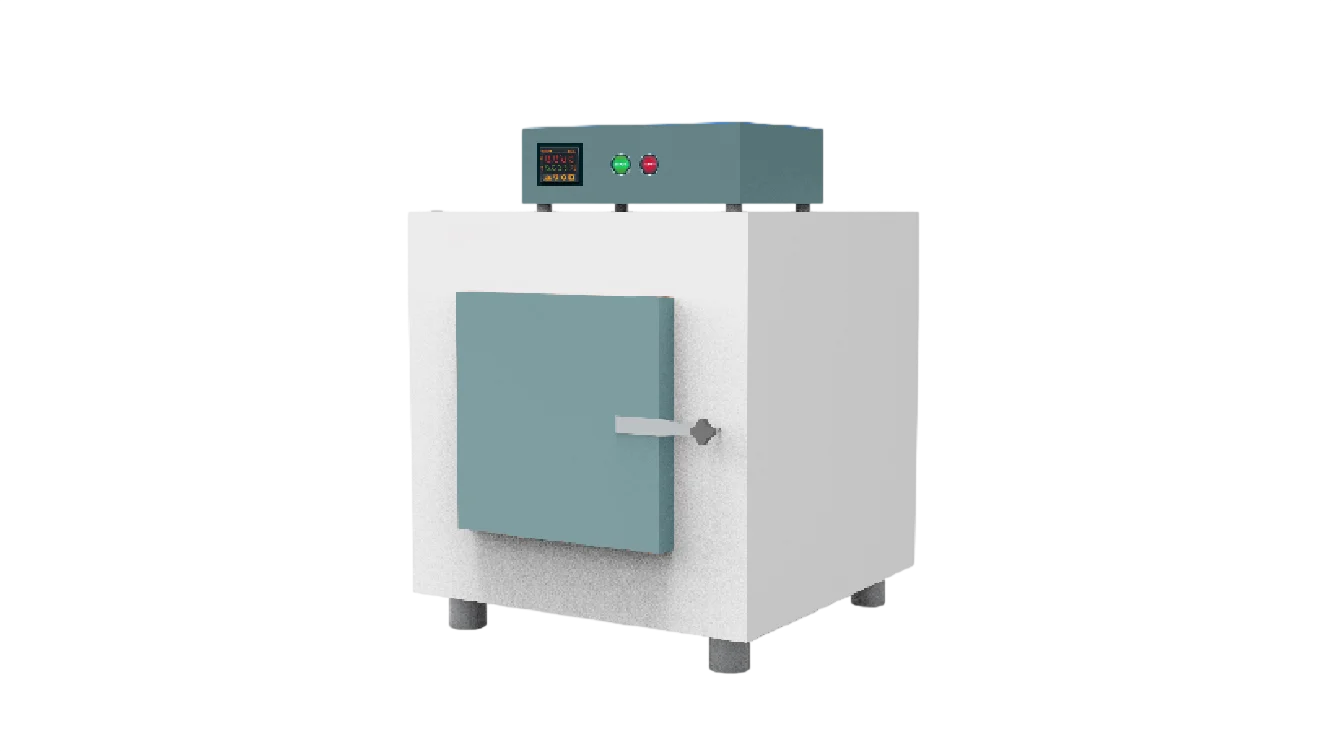
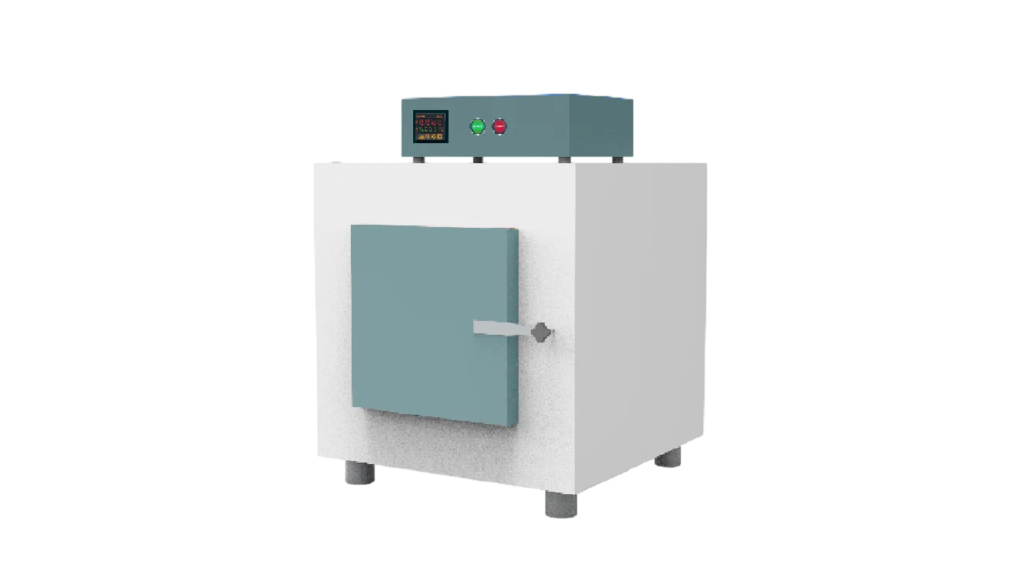
The Finetech muffle furnace manufacturer India product answers this question in one simple test. You put a weighed sample of your plastic into a crucible, put the crucible into the furnace, heat it to 600 degrees C, and wait. The plastic burns away completely. What is left behind – the white or grey ash – is the inorganic filler. You weigh it. That is your ash content percentage. It tells you exactly how much filler is in the compound, to within 0.1%.
As a specialist laboratory muffle furnace manufacturer India, Finetech builds this as a PID muffle furnace manufacturer India – a furnace with a precision PID controller that keeps the temperature exactly at 600 degrees (or any other setpoint) rather than drifting up and down. Temperature stability is not a luxury in ash content testing – even a 25-degree drift changes the result. The ASTM D5630 muffle furnace manufacturer India specification requires 600 plus or minus 25 degrees, and the Finetech controller holds it to plus or minus 1 degree.
The furnace is also built with ceramic fibre muffle furnace India insulation – not the traditional heavy refractory brick that takes an hour to heat up and stays hot for hours after you switch it off. Ceramic fibre insulation heats up in 25-30 minutes and cools down in a fraction of the time. Faster testing, lower energy bills, and a safer lab.
Beyond ash content, this muffle furnace for plastic testing India serves as your general high-temperature tool: loss on ignition (LOI) testing, glass fibre content per ASTM D2584, rubber carbon black analysis per ASTM D297, paper ash per TAPPI T211, and calcination of ceramic or chemical samples. One investment that handles every high-temperature lab application.
Feature | Ash Content | Loss on Ignition (LOI) |
What it measures | The inorganic residue left behind after burning a sample completely. Tells you how much filler is in a plastic or rubber compound. | The weight of material lost during heating – the difference between the original weight and the weight after heating. Tells you how much organic or volatile content was removed. |
How it is calculated | Ash (%) = (Weight of ash / Weight of original sample) x 100. A higher percentage = more filler. | LOI (%) = ((Weight before – Weight after) / Weight before) x 100. A higher percentage = more volatile or organic content. |
Typical temperature | 600 deg C for plastics (ASTM D5630 muffle furnace manufacturer India), 550-800 deg C for rubber, 525 deg C for paper | 950-1050 deg C for most LOI applications (cement, minerals). 800 deg C for some materials. |
Who uses it | Plastic compounders, rubber manufacturers, paper mills, composite producers. Core application for muffle furnace for ash content testing India | Cement manufacturers, ceramics, construction materials labs, mineral testing labs. |
Standard | ASTM D5630 muffle furnace manufacturer India (plastics), ISO 3451 muffle furnace manufacturer India (plastics/rubber), ASTM D297 (rubber), TAPPI T211 (paper) | ASTM C25 (cement), ASTM D7348 (coal), ISO 1744 (glass). Various material-specific standards. |
Same machine? | YES – the same laboratory muffle furnace manufacturer India product from Finetech handles both. Only the temperature setpoint and duration are different. | YES – same PID muffle furnace manufacturer India product. Set to 950 deg C instead of 600 deg C. |
Step 1: Prepare the Crucible
Step 2: Prepare the Sample
Step 3: Ashing in the Muffle Furnace
Step 4: Cool and Weigh
Step 5: Calculate the Ash Content
Ash Content (%) = [(W3 – W1) / (W2 – W1)] x 100
Symbol | What It Means | Plain English |
W1 | Weight of empty crucible | The weight of the empty pot before anything is in it |
W2 | Weight of crucible + original sample | The weight before putting it in the furnace – plastic is still there |
W3 | Weight of crucible + ash after ashing | The weight after the furnace – only ash remains |
Application | What It Measures | Temperature | Standard | Industry |
Ash content – plastics | Inorganic filler loading (CaCO3, talc, glass fibre) | 600 deg C | ASTM D5630 muffle furnace manufacturer India, ISO 3451 muffle furnace manufacturer India | Muffle furnace for plastic testing India – plastic manufacturers and compounders |
Ash content – rubber | Carbon black and mineral fillers in rubber compounds | 550-800 deg C | ASTM D297 | Rubber manufacturers, tyre compounders |
Ash content – paper/pulp | Mineral content of paper and pulp | 525 deg C | TAPPI T211, ISO 2144 | Paper mills, packaging labs |
Glass fibre content | Glass fibre reinforcement percentage in composites | 600 deg C | ASTM D2584 | FRP / composite manufacturing |
Loss on ignition (LOI) | Loss on ignition vs ash content difference – volatile/organic content of raw materials, cements | 950-1050 deg C | ASTM C25, various | Laboratory muffle furnace manufacturer India – cement, ceramics, minerals |
Calcination | Thermal decomposition of carbonates and hydroxides | 800-1100 deg C | Various | PID muffle furnace manufacturer India – ceramics, chemicals |
Heat treatment | Hardening, annealing, tempering of small metal parts | As required | Various | Metallurgy, tool making |
Parameter | Specification |
Product Name | Muffle Furnace Manufacturer India – Laboratory High-Temperature Furnace (Laboratory Muffle Furnace Manufacturer India, Finetech Engineering) |
Also Known As | Muffle Furnace for Ash Content Testing India, Muffle Furnace for Plastic Testing India, ASTM D5630 Muffle Furnace Manufacturer India, ashing furnace |
Maximum Temperature | 1100 deg C standard. 1200 deg C and 1400 deg C models available on request. |
Temperature Control | PID Muffle Furnace Manufacturer India – PID microprocessor controller with digital display. Programmable ramp-and-soak profiles. |
Temperature Accuracy | Plus or minus 1 deg C at setpoint |
Temperature Uniformity | Plus or minus 5 deg C across chamber at 600 deg C (model-dependent) |
Insulation | Ceramic Fibre Muffle Furnace India – lightweight ceramic fibre blanket: rapid heat-up (600 deg C in under 30 min), energy-efficient, cool exterior surface |
Chamber Sizes | 4 L, 8 L, 12 L, 16 L. Larger sizes on request. |
Chamber Material | High-purity alumina ceramic / ceramic fibre board |
Heating Elements | Kanthal wire (standard) or SiC elements (model-dependent) |
Thermocouple | K-type thermocouple for accurate temperature feedback |
Exterior | Double-walled MS steel, powder coated – cool exterior during operation |
Standards Supported | ASTM D5630 Muffle Furnace Manufacturer India, ISO 3451 Muffle Furnace Manufacturer India, ASTM D2584, ASTM D297, TAPPI T211 |
Power Supply | 230V AC, single phase, 50 Hz. Higher-capacity models: 3-phase. |
Certification | ISO 9001:2015 certified manufacturing. NABL-traceable temperature calibration available. |
Chamber Size | Crucible Capacity | Best For |
4 L (compact) | 4-6 standard crucibles | Muffle furnace for plastic testing India – small QC labs with low sample volume; single-operator testing |
8 L (standard) | 8-12 crucibles | Standard QC labs. The most popular size for muffle furnace for ash content testing India applications – plastic and rubber testing. Best balance of capacity, heat-up time, and energy. |
12 L | 12-18 crucibles | High-volume QC labs; batch testing of multiple samples at once |
16 L (large) | 18-24 crucibles | Laboratory muffle furnace manufacturer India large format – high-throughput labs, R&D with multiple experiments, cement and mineral labs running LOI batches |
These are the typical ash values you will get when running the how to do ash content test plastics ASTM D5630 procedure on common materials:
Material | Filler Type | Typical Ash Content | Standard |
Unfilled PP / PE | None | Less than 0.5% | ASTM D5630 muffle furnace manufacturer India spec |
CaCO3-filled PP (20% loaded) | Calcium carbonate | 18-22% | ASTM D5630 muffle furnace manufacturer India / ISO 3451 muffle furnace manufacturer India |
Talc-filled PP (30% loaded) | Talc | 28-32% | ASTM D5630 muffle furnace manufacturer India spec |
Glass-fibre-reinforced nylon 33% | Glass fibre | 31-35% | ASTM D2584 |
PVC compound | CaCO3, stabilisers | 5-40% (varies widely) | ISO 3451 muffle furnace manufacturer India spec |
Paper / paperboard | Mineral coatings, fillers | 5-20% | TAPPI T211 |
PID precision – not a thermostat. Many cheap muffle furnaces use a simple on/off thermostat that overshoots and undershoots by 10-20 degrees. A 20-degree error at 600 degrees C changes your ash content result. The Finetech PID muffle furnace manufacturer India product uses a true PID controller that constantly corrects temperature to stay within plus or minus 1 degree C.
Ceramic fibre – not refractory brick. Traditional brick-lined furnaces take an hour to reach 600 degrees C and stay hot for hours after use. The Finetech ceramic fibre muffle furnace India product heats up in under 30 minutes and cools faster – saving operator time, saving energy, and keeping the exterior surface safe to approach during the test.
Purpose-built for plastic and rubber labs. The temperature range covers ASTM D5630 muffle furnace manufacturer India (600 deg C for plastics), ISO 3451 muffle furnace manufacturer India (same), ASTM D297 (rubber ashing), and ASTM D2584 (glass fibre content). One muffle furnace for plastic testing India that handles every ashing standard your auditors will ask for.
Multiple sizes – same quality and service. 4 L, 8 L, 12 L, 16 L – all from the same laboratory muffle furnace manufacturer India. Same controller platform, same heating element type, same spare parts across the range.
Calibration and AMC support. Temperature calibration with traceable thermocouple verification, plus AMC plans. Keeps your muffle furnace for ash content testing India audit-ready and NABL compliant.
| Product | Why Related |
Complementary plastic QC – MFR and ash content are both incoming material checks |
|
Complementary mechanical testing – filler loading affects tensile, flexural, and compression properties |
|
Impact testing of filled plastics – filler content affects toughness |
|
For conditioning specimens before mechanical testing |
|
Complementary fire safety testing – fillers affect UL 94 classification |
|
Complementary hardness testing – filler loading directly affects hardness |

















All Equipments & specimen preparation products can be customised as per requirements.
We provide NABL-traceable dimensional certification for the notch geometry produced by the cutter — verifying that the 45° angle and 0.25 mm tip radius meet the standard requirements. This documentation supports your NABL accreditation application and is included when requested.