





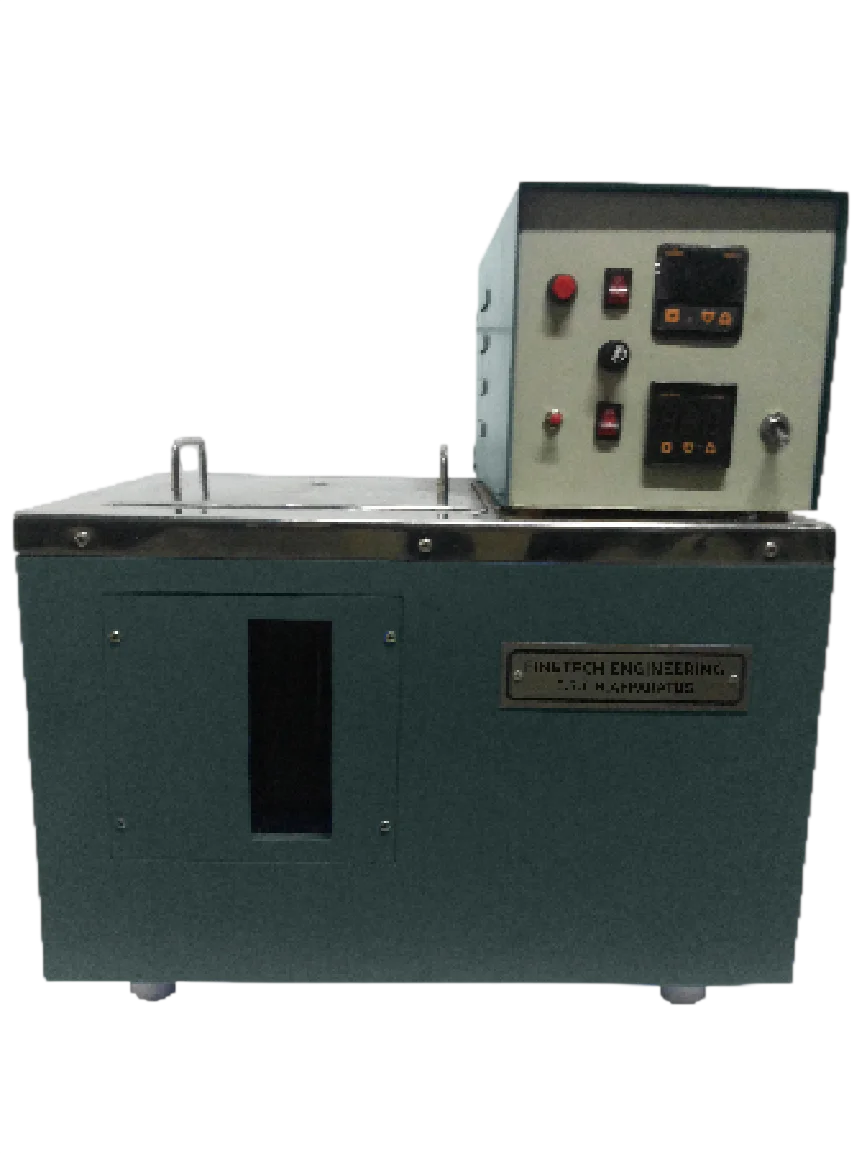
Understanding “what is environmental stress cracking HDPE”: the Finetech Engineering environmental stress cracking resistance tester India evaluates how well polyethylene (HDPE, LDPE, LLDPE) resists cracking when exposed to a combination of mechanical stress and a chemical stress-cracking agent. Environmental stress cracking is the most common cause of premature failure in polyethylene products – pipes that crack along the extrusion line, bottles that split at the base, containers that fracture at weld lines. It happens slowly, often without visible warning.
The bent strip test per ASTM D1693 works by creating the worst-case conditions for stress cracking in an accelerated laboratory setting. A rectangular strip of polyethylene is notched on one surface (creating a controlled flaw), bent into a tight U-shape inside a brass channel holder (creating high tensile stress at the notch), and immersed in a surface-active reagent (typically Igepal CO-630, a nonylphenol ethoxylate) at 50°C. The reagent accelerates crack initiation at the notch. The time until 50% of specimens exhibit visible stress cracks (the F₅₀ value) is the material’s ESCR rating.
Among the IS 4984 mandatory tests for HDPE pipe India, ESCR testing is the most critical. The correct HDPE pipe ESCR testing equipment IS 4984 India specifies a minimum ESCR of 1000 hours per ASTM D1693 Condition B for PE 80 and PE 100 grades. Every batch of HDPE pipe resin and every production lot must demonstrate that it passes this requirement.
Tip: ESCR is the gatekeeper test for HDPE pipe resin qualification. As your trusted ESCR apparatus manufacturer India and polyethylene stress cracking tester manufacturer India, Finetech supplies the essential equipment for every HDPE pipe manufacturer and pipe resin supplier. A resin that fails ESCR cannot be used for pressure pipes, regardless of its tensile or MFI values.
Step 1: Specimen Preparation
Step 2: Bend and Load
Step 3: Immerse
Step 4: Inspect and Record
Condition | Specimen Thickness | Density Range | Reagent | Temperature | Typical Use |
A | 1.9 mm | 0.910–0.925 g/cm³ | 100% Igepal CO-630 | 50°C | Low-density PE (LDPE, LLDPE) |
B | 3.2 mm | >0.925 g/cm³ | 10% Igepal in water | 50°C | High-density PE (HDPE) – pipe grades |
C | 1.9 mm | >0.925 g/cm³ | 100% Igepal CO-630 | 50°C | Accelerated test for very high ESCR materials |
Tip: Condition B is by far the most commonly tested condition in India – it applies to HDPE pipe resins (PE 80, PE 100) tested per IS 4984. If your specification says “ESCR per ASTM D1693,” confirm which condition is required.
Parameter | Specification |
Product Name | ESCR Apparatus (Environmental Stress Cracking Resistance Tester) |
Test Method | Bent strip method per ASTM D1693 |
Number of Test Tubes | 10 per bath (standard); additional capacity available |
Bath Type | Constant-temperature water bath |
Temperature | 50°C ±0.5°C (PID controlled) |
Bath Capacity | Sufficient to immerse all 10 test tubes simultaneously |
Specimen Size | 38 × 13 mm strips, 1.9 mm or 3.2 mm thick |
Specimen Holders | Brass channel holders per ASTM D1693 |
Nicking Tool | Controlled-depth nicking blade for specimen notching |
Reagent | Igepal CO-630 (10% solution or 100%) – user-supplied |
Test Tube Material | Borosilicate glass with screw caps |
Timer / Clock | Hours counter for tracking test duration |
Power Supply | 230V AC, single phase, 50 Hz |
Standards | ASTM D1693, IS 2508, IS 4984 |
Certification | ISO 9001:2015 certified manufacturing |
Note: Igepal CO-630 reagent is a consumable that the user must procure separately. Finetech supplies the complete apparatus including specimen holders, nicking tool, test tubes, and constant-temperature bath.
Built for IS 4984 compliance. Trusted HDPE pipe ESCR testing equipment IS 4984 India. Designed to meet the ESCR testing requirements of IS 4984, the Indian standard for HDPE water supply pipes. Every HDPE pipe manufacturer in India needs this test.
PID temperature control ±0.5°C. ESCR is temperature-sensitive. The bath must hold 50°C with minimal fluctuation over weeks of continuous operation. The PID controller ensures this.
Complete kit including nicking tool. Specimen holders, nicking tool, test tubes, and bath are supplied as a complete set. No need to source components separately.
Manufacturer, not trader – best ESCR apparatus price India direct from our Thane facility with spare parts, replacement holders, and calibration. Built at our Thane facility. Direct access to spare parts, replacement holders, and calibration.
Calibration and AMC support. Temperature calibration, nicking tool inspection, and scheduled bath maintenance under AMC.
| Product | Why Related |
MFI + ESCR are the two critical incoming QC tests for HDPE pipe resin |
|
For pipe reversion/shrinkage testing – complementary IS 4984 test |
|
Tensile testing of pipe material |
|
For conditioning specimens |
|
Thermal property testing of pipe-grade polyethylene |
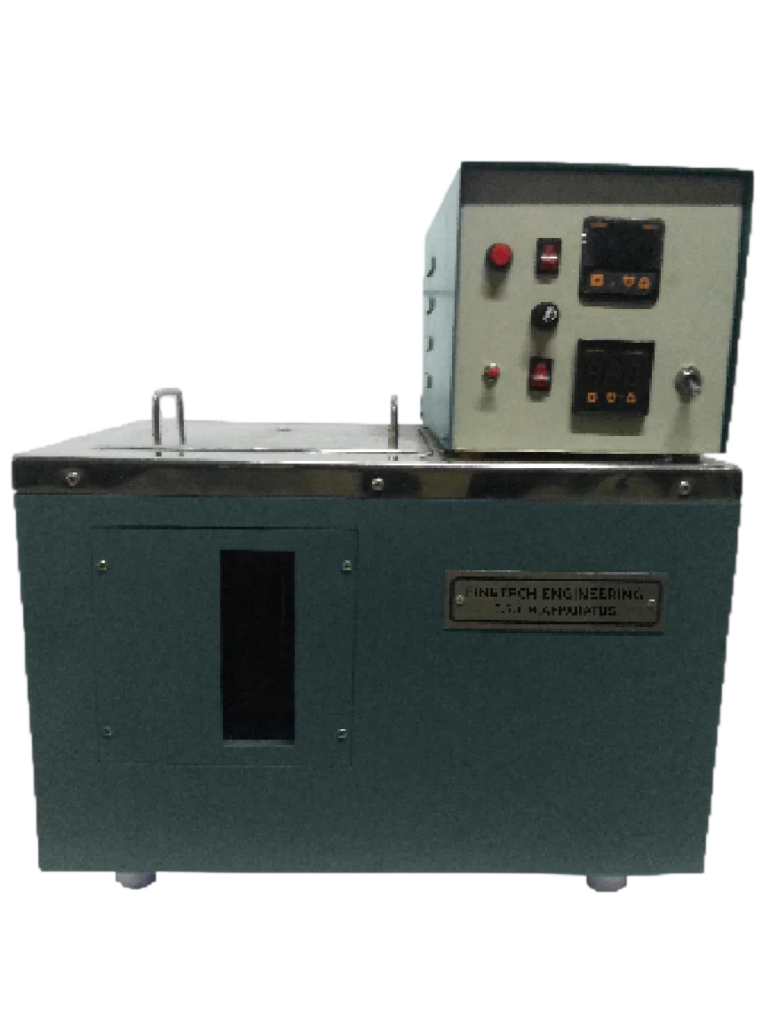












All Equipments & specimen preparation products can be customised as per requirements.
Answering “what is environmental stress cracking HDPE”: ESC is the formation of cracks in a plastic material when simultaneously exposed to mechanical stress and a chemical agent. Neither the stress alone nor the chemical alone would cause failure – but the combination does. It is the most common cause of premature failure in polyethylene products: pipes, bottles, containers, and geomembranes.
Answering “what is ESCR F50 value polyethylene”: F50 is the time in hours at which 50% of the test specimens exhibit visible stress cracks. A higher F50 means better ESCR. For HDPE pipe grades per IS 4984, the minimum ESCR requirement is typically 1000 hours (Condition B).
Igepal CO-630 (nonylphenol ethoxylate) is the standard stress-cracking agent specified by ASTM D1693. It accelerates crack initiation by reducing the surface energy at the crack tip, making the crack grow faster than it would in service. This acceleration allows a test that would take years in the field to be completed in hours or weeks in the lab.
It depends on the material. Poor ESCR materials may crack in 10–100 hours. Good pipe-grade HDPE (PE 100) typically survives 1000–5000+ hours without cracking. Some very high ESCR grades may exceed 10,000 hours. The test runs continuously until 50% of specimens fail or the specified pass time is reached.
Yes. Among the IS 4984 mandatory tests for HDPE pipe India, ESCR per ASTM D1693 Condition B is required. BIS and government procurement agencies require this test. Without the ESCR apparatus, you cannot certify HDPE pipe compliance per IS 4984.
Yes. As a certified polyethylene stress cracking tester manufacturer India, Finetech’s ESCR apparatus meets the requirements of ASTM D1693. We provide temperature calibration certificates and nicking tool verification that support NABL accreditation for ESCR testing.