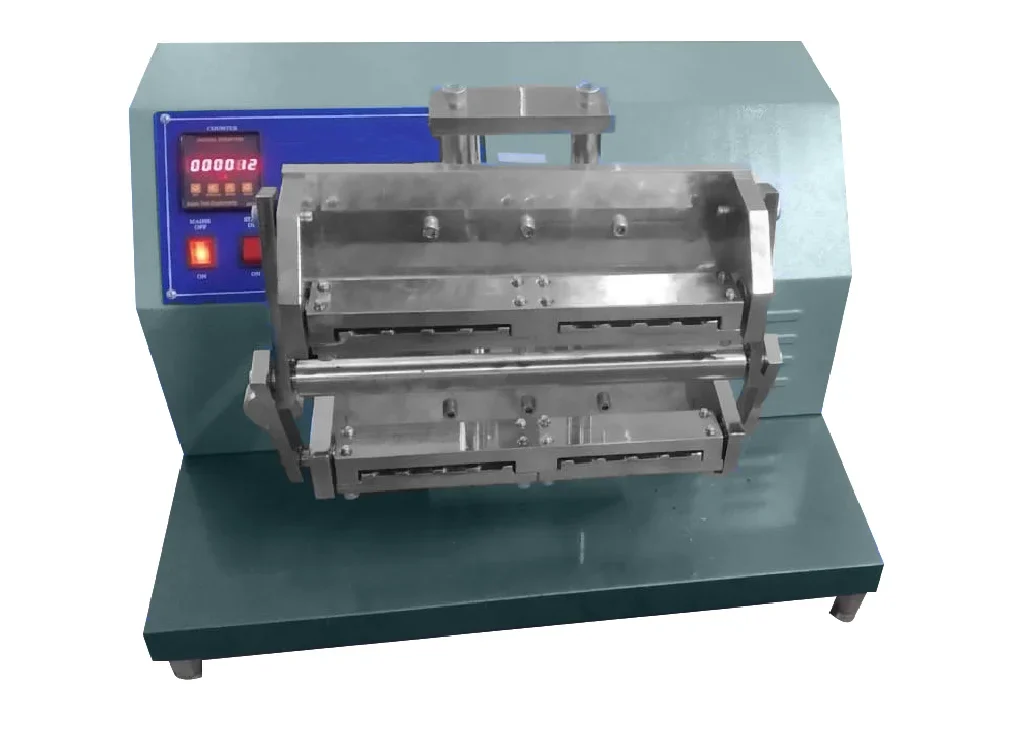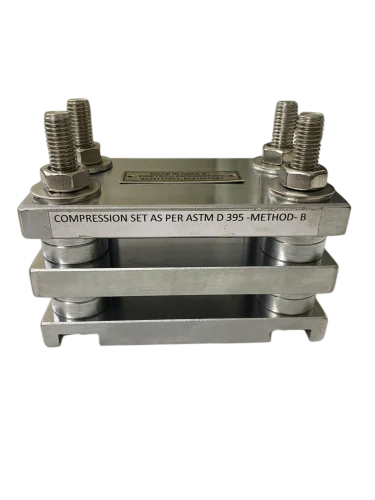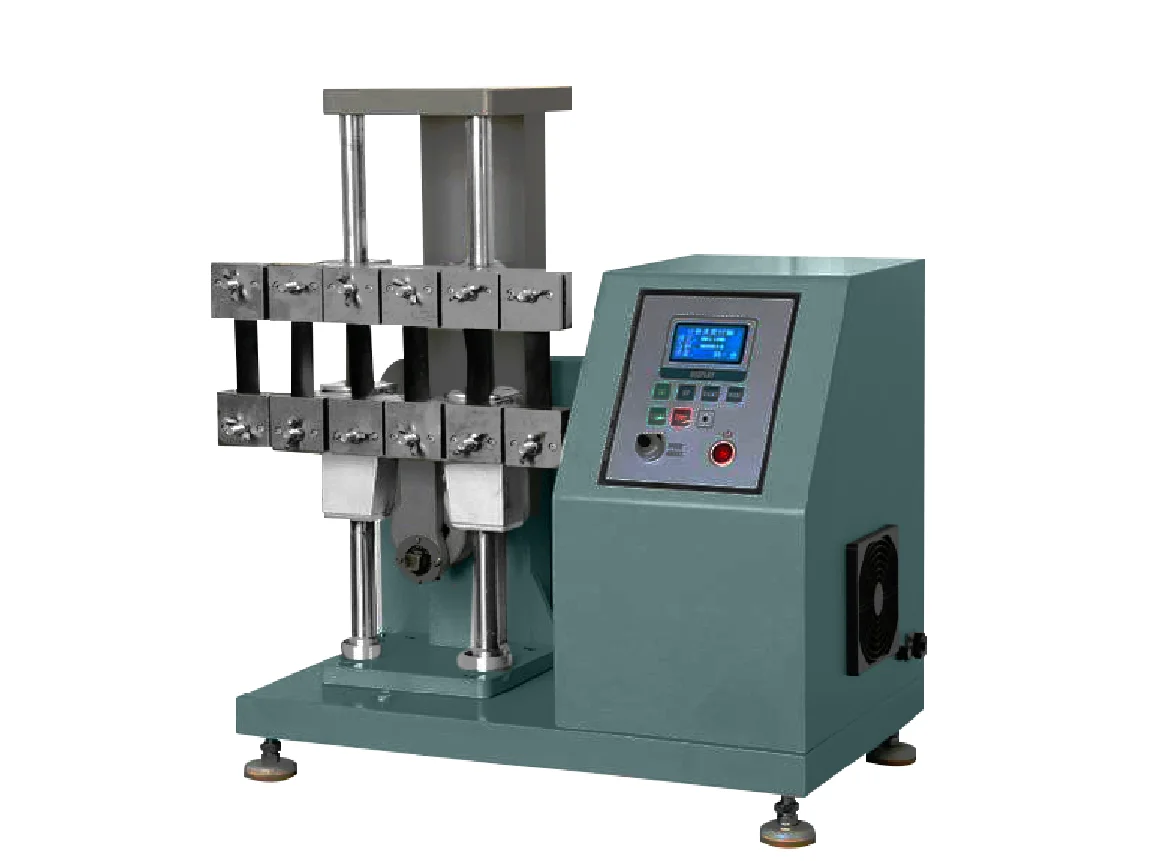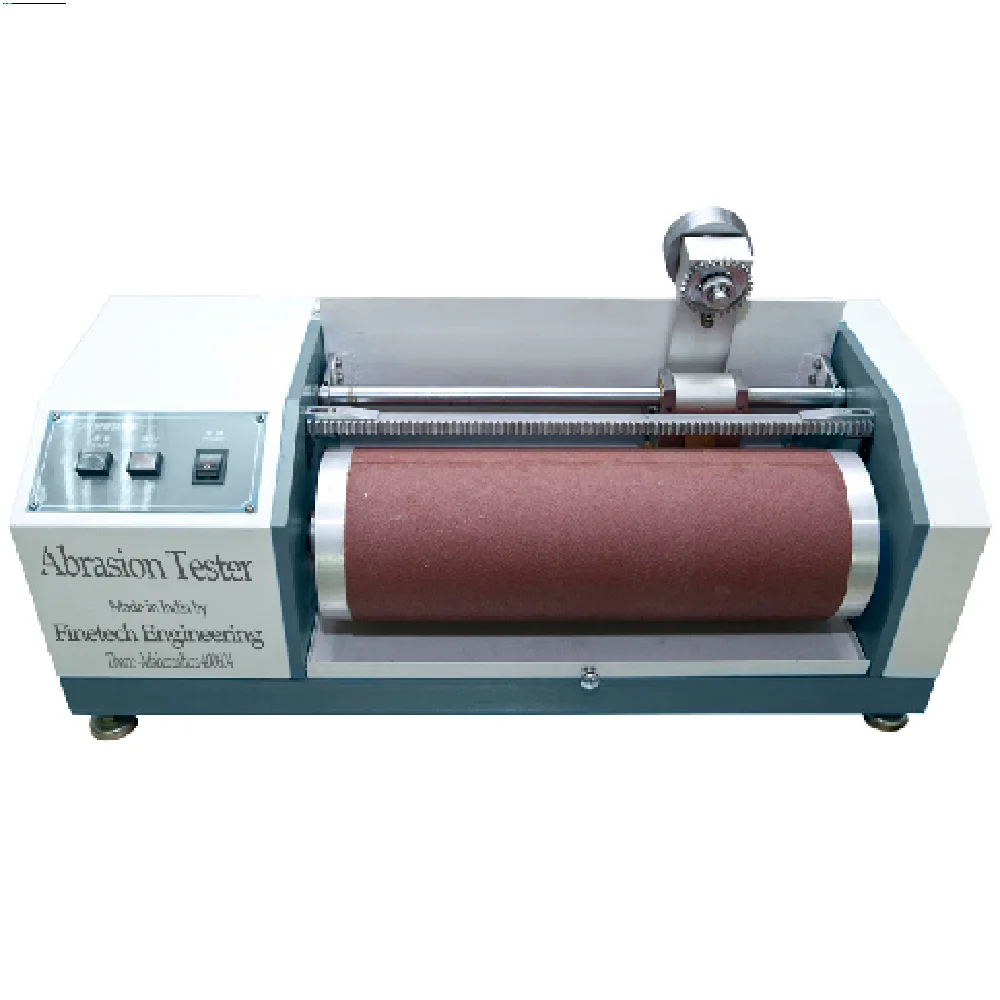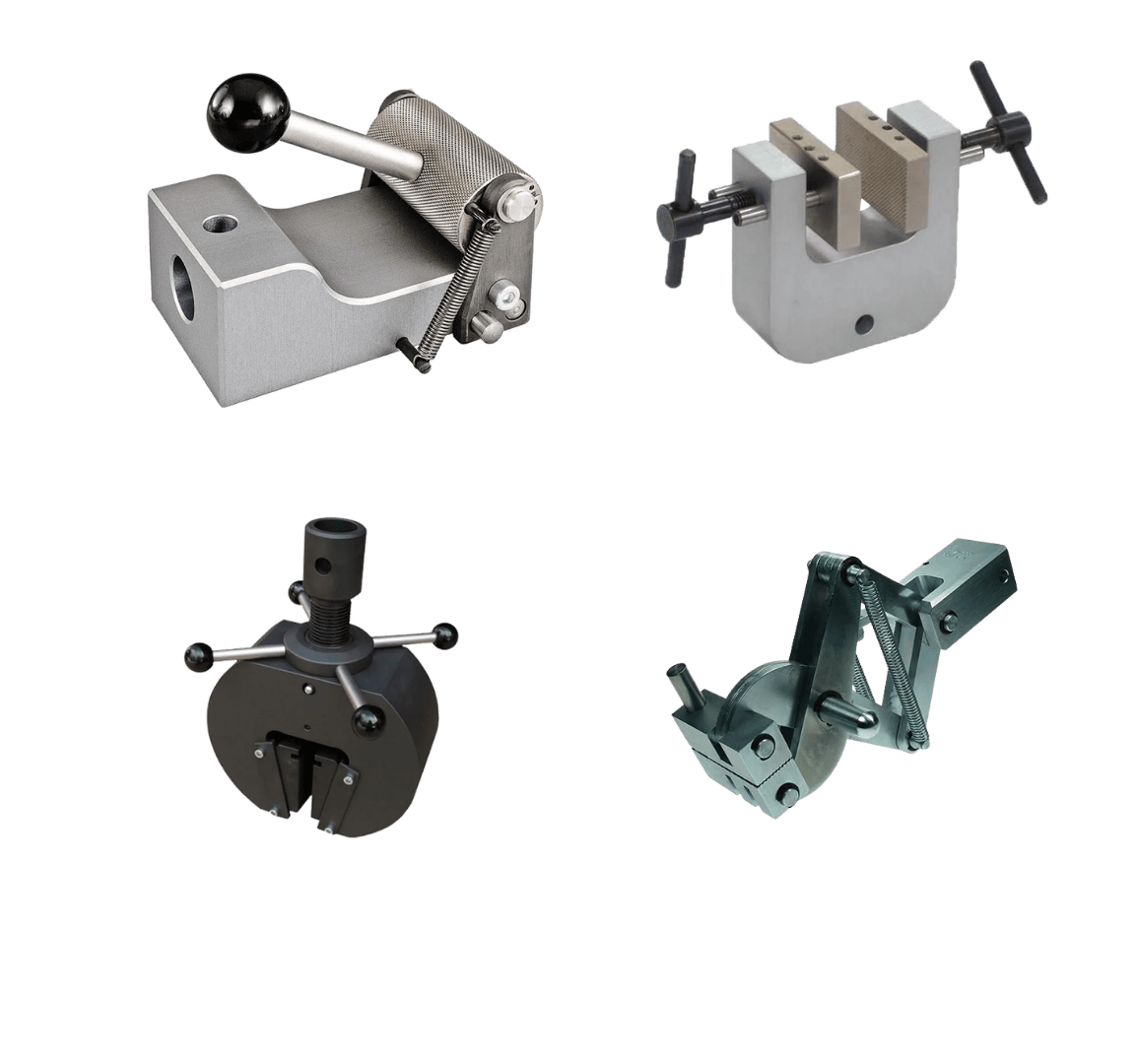







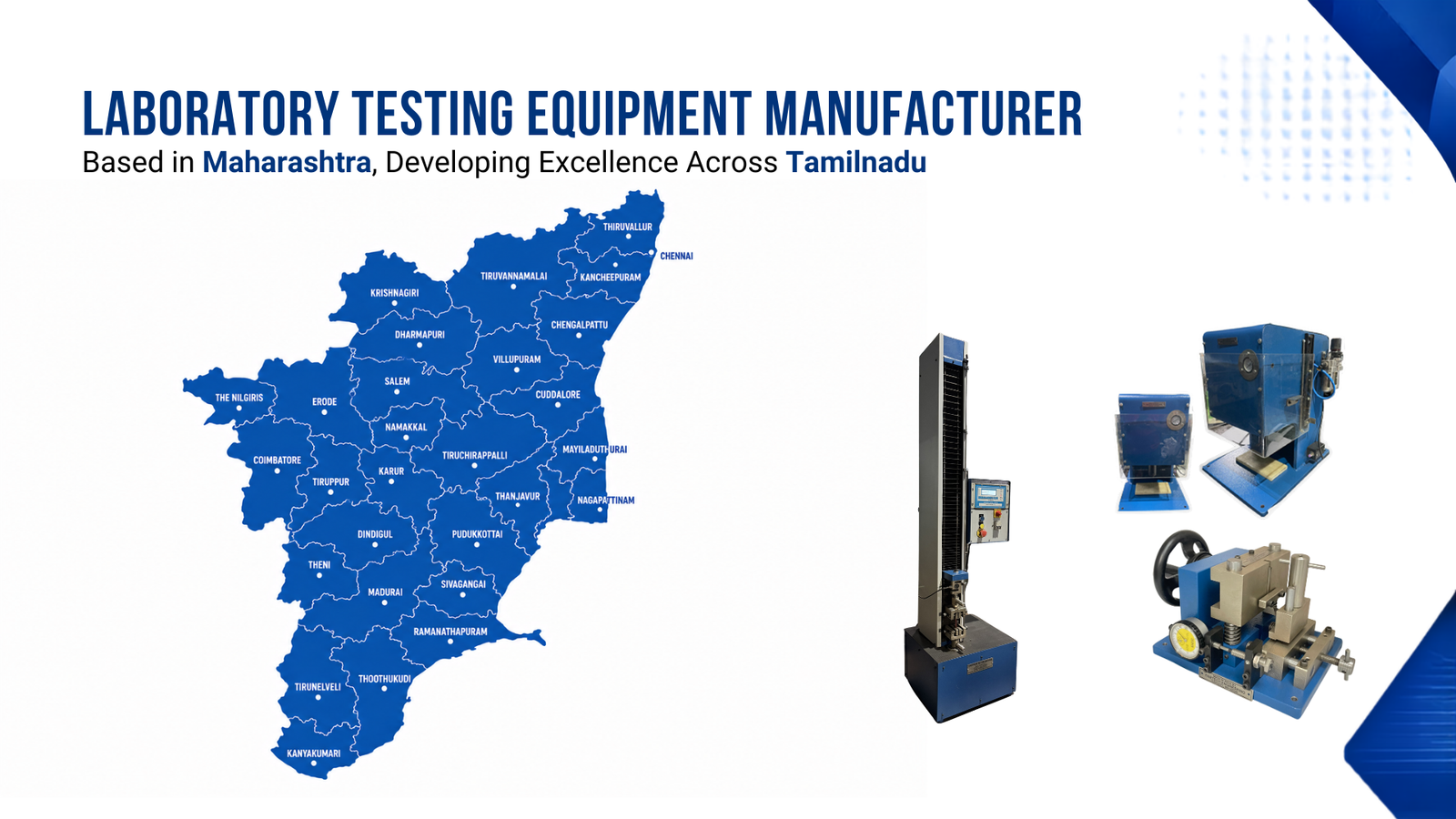
Tamil Nadu is one of India’s largest automotive and tyre-component manufacturing states, with a dense cluster of OEMs and Tier-1 suppliers around Chennai and Oragadam, alongside a significant rubber footwear and industrial rubber goods sector extending toward Coimbatore. These industries depend on rubber compounds that perform reliably under sustained compression, repeated flexing, abrasive wear and impact – which is why compression set testing, flex-fatigue testing and abrasion testing form the backbone of rubber QC across the state. Finetech Engineering is a Rubber Laboratory Testing Equipment manufacturer Tamil Nadu plants have sourced from since 2023, supplying this full testing range from our Wagle Estate, Thane factory.
As a Rubber Laboratory Testing Equipment supplier Tamil Nadu automotive and tyre-component makers rely on, the Compression Set Apparatus Tamil Nadu plants order most often qualifies rubber seals, gaskets, bushings and anti-vibration mounts – components that must maintain sealing or damping force over years of service. Alongside compression set, Tamil Nadu’s tyre and footwear manufacturers run flex-fatigue and rebound-resilience testing to qualify compounds for their specific dynamic-loading applications.
We dispatch and install across the Rubber Laboratory Testing Equipment manufacturer Chennai-Oragadam-Coimbatore industrial belt, with regular scheduled delivery routes covering Chennai, Oragadam, Sriperumbudur and Coimbatore. NABL traceable Rubber Laboratory Testing Equipment Tamil Nadu calibration is supplied with every instrument, supporting NABL-accredited labs and the supplier-audit requirements of Tamil Nadu’s automotive and tyre OEMs.
Tip: Tamil Nadu’s tyre-component and automotive rubber sector typically qualifies a new compound against three tests together: compression set (for seals and mounts), an abrasion test (for tread and wear-facing components), and a flex or rebound test (for dynamic-loading components like sidewalls and bushings). Tell us the component’s application and we will recommend the right combination. Answering ‘which three tests qualify rubber compound tyre component’ development directly: compression set, an abrasion test, and a flex or rebound test – run together, not in isolation.
Ross flex test vs Bennewart flex test which to use is a question we hear often from Tamil Nadu’s footwear and automotive rubber component manufacturers choosing their first flex-fatigue instrument. Both tests measure how a rubber specimen resists cracking under repeated flexing, but they load the specimen very differently:
Feature | Ross Flex Test (ASTM D1052) | Bennewart Flex Test (ASTM D430) |
Specimen shape | Flat strip, pre-cut or moulded with a groove | Flat strip flexed over a rounded mandrel |
Loading mode | Specimen is flexed and twisted through a wide bending arc, combining bending with some torsional stress | Specimen is repeatedly bent over a fixed-radius mandrel under tension – a simpler, purely bending load |
Severity | More aggressive – the wider bending arc and torsional component accelerate crack growth | Less aggressive per cycle – tests pure flex fatigue without added torsional stress |
Typical Tamil Nadu application | Footwear soles and heavy-flex industrial rubber goods needing a severe, realistic flex test | Rubber hoses, belting and sleeves flexed over a pulley, roller or similar fixed radius in service |
What it reveals | Crack growth resistance under combined bending and twisting, closer to how a shoe sole flexes underfoot | Crack initiation and growth under pure repeated bending, closer to how a hose flexes over a fixed radius |
For Tamil Nadu’s footwear manufacturers, the Ross flex test vs Bennewart flex test which to use choice usually comes down to the Ross test, since it better represents the combined bending-and-twisting motion a shoe sole experiences during walking. For rubber hose, belting and sleeve manufacturers, the Bennewart test better represents the simpler bending motion the product experiences flexing over a pulley or roller. Some Tamil Nadu plants supplying both markets keep both instruments.
Note: Results from the Ross and Bennewart tests are not directly comparable to each other – they use different loading mechanisms and are expressed differently (Ross: cycles to a specified crack growth length; Bennewart: cycles to crack initiation or growth). Always confirm which test your customer specification names, since substituting one for the other will not satisfy a specification calling for a specific method.
Rubber abrasion resistance standards comparison vary more than most rubber testers realise – there are several distinct methods in use worldwide, each with a different mechanism and reported unit. Tamil Nadu’s tyre and rubber-component exporters, in particular, need to know which standard a customer specification calls for, since the numbers from different methods are not interchangeable. Here is a reference table of the major methods:
Standard | Mechanism | Reported Result | Common Use |
DIN ISO 4649 / ISO 4649 | Specimen rubbed against a rotating drum covered with abrasive paper, under fixed load | Volume loss (mm³), relative to a reference compound | Dominant standard in India and much of the world for general rubber goods, referenced in IS 3400 |
ASTM D1630 (Akron) | Disc-shaped specimen rolls against an abrasive wheel at a slip angle | Volume loss per unit distance travelled | Tyre tread compounds, especially for US-origin specifications |
ASTM D5963 | Similar rotating-drum method to DIN ISO 4649, the US-adopted equivalent | Volume loss (mm³) | US specifications requiring an ASTM-numbered abrasion method rather than an ISO/DIN one |
Taber Abrasion (ASTM D3389 / D4060) | Rotating abrasive wheels press down on a flat specimen disc | Weight loss (mg) per specified number of cycles | Rubber and coated-fabric sheet goods, flooring, coatings |
NBS Abrasion | Specimen rubbed against abrasive paper on a rotating drum, similar in concept to DIN but with different reference compound | Abrasion index relative to a reference rubber | Historically used in the US rubber industry; less common today but still referenced in some legacy specifications |
For most Tamil Nadu tyre-component and general rubber goods manufacturers, DIN ISO 4649 is the standard abrasion test to have on hand, since it is the most widely referenced method domestically and matches IS 3400. Export-focused manufacturers supplying US-origin OEMs may also need the Akron test (ASTM D1630) or ASTM D5963, depending on which the customer specification names. For exporters weighing the DIN ISO 4649 vs Akron abrasion which standard question, the short answer is: match whichever the customer specification names, since the two figures are not interchangeable even though both report a volume-related result.
Tip: If a customer specification simply says “abrasion resistance” without naming a standard, always ask which method they mean before quoting a number – a DIN ISO 4649 volume-loss figure and an Akron volume-loss-per-distance figure use the same units (volume) but are not measuring the same thing and cannot be compared directly.
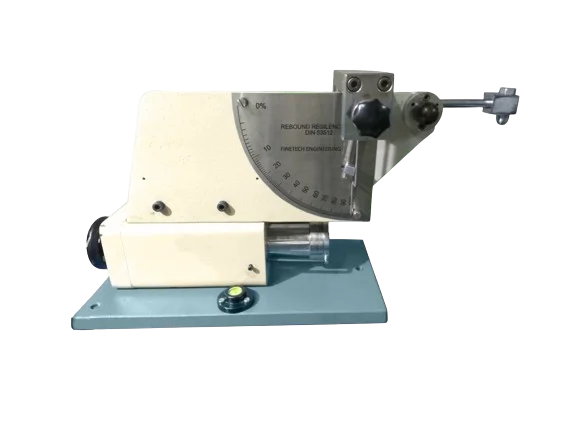
Pendulum rebound resilience explained – rebound resilience measures how much energy a rubber specimen returns after being struck, expressed as a percentage of the energy delivered. It is a key property for Tamil Nadu’s tyre and anti-vibration mount manufacturers, since it is directly related to heat build-up and rolling resistance in dynamic rubber applications. Here is how the pendulum method works (per ASTM D2632 / ISO 4662):
Step | What Happens |
1. Mount the specimen | A rubber test specimen (typically a disc or slab of specified thickness) is mounted on a rigid base. |
2. Raise the pendulum | A pendulum with a hemispherical striking head is raised to a fixed starting angle, giving it a known, repeatable amount of potential energy. |
3. Release and strike | The pendulum is released and swings down to strike the specimen, transferring energy into it on impact. |
4. Measure the rebound | Some of the impact energy is absorbed by the rubber (as heat, through hysteresis) and some is returned, causing the pendulum to rebound to a new angle on the far side. |
5. Calculate resilience | Rebound resilience (%) is calculated from the rebound angle relative to the starting angle – a higher percentage means the rubber returned more energy and absorbed less internally. |
Low rebound resilience means high internal energy absorption (hysteresis) – useful for vibration-damping mounts, where you want the rubber to absorb energy rather than bounce it back. High rebound resilience is generally preferred for tyre tread compounds, since energy absorbed internally as heat during rolling translates directly into fuel consumption and reduced tyre life. Tamil Nadu’s tyre and anti-vibration component manufacturers use this single test to steer compound development in opposite directions depending on the application.
Tip: Rebound resilience is temperature-sensitive – rubber typically shows lower resilience (more energy absorption) at low temperatures and higher resilience at elevated temperatures. If your specification requires testing at a specific temperature, confirm the pendulum tester is fitted with temperature conditioning, or condition specimens separately before testing.
As a Rubber Laboratory Testing Equipment supplier Tamil Nadu plants have used since 2023, Finetech Engineering supplies the following instruments, each built to the named ASTM/ISO/DIN standard:
| Instrument | What It Tests | Primary Standards | Why Tamil Nadu Plants Need It |
| Compression Set Apparatus | Permanent deformation of rubber after sustained compression | ASTM D395, ISO 815, IS 3400 | Qualification test for seals, gaskets, bushings and anti-vibration mounts |
| DIN Abrasion Tester | Volume loss of rubber under abrasive wear | DIN ISO 4649, ISO 4649 | Wear-resistance QC for tyre compounds, footwear soles and industrial rubber goods |
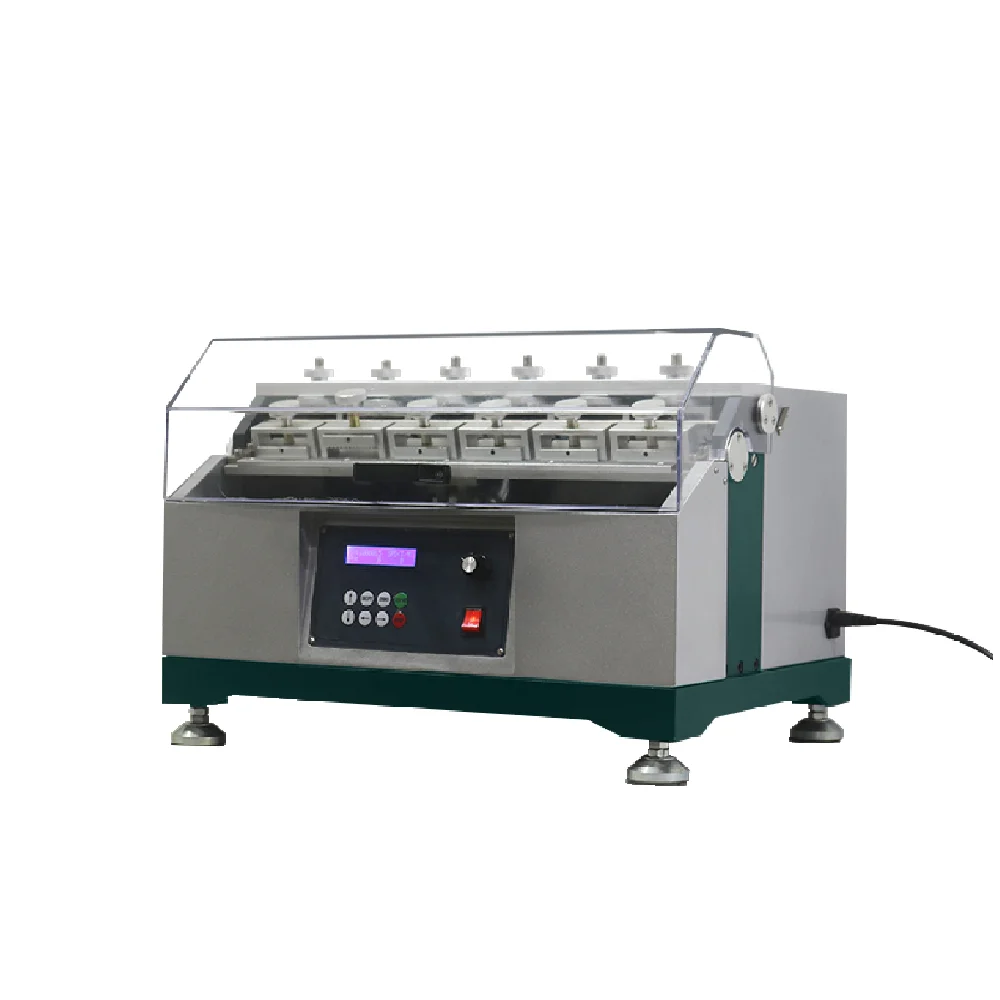
| Ross Flex Tester | Flex-cracking resistance under a severe bending-and-twisting arc | ASTM D1052, ISO 132 | Footwear soles and industrial rubber goods subject to severe flexing |
| Bennewart Flex Tester | Flex fatigue resistance under repeated bending over a fixed radius | ASTM D430 | Rubber hoses, belting and sleeves flexed over a pulley or roller |
| Pendulum Rebound Resilience Tester | Rebound resilience / energy return of rubber after impact | ASTM D2632, ISO 4662 | Tyre tread compound development and anti-vibration mount qualification |
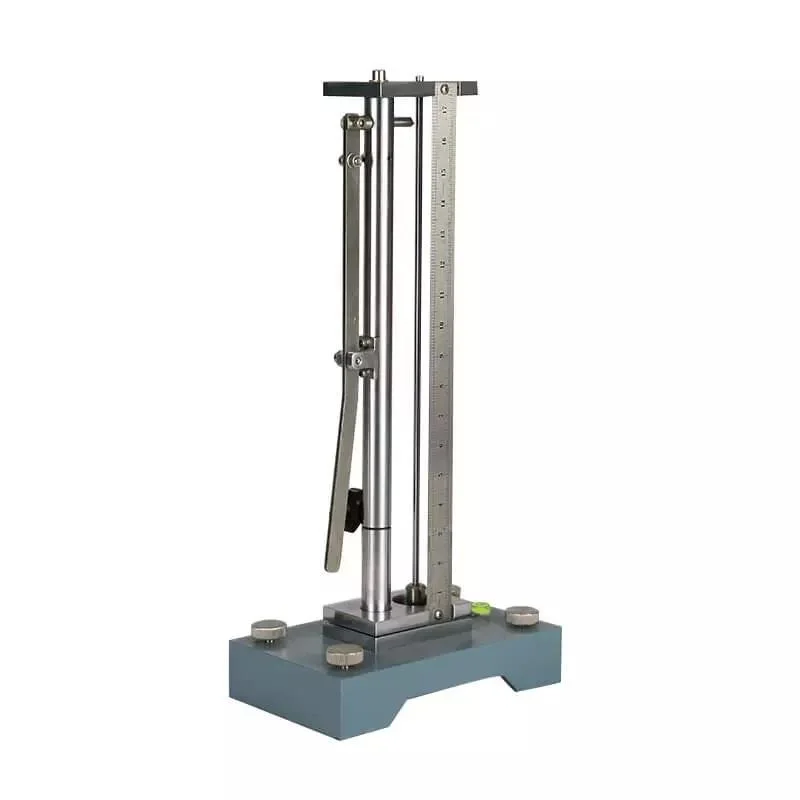
| Vertical Rebound Tester | Vertical rebound resilience of rubber | ASTM D2632, ISO 4662 | Alternative rebound test geometry for softer compounds and foam |
| Universal Testing Machine (UTM) | Tensile strength, elongation at break, modulus | ASTM D412, ISO 37 | Fundamental mechanical property testing for rubber compound approval |
| Shore A Hardness Tester | Indentation hardness of soft to medium rubber | ASTM D2240, IS 3400 | Batch QC on incoming rubber compound |
| Shore D Hardness Tester | Indentation hardness of hard rubber and ebonite | ASTM D2240, IS 3400 | QC for hard rubber goods and ebonite components |
We dispatch from our Thane factory and deliver across Tamil Nadu’s rubber and automotive processing corridor: Chennai, Oragadam, Sriperumbudur and Coimbatore. As a Rubber Laboratory Testing Equipment manufacturer Tamil Nadu plants have relied on, our team handles installation, calibration, operator training and ongoing AMC support.
Manufacturer, not a trader. Every instrument is designed, built and calibrated in our Wagle Estate, Thane factory. You deal directly with the maker – no dealer mark-up, no second-hand specifications.
ISO 9001 certified. ISO 9001 Rubber Laboratory Testing Equipment Tamil Nadu standard is what we hold – our manufacturing is ISO 9001:2015 certified and our equipment is CE marked.
NABL-traceable calibration. NABL traceable Rubber Laboratory Testing Equipment Tamil Nadu – calibration certificates traceable to national measurement standards, supporting NABL-accredited labs and OEM supplier audits.
Built for Tamil Nadu’s automotive and tyre supply chain. Our compression set, flex and abrasion instruments cover the qualification tests Tamil Nadu’s OEM customers specify most across the Rubber Laboratory Testing Equipment manufacturer Chennai-Oragadam-Coimbatore industrial belt.
Built to specific standards. ASTM D395, ASTM D1052, ASTM D430, ASTM D2632, DIN ISO 4649, ASTM D1630 – with IS/BIS methods supported alongside ASTM/ISO/DIN, so your Tamil Nadu lab stays audit-ready.
Installation, calibration and AMC. We commission, train operators and provide annual maintenance contracts across Tamil Nadu.


















All Equipments & specimen preparation products can be customised as per requirements.
Understanding the Ross flex test vs Bennewart flex test which to use comes down to the loading mechanism. The Ross flex test (ASTM D1052) flexes a rubber specimen through a wide bending arc that combines bending with a torsional component - a more severe, aggressive test often used for footwear soles. The Bennewart flex test (ASTM D430) flexes a specimen repeatedly over a fixed-radius mandrel under tension - a purer bending load, typically used for rubber hoses and belting flexed over a pulley or roller. The two tests are not directly comparable; always confirm which one your specification names.
Rubber abrasion resistance standards comparison include DIN ISO 4649 (the dominant standard in India, rotating-drum method, referenced in IS 3400), ASTM D1630 / Akron abrasion (disc-shaped specimen against an abrasive wheel, common for tyre tread), ASTM D5963 (the US-adopted equivalent of the DIN rotating-drum method), Taber abrasion (rotating abrasive wheels on a flat specimen, used for sheet goods), and NBS abrasion (a legacy US method still referenced in some older specifications). These methods are not interchangeable - always confirm which standard your customer specification names.
Pendulum rebound resilience explained: a pendulum with a striking head is released from a fixed height to strike a rubber specimen, and the height it rebounds to indicates how much energy the rubber returned versus absorbed, per ASTM D2632. Higher rebound resilience means less internal energy loss - generally preferred for tyre tread compounds, since energy absorbed as heat during rolling increases fuel consumption. Lower rebound resilience means the rubber absorbs more energy internally - preferred for anti-vibration and damping mounts, where you want the rubber to absorb shock rather than bounce it back.
We are a manufacturer. As a Rubber Laboratory Testing Equipment manufacturer Tamil Nadu plants rely on, every instrument is designed and built in-house at our Wagle Estate, Thane factory - not purchased from another manufacturer and resold.
Yes. We hold ISO 9001 Rubber Laboratory Testing Equipment Tamil Nadu certification - our manufacturing is ISO 9001:2015 certified and our equipment is CE marked. We supply instruments with NABL traceable Rubber Laboratory Testing Equipment Tamil Nadu calibration, meaning the calibration certificate we provide can be traced back to national measurement standards, supporting NABL-accredited labs and OEM audit requirements.
We deliver and support across the Rubber Laboratory Testing Equipment manufacturer Chennai-Oragadam-Coimbatore industrial belt: Chennai, Oragadam, Sriperumbudur and Coimbatore. Dispatch is from our Thane factory, with scheduled delivery routes covering these areas.