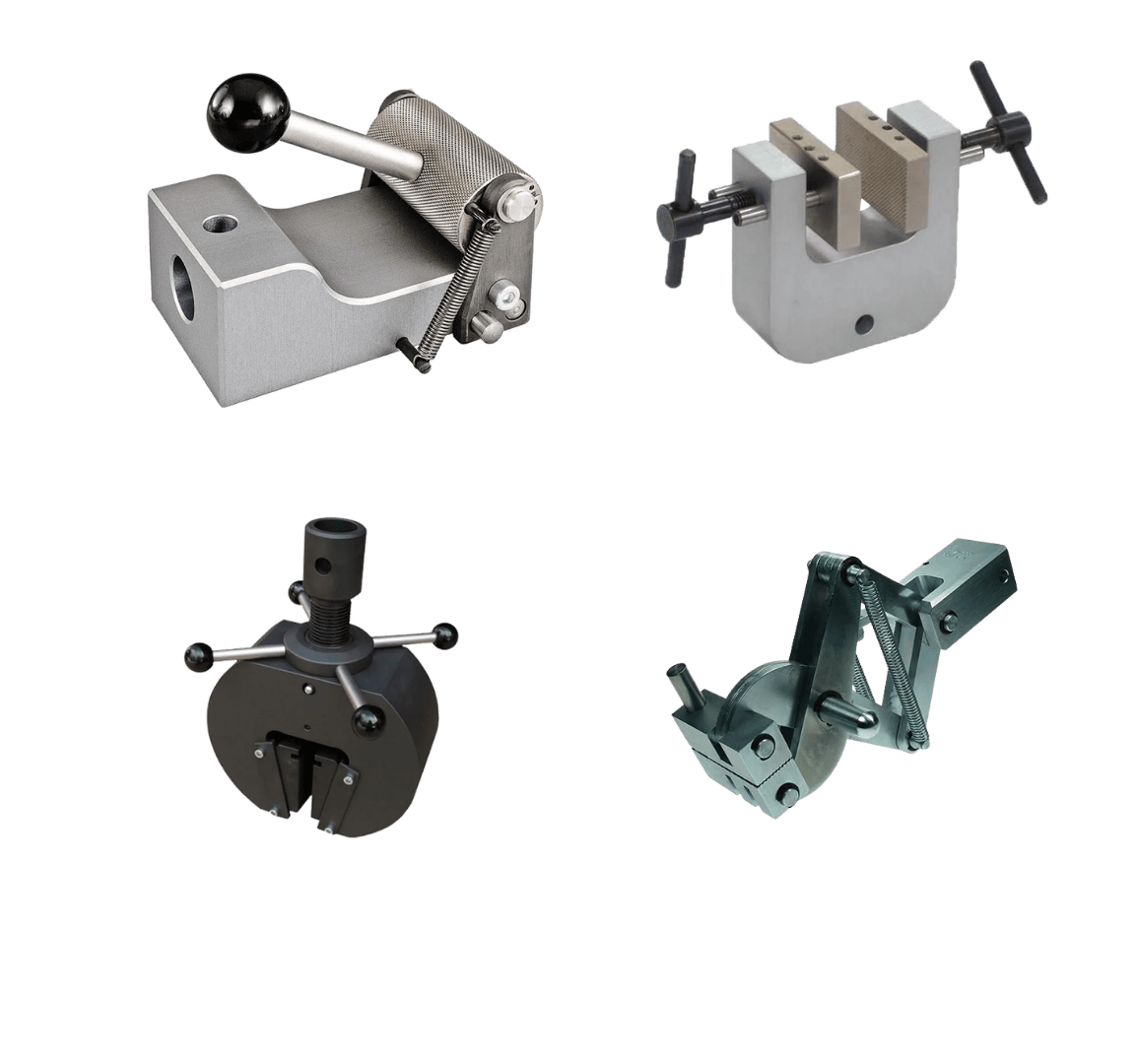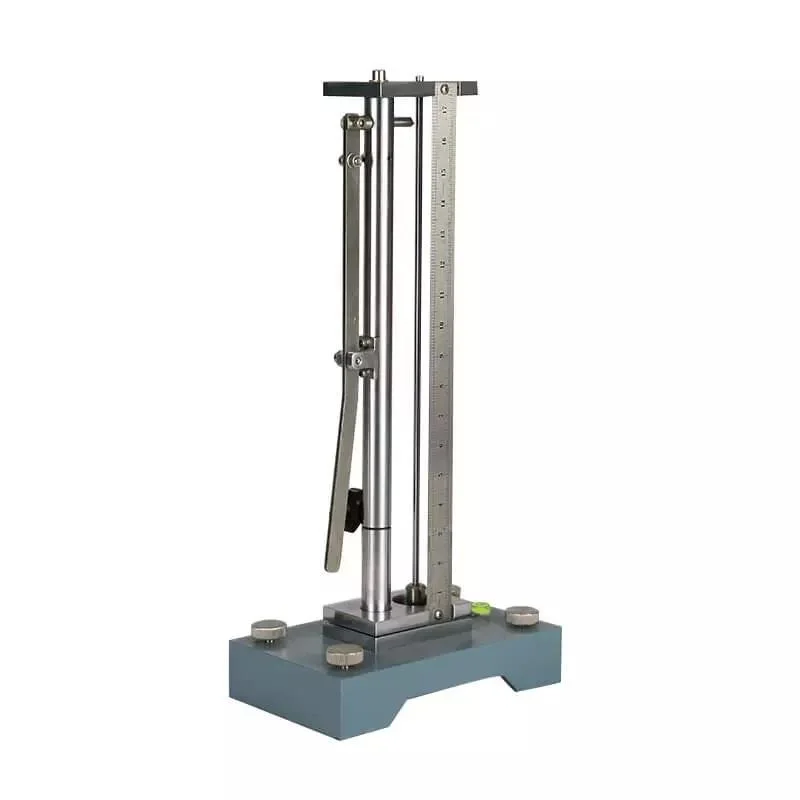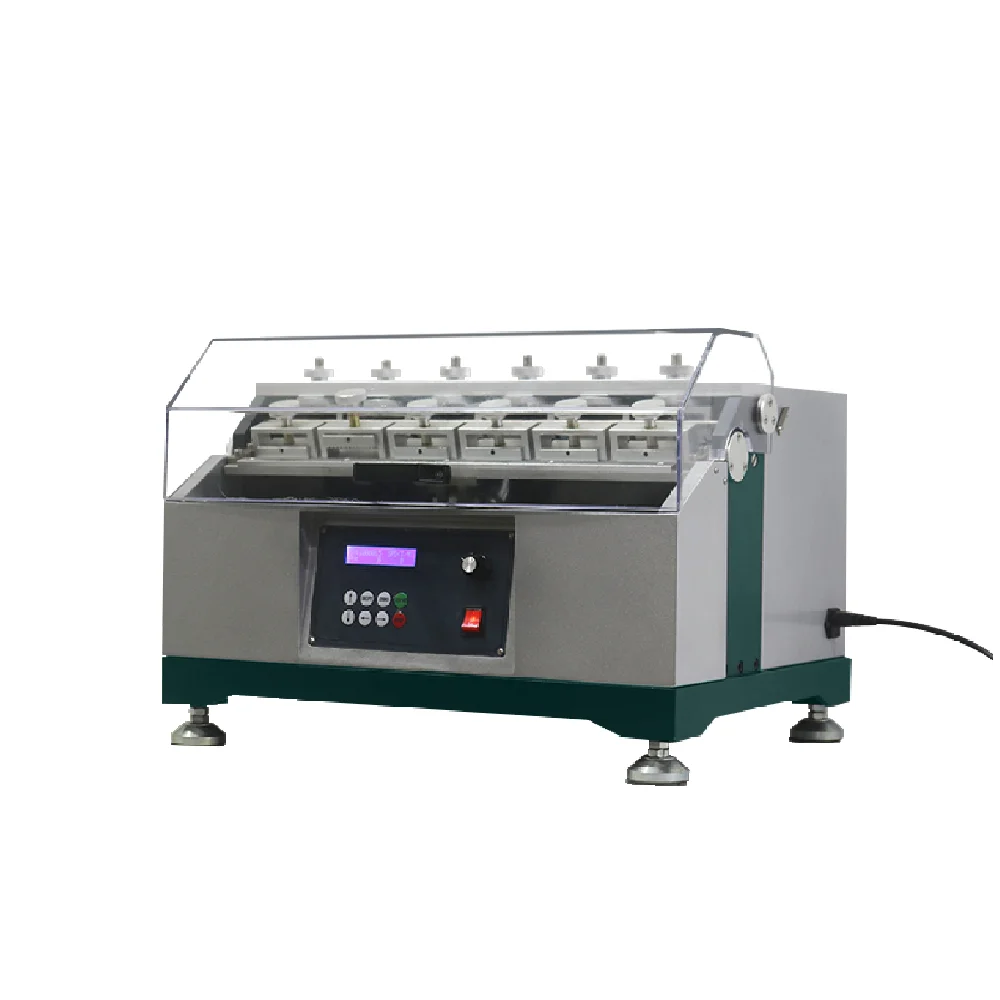







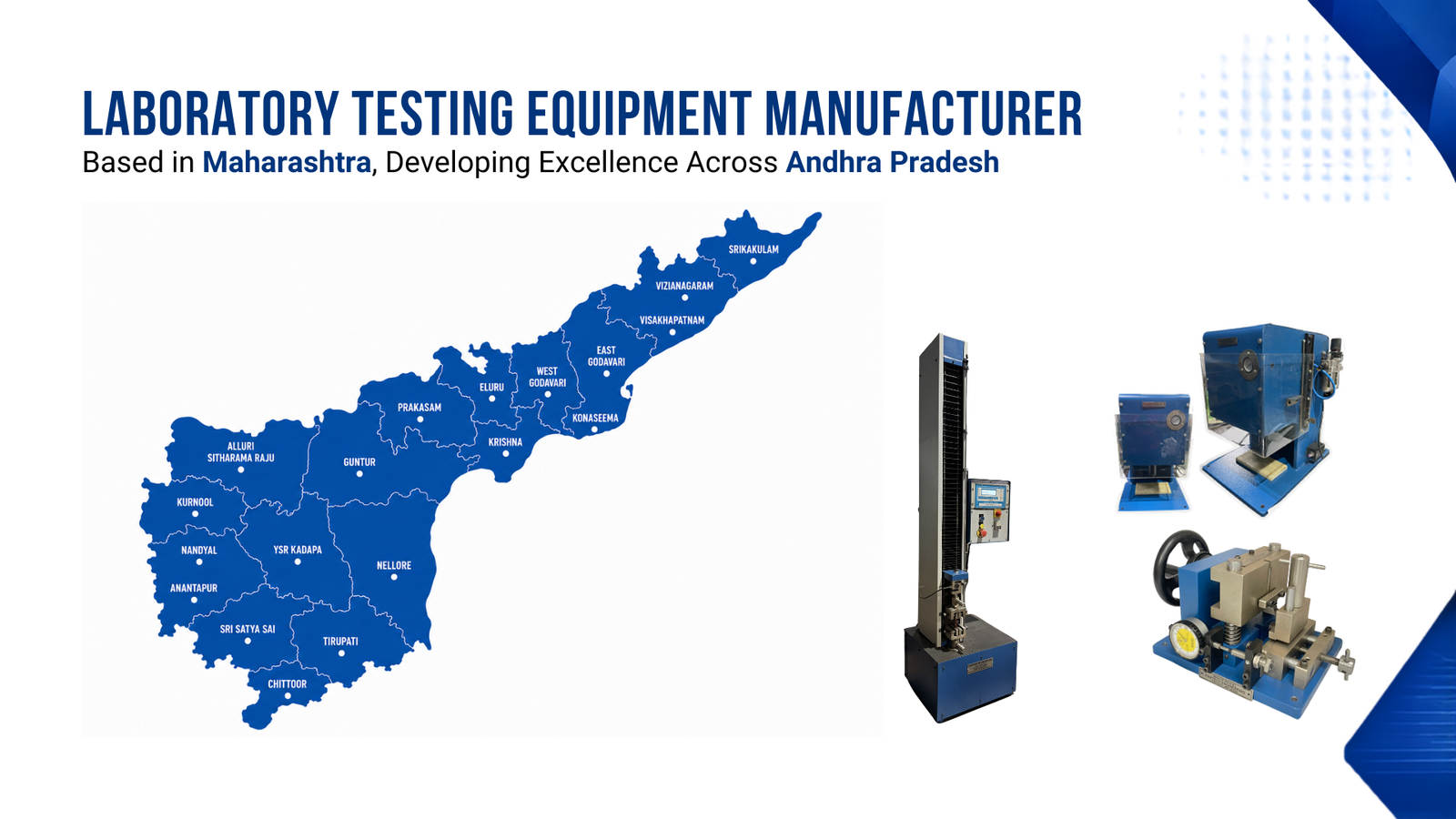
Andhra Pradesh’s rubber testing needs are shaped significantly by its pharma manufacturing sector, anchored by Visakhapatnam Pharma City. Rubber components used in pharma manufacturing and packaging – vial stoppers, septa, gaskets and O-rings on processing and filling equipment – face demanding requirements: they must maintain sealing force over long storage periods (compression set), resist repeated flexing where used in dynamic seals (flex testing), and resist abrasive wear where used in moving equipment seals (abrasion testing). Finetech Engineering is a Rubber Laboratory Testing Equipment manufacturer Andhra Pradesh pharma-linked rubber component makers have sourced from since 2023, supplying this full testing range from our Wagle Estate, Thane factory. Vial stopper septa gasket rubber testing India pharma manufacturers rely on covers exactly this: compression set, flex fatigue and abrasion resistance for the rubber components that contact or move against processing equipment.
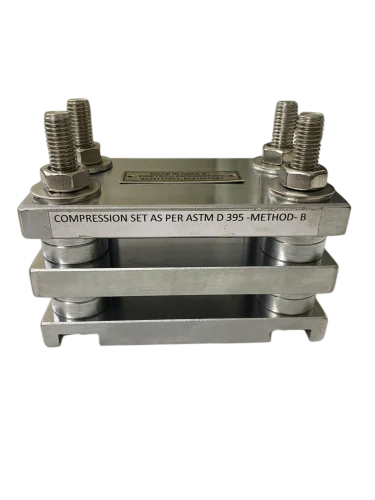
As a Rubber Laboratory Testing Equipment supplier Andhra Pradesh rubber component manufacturers rely on, the Compression Set Apparatus Andhra Pradesh plants order most is central to qualifying rubber closures and seals – a vial stopper or gasket that loses its sealing force over shelf life is a serious quality failure in a pharma packaging or processing application. Alongside compression set, flex-fatigue and rebound-resilience testing qualify rubber components used in dynamic sealing and vibration-damping applications on pharma processing equipment. A vial stopper compression set shelf life sealing test is the single most important qualification a pharma-linked rubber component maker runs, since a stopper that loses sealing force in storage is a product-quality failure, not just a lab result.
We dispatch and install directly to Rubber Laboratory Testing Equipment manufacturer Visakhapatnam Pharma City facilities, as well as Vijayawada and the wider Andhra Pradesh industrial corridor. NABL traceable Rubber Laboratory Testing Equipment Andhra Pradesh calibration is supplied with every instrument, supporting NABL-accredited labs and the regulatory audit requirements pharma-linked rubber component manufacturers face. As a Visakhapatnam Pharma City rubber testing equipment supplier, our scheduled delivery routes make installation and calibration turnaround faster than sourcing from outside the state.
Tip: Rubber closures and seals used in direct or indirect contact with pharma products typically need compression set data (for shelf-life sealing performance) and hardness data (for batch consistency) as a minimum qualification pair. Flex and rebound testing are added for components used in moving or vibrating equipment applications. Tell us the component’s application and we will recommend the right combination. Answering ‘why do rubber seals need compression set and hardness together’ directly: compression set tells you whether the seal will hold force over time, while hardness tells you whether the batch is even consistent enough to trust that result.
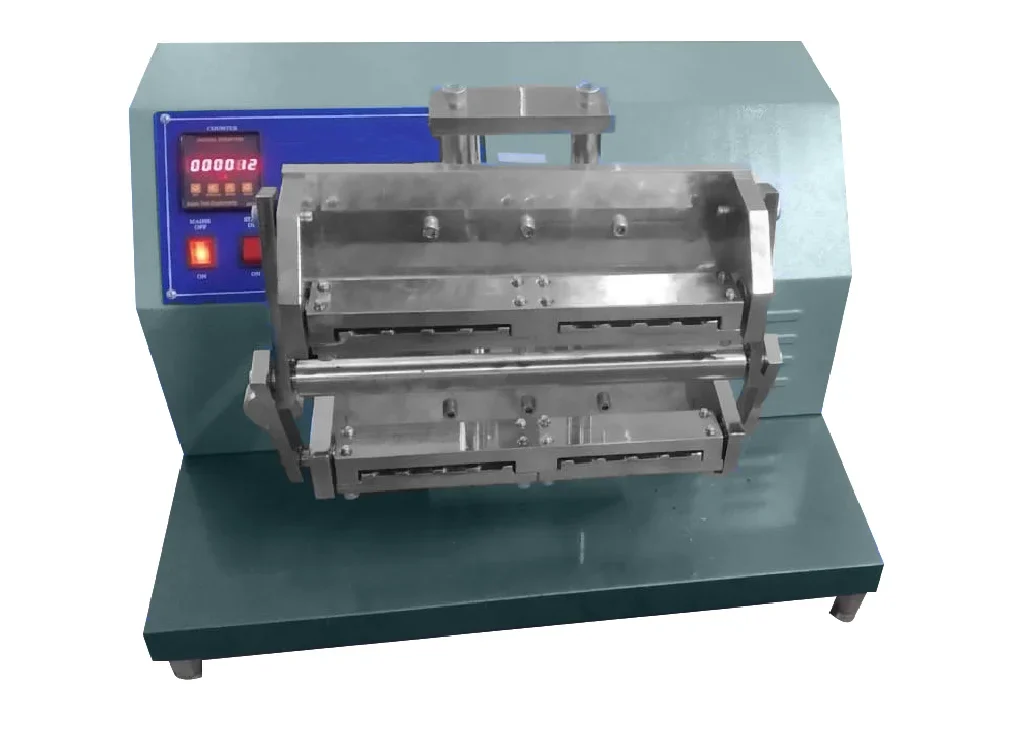
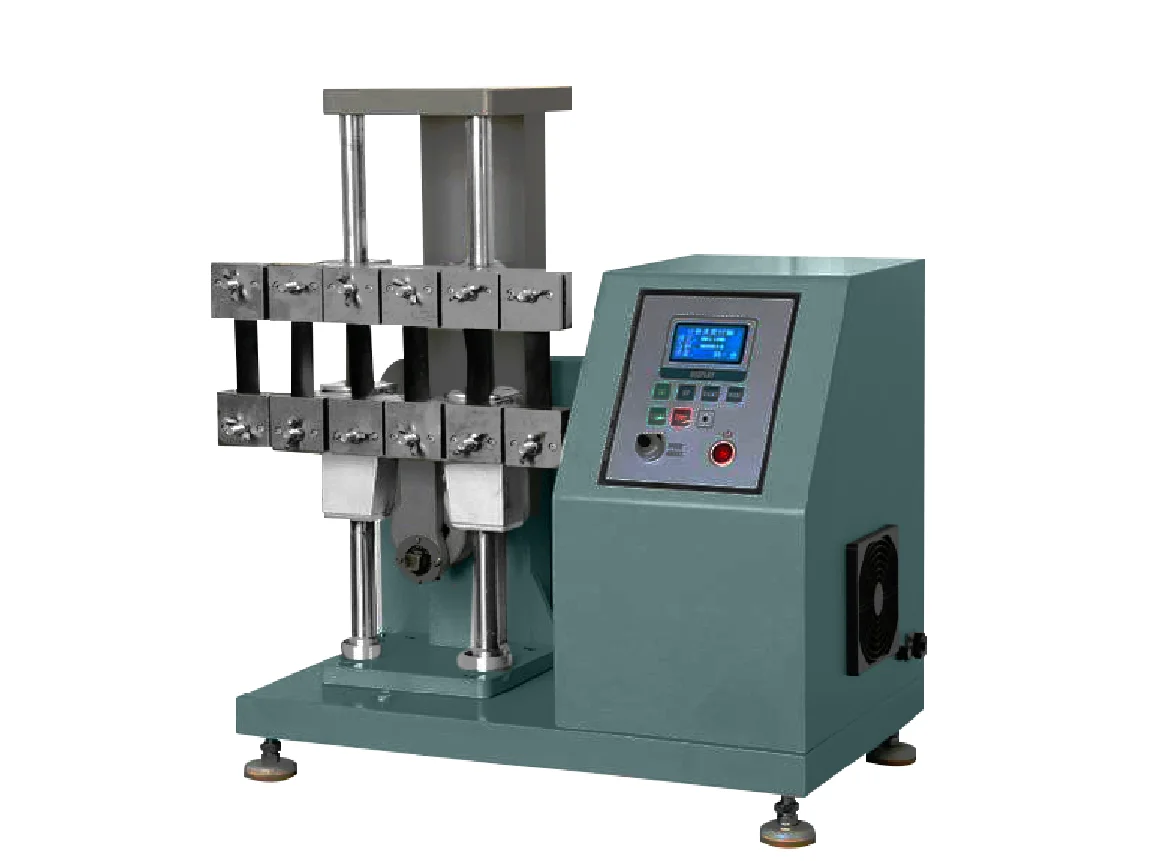
Ross flex test vs Bennewart flex test is a question that comes up for Andhra Pradesh rubber component manufacturers qualifying seals and gaskets used on pharma processing and packaging equipment subject to repeated motion. Both tests measure flex-crack resistance, but they load the specimen differently. An O-ring gasket flex fatigue rubber test pharma equipment manufacturers request most often comes down to exactly this choice, since most dynamic seals on processing lines experience some combination of bending and twisting in service:
Feature | Ross Flex Test (ASTM D1052) | Bennewart Flex Test (ASTM D430) |
Specimen shape | Flat strip, pre-cut or moulded with a groove | Flat strip flexed over a rounded mandrel |
Loading mode | Flexed and twisted through a wide bending arc, combining bending with torsional stress | Repeatedly bent over a fixed-radius mandrel under tension – a simpler, purely bending load |
Severity | More aggressive – wider arc and torsional component accelerate crack growth | Less aggressive per cycle – tests pure flex fatigue |
Typical application | Dynamic seals and gaskets subject to combined bending and twisting motion on processing equipment | Rubber tubing, sleeves and seals flexed over a fixed radius – relevant to some pharma-equipment hose and tubing applications |
What it reveals | Crack growth resistance under combined bending and twisting | Crack initiation and growth under pure repeated bending |
For Andhra Pradesh’s rubber component manufacturers supplying pharma equipment seals and dynamic gaskets, the Ross flex test vs Bennewart flex test choice depends on how the component moves in service. A seal or gasket that experiences combined bending and twisting during equipment operation is better represented by the Ross test; a component flexed over a fixed radius – tubing, sleeves – is better represented by the Bennewart test.
Note: Results from the Ross and Bennewart tests are not directly comparable – they use different loading mechanisms and are reported differently. Always confirm which test your customer or regulatory specification names, since substituting one for the other does not satisfy a specification calling for a specific method.
Rubber abrasion resistance standards matter for Andhra Pradesh rubber component manufacturers supplying wear-facing seals and gaskets on pharma processing equipment – components subject to repeated contact and sliding wear against metal or other surfaces during equipment operation. Several distinct abrasion test methods exist, and the numbers from different methods are not interchangeable:
Standard | Mechanism | Reported Result | Common Use |
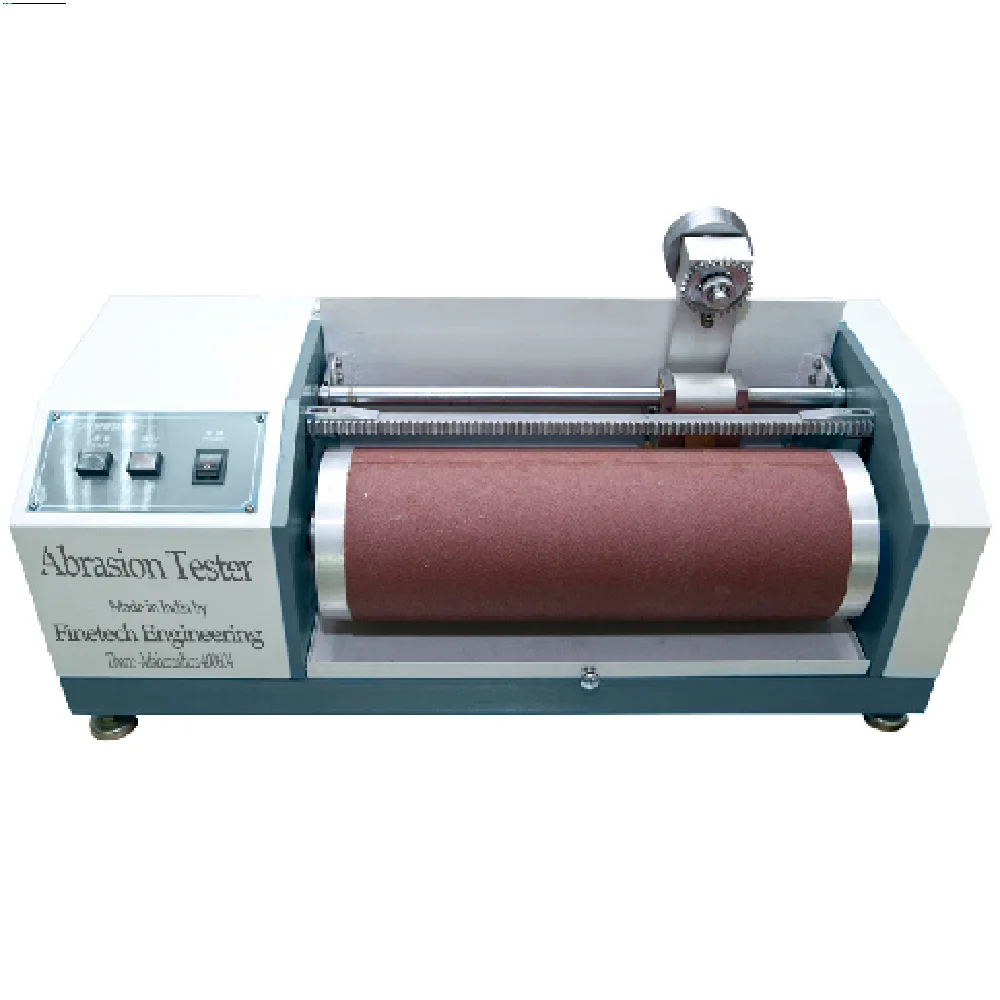
DIN ISO 4649 / ISO 4649 | Specimen rubbed against a rotating drum covered with abrasive paper, under fixed load | Volume loss (mm³), relative to a reference compound | Dominant standard in India for general rubber goods, referenced in IS 3400 |
ASTM D1630 (Akron) | Disc-shaped specimen rolls against an abrasive wheel at a slip angle | Volume loss per unit distance travelled | Applications with a rolling-and-slipping wear mechanism, e.g. tyre tread |
ASTM D5963 | Similar rotating-drum method to DIN ISO 4649, US-adopted equivalent | Volume loss (mm³) | US specifications requiring an ASTM-numbered abrasion method |
Taber Abrasion (ASTM D3389 / D4060) | Rotating abrasive wheels press down on a flat specimen disc | Weight loss (mg) per specified cycles | Rubber sheet and coated-fabric goods, flooring |
For Andhra Pradesh’s pharma-linked rubber component manufacturers, DIN ISO 4649 is generally the standard to have on hand, since it is the most widely referenced method domestically and aligns with IS 3400. If a customer or equipment OEM specification names a different method, confirm the exact standard before quoting a number.
Tip: If a customer specification simply says “abrasion resistance” without naming a standard, always ask which method they mean before quoting a number – different abrasion methods use similar-looking units (volume loss, weight loss) but are not measuring the same thing and cannot be compared directly.
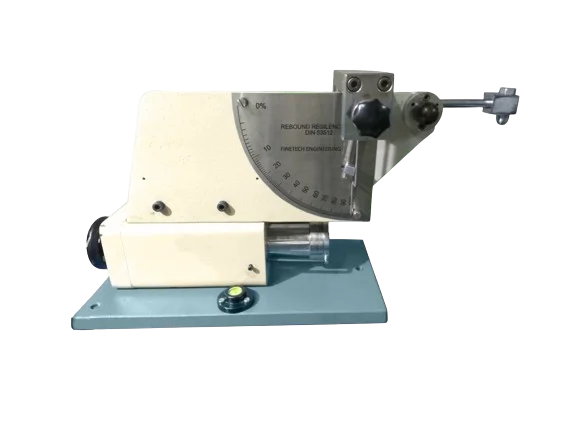
Pendulum rebound resilience explained – rebound resilience measures how much energy a rubber specimen returns after being struck, expressed as a percentage of the energy delivered. For Andhra Pradesh’s rubber component manufacturers, this property matters for vibration-damping mounts and seals used on pharma processing equipment, where controlling energy absorption and heat build-up affects both component life and equipment performance. Pendulum rebound resilience vibration damping mount pharma processing equipment relies on is exactly what this test is built to qualify, since controlling energy absorption directly affects both mount life and the sensitive equipment it protects. Here is how the pendulum method works (per ASTM D2632 / ISO 4662):
Step | What Happens |
1. Mount the specimen | A rubber test specimen (disc or slab of specified thickness) is mounted on a rigid base. |
2. Raise the pendulum | A pendulum with a hemispherical striking head is raised to a fixed starting angle, giving it a known, repeatable amount of potential energy. |
3. Release and strike | The pendulum is released and swings down to strike the specimen, transferring energy into it on impact. |
4. Measure the rebound | Some impact energy is absorbed by the rubber (as heat, through hysteresis) and some is returned, causing the pendulum to rebound to a new angle. |
5. Calculate resilience | Rebound resilience (%) is calculated from the rebound angle relative to the starting angle – a higher percentage means the rubber returned more energy and absorbed less internally. |
Low rebound resilience means high internal energy absorption – generally what is wanted for vibration-damping mounts on pharma processing equipment, where the rubber should absorb shock and vibration rather than transmit it back into sensitive equipment. High rebound resilience is preferred where the component needs to spring back quickly rather than dissipate energy as heat. Andhra Pradesh’s rubber component manufacturers use this single test to steer compound development in the direction their specific application requires.
Tip: Rebound resilience is temperature-sensitive – rubber typically shows lower resilience at low temperatures and higher resilience at elevated temperatures. If your specification requires testing at a specific temperature (relevant for equipment operating in controlled or elevated-temperature pharma processing environments), confirm the pendulum tester is fitted with temperature conditioning.
As a Rubber Laboratory Testing Equipment supplier Andhra Pradesh plants have used since 2023, Finetech Engineering supplies the following instruments, each built to the named ASTM/ISO/DIN standard:
| Instrument | What It Tests | Primary Standards | Why AP Plants Need It |
| Compression Set Apparatus | Permanent deformation of rubber after sustained compression | ASTM D395, ISO 815, IS 3400 | Qualification test for vial stoppers, septa, seals and gaskets used in pharma manufacturing and packaging |
| DIN Abrasion Tester | Volume loss of rubber under abrasive wear | DIN ISO 4649, ISO 4649 | Wear-resistance QC for seals and gaskets on moving equipment |
| Ross Flex Tester | Flex-cracking resistance under a severe bending-and-twisting arc | ASTM D1052, ISO 132 | Dynamic seals and gaskets on processing equipment |
| Bennewart Flex Tester | Flex fatigue resistance under repeated bending over a fixed radius | ASTM D430 | Rubber tubing and sleeves flexed over a fixed radius |
| Pendulum Rebound Resilience Tester | Rebound resilience / energy return of rubber after impact | ASTM D2632, ISO 4662 | Vibration-damping mount qualification for pharma processing equipment |
| Universal Testing Machine (UTM) | Tensile strength, elongation at break, modulus | ASTM D412, ISO 37 | Fundamental mechanical property testing for rubber compound approval |
| Shore A Hardness Tester | Indentation hardness of soft to medium rubber | ASTM D2240, IS 3400 | Batch QC on incoming rubber compound for closures and seals |
We dispatch from our Thane factory and deliver directly to Visakhapatnam Pharma City, as well as Vijayawada and the wider Andhra Pradesh industrial corridor. As a Rubber Laboratory Testing Equipment manufacturer Andhra Pradesh plants have relied on, our team handles installation, calibration, operator training and ongoing AMC support.
Manufacturer, not a trader. Every instrument is designed, built and calibrated in our Wagle Estate, Thane factory. You deal directly with the maker – no dealer mark-up, no second-hand specifications.
ISO 9001 certified. ISO 9001 Rubber Laboratory Testing Equipment Andhra Pradesh standard is what we hold – our manufacturing is ISO 9001:2015 certified and our equipment is CE marked.
NABL-traceable calibration. NABL traceable Rubber Laboratory Testing Equipment Andhra Pradesh – calibration certificates traceable to national measurement standards, supporting NABL-accredited labs and pharma regulatory audits.
Built for Andhra Pradesh’s pharma-linked rubber sector. Our compression set, flex and rebound instruments cover the qualification tests pharma-linked rubber component manufacturers specify most, serving Rubber Laboratory Testing Equipment manufacturer Visakhapatnam Pharma City facilities directly.
Built to specific standards. ASTM D395, ASTM D1052, ASTM D430, ASTM D2632, DIN ISO 4649 – with IS/BIS methods supported alongside ASTM/ISO/DIN, so your Andhra Pradesh lab stays audit-ready.
Installation, calibration and AMC. We commission, train operators and provide annual maintenance contracts across Andhra Pradesh.


















All Equipments & specimen preparation products can be customised as per requirements.
The Ross flex test vs Bennewart flex test difference is in loading mechanism. The Ross flex test (ASTM D1052) flexes a specimen through a wide bending arc combining bending with torsional stress - a more severe test, suited to dynamic seals experiencing combined motion. The Bennewart flex test (ASTM D430) flexes a specimen repeatedly over a fixed-radius mandrel under tension - a purer bending load, suited to tubing and sleeves flexed over a fixed radius. The two are not directly comparable; confirm which your specification names.
Rubber abrasion resistance standards include DIN ISO 4649 (the dominant standard in India, rotating-drum method, referenced in IS 3400), ASTM D1630 / Akron abrasion (disc against an abrasive wheel, for rolling-and-slipping wear), ASTM D5963 (US-adopted equivalent of the DIN method), and Taber abrasion (rotating wheels on a flat disc, for sheet goods). These methods are not interchangeable - always confirm which standard your specification names.
Pendulum rebound resilience explained: a pendulum with a striking head is released to strike a rubber specimen, and the rebound height indicates how much energy the rubber returned versus absorbed, per ASTM D2632. Lower resilience means the rubber absorbs more energy internally - generally preferred for vibration-damping mounts on processing equipment. Higher resilience means the rubber returns energy quickly rather than absorbing it - preferred where a quick mechanical response is wanted.
We are a manufacturer. As a Rubber Laboratory Testing Equipment manufacturer Andhra Pradesh plants rely on, every instrument is designed and built in-house at our Wagle Estate, Thane factory - not purchased from another manufacturer and resold.
Yes. We hold ISO 9001 Rubber Laboratory Testing Equipment Andhra Pradesh certification - our manufacturing is ISO 9001:2015 certified and our equipment is CE marked. We supply instruments with NABL traceable Rubber Laboratory Testing Equipment Andhra Pradesh calibration, supporting NABL-accredited labs and pharma regulatory audit requirements.
Yes. We are a Rubber Laboratory Testing Equipment manufacturer Visakhapatnam Pharma City facilities have sourced from directly, alongside Vijayawada and the wider Andhra Pradesh industrial corridor. Dispatch is from our Thane factory, with installation and support delivered on-site.