






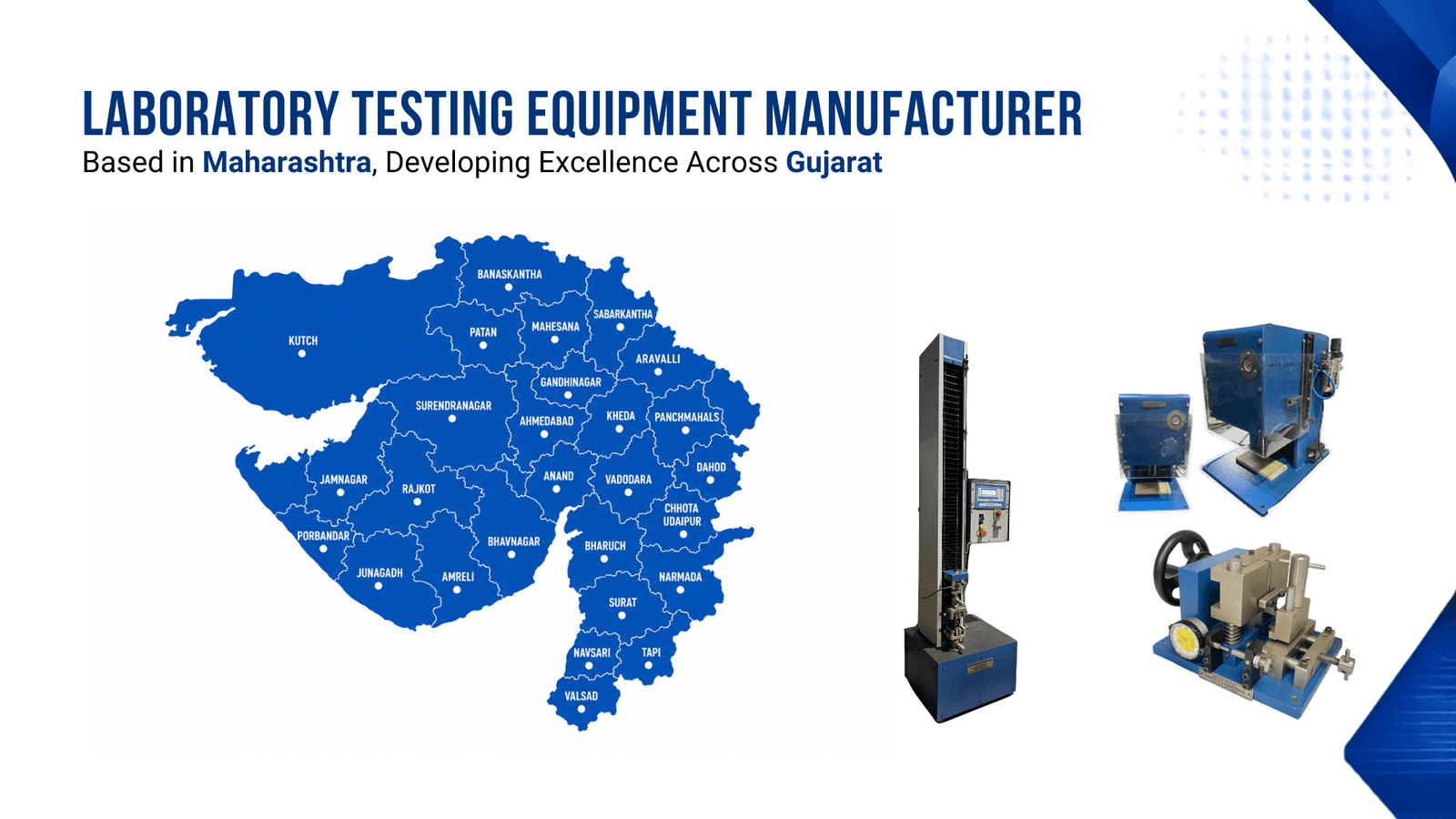
Gujarat’s chemical and petrochemical manufacturing base, concentrated across the Ahmedabad-Vadodara-Surat GIDC belt, drives demand for rubber components engineered to withstand aggressive chemical exposure: flange gaskets on process piping, expansion joints absorbing thermal movement and vibration, chemical-resistant linings, and seals on process equipment. These components face a demanding combination – sustained mechanical load from bolt torque or pipe pressure, repeated flexing from thermal cycling or equipment vibration, and continuous chemical contact. Finetech Engineering is a Rubber Laboratory Testing Equipment manufacturer Gujarat chemical and petrochemical rubber component makers have sourced from since 2023, supplying this full testing range from our Wagle Estate, Thane factory.
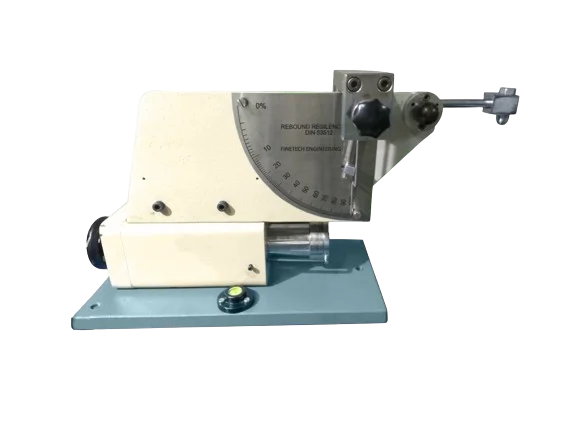
As a Rubber Laboratory Testing Equipment supplier Gujarat rubber component manufacturers rely on, the Pendulum Rebound Resilience Tester Gujarat plants order most qualifies rubber components used in vibration- and shock-absorbing applications on process equipment and piping – expansion joints and vibration-isolation mounts in particular. Alongside rebound testing, flex-fatigue and compression set testing round out qualification for expansion joints, gaskets and long-service seals in chemical plant applications.
We dispatch and install across the Rubber Laboratory Testing Equipment manufacturer Ahmedabad-Vadodara-Surat GIDC belt, with regular scheduled delivery routes covering this corridor and the wider Gujarat industrial area. NABL traceable Rubber Laboratory Testing Equipment Gujarat calibration is supplied with every instrument, supporting NABL-accredited labs and plant supplier-audit requirements.
Chemical plant rubber gaskets and expansion joints in Gujarat typically need compression set data (for long-term flange sealing performance) and flex-fatigue data (for expansion joints under repeated thermal or vibration cycling) as a minimum qualification pair. Tell us the component’s specific service conditions – chemical exposure, temperature range, and mechanical loading – and we will recommend the right test combination.
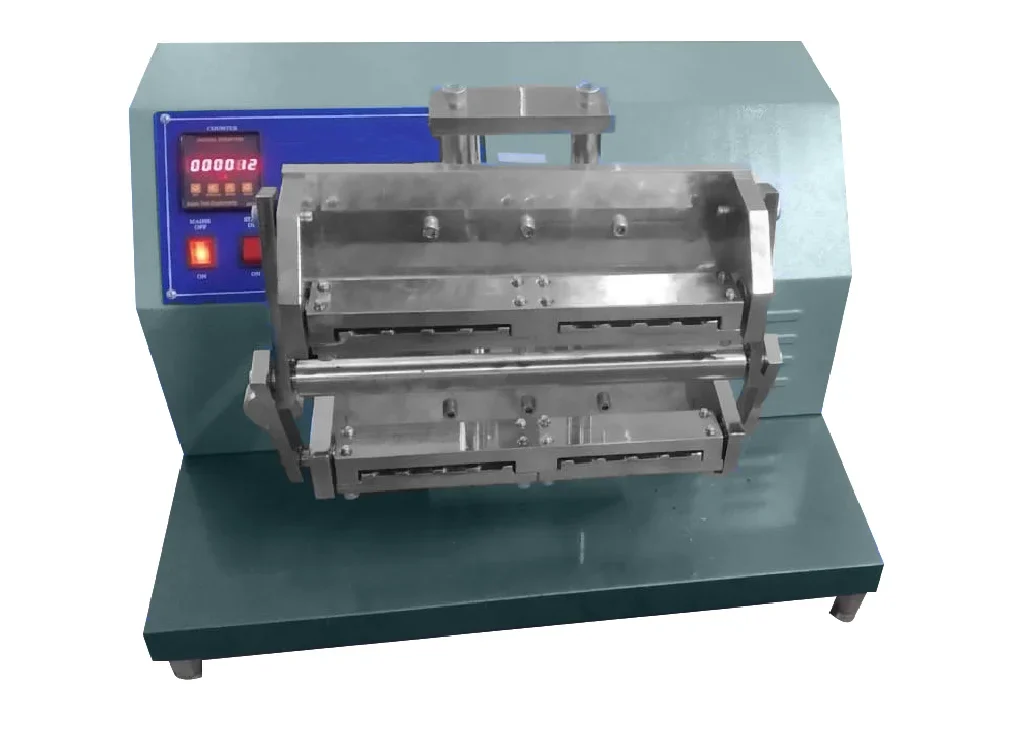
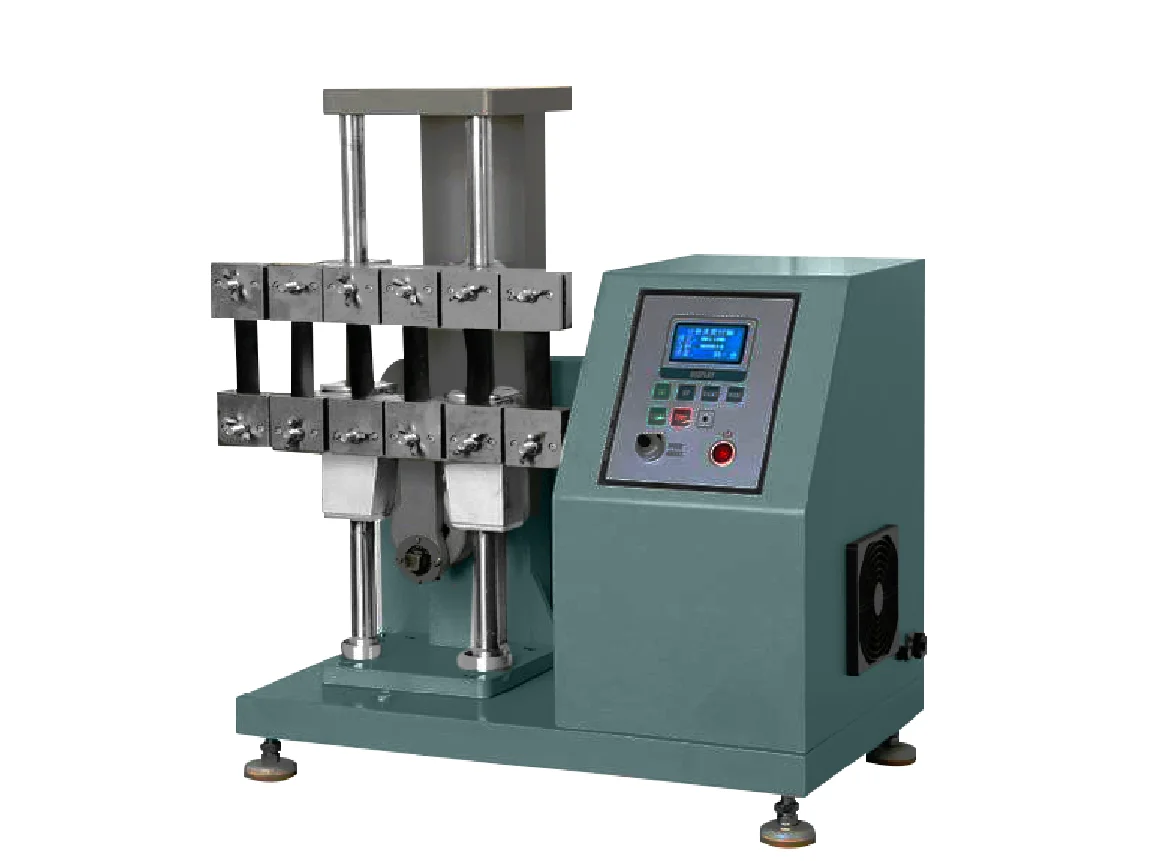
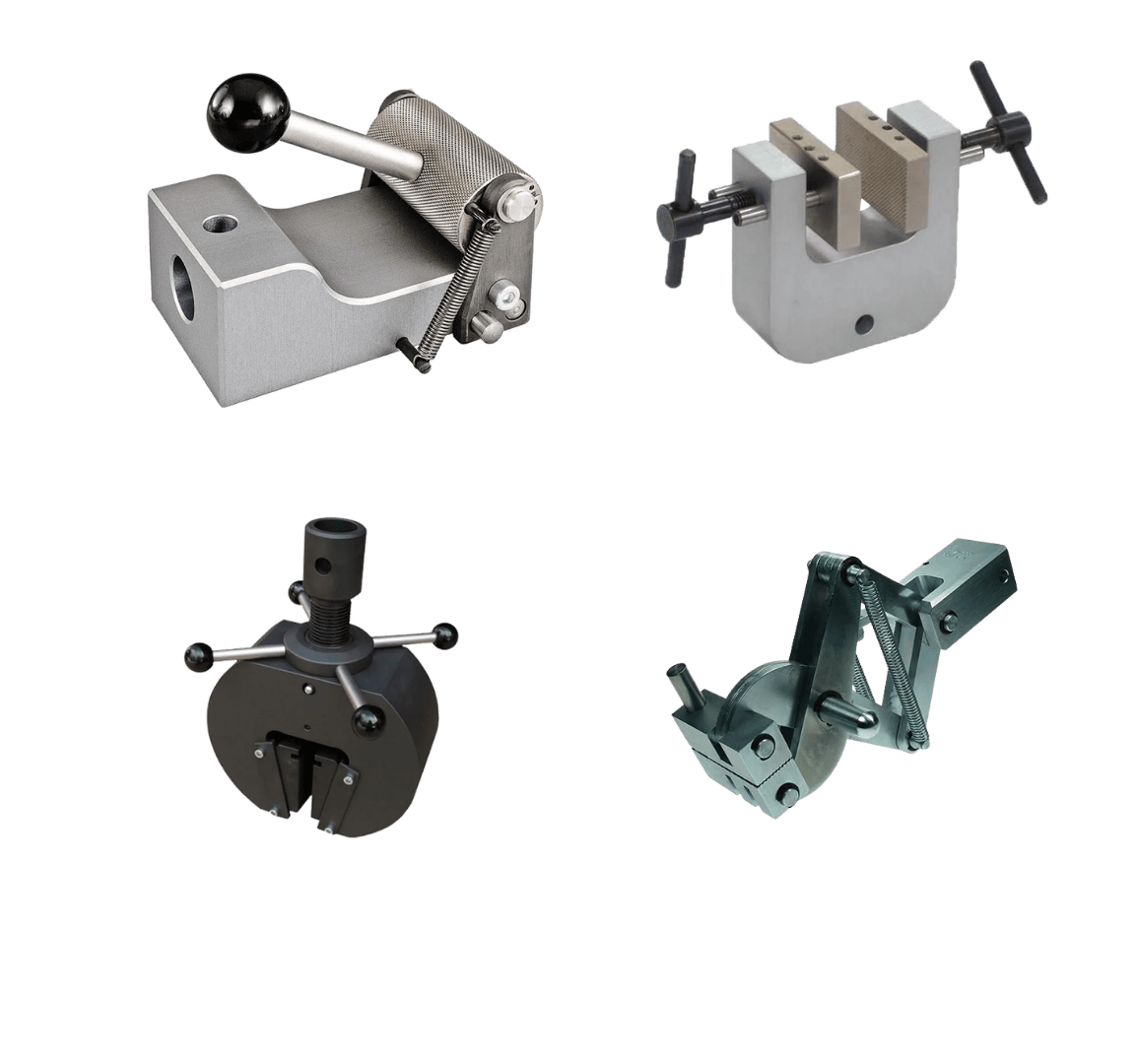
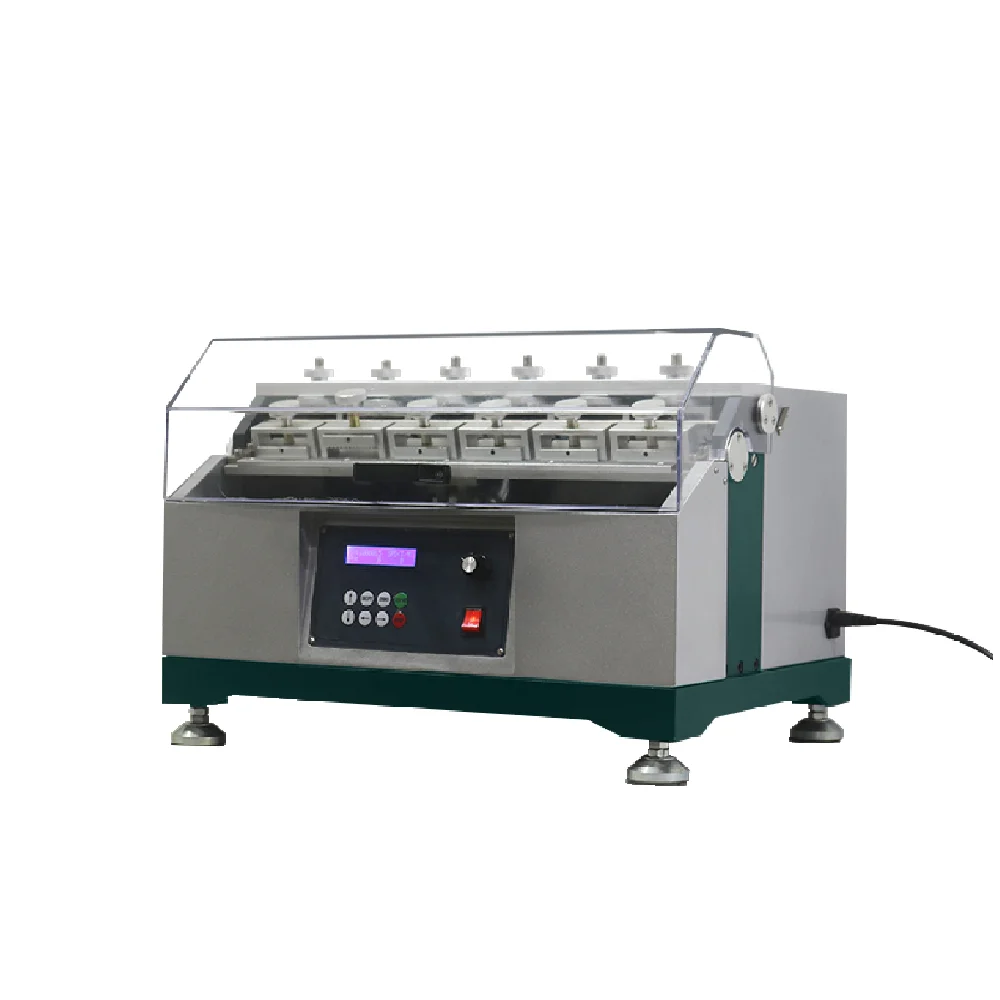
The Demattia flex test (ASTM D430, ISO 132) measures how well a rubber specimen resists crack initiation and crack growth under repeated flexing. For Gujarat’s chemical and petrochemical plants, this is directly relevant to expansion joints, flexible connectors and rubber-lined components that flex repeatedly from thermal cycling, pressure pulsation, or equipment vibration in process service.
Specimen preparation: a flat rubber specimen is moulded or cut with a groove or pierced hole at a defined point, deliberately creating a location where a crack is likely to initiate under repeated flexing.
The test cycle: the specimen is mounted in the Demattia flex tester and flexed back and forth through a fixed stroke, repeatedly bending at the grooved or pierced point. This is the core expansion joint rubber bellows crack resistance test method Gujarat specifiers reference when qualifying bellows and sleeve materials for repeated flexing service.
Why it matters for expansion joints: pipe expansion joints in chemical and petrochemical plants absorb thermal expansion, contraction and vibration through repeated flexing of the rubber bellows or sleeve – flex-fatigue cracking is a primary failure mode, and the Demattia test directly predicts resistance to it. A Demattia flex test expansion joint chemical plant qualification is the standard way Gujarat’s plants confirm this failure mode will not occur in service.
Why it matters for rubber-lined equipment: linings and flexible connectors subject to vibration or pressure pulsation in process piping face the same repeated-flexing stress, often combined with the chemical exposure that ordinary tensile testing does not capture.
Note: for chemical-exposed rubber components, flex-fatigue resistance and chemical resistance are both critical but are tested separately – a compound can pass Demattia flex testing in its unexposed state but perform very differently after chemical exposure has already begun to degrade it. Where relevant, consider testing flex-fatigue resistance both before and after a representative chemical exposure and ageing period.
Rubber hardness testing method selection for Gujarat’s chemical and petrochemical plant rubber components – gaskets, linings, expansion joints – depends on both the compound hardness range and the component geometry. Here is how the methods compare for the rubber hardness testing gasket lining chemical plant workflow Gujarat’s component manufacturers follow:
Method | Standard | Scale | Best Suited For |
Shore A Durometer | ASTM D2240 | 0-100 (Shore A) | Soft to medium flange gaskets, seals and lining materials – the majority of chemical-plant rubber components |
Shore D Durometer | ASTM D2240 | 0-100 (Shore D) | Harder rubber-lined components and rigid rubber-metal bonded parts |
IRHD (International Rubber Hardness Degrees) | ISO 48-4 | 0-100 (IRHD) | Small or curved gasket sections and O-ring-type seals where a standard Shore durometer foot cannot seat flat |
IRHD Micro | ISO 48-4 | 0-100 (IRHD Micro) | Thin lining sections or small moulded seal geometries too small for standard Shore or IRHD testing |
For most Gujarat chemical-plant flange gaskets and general seals, Shore A hardness is the default and correlates closely with IRHD for typical compounds. IRHD becomes relevant specifically for small or curved gasket sections and seal geometries where a standard Shore durometer cannot seat flat – a common situation with compact valve seals and fitting gaskets in process piping.
Note: hardness alone does not confirm chemical compatibility – a gasket compound can have the correct Shore A reading and still be unsuitable for a specific process chemical. Hardness testing should be paired with the compound manufacturer’s chemical compatibility data for your specific process media before specification.
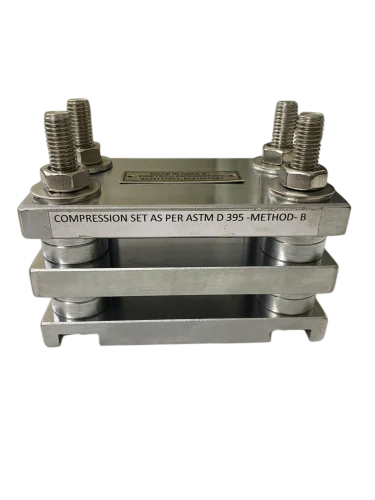
Compression set method A vs B is a distinction with direct practical relevance for Gujarat’s chemical and petrochemical flange gasket and seal manufacturers, since flange joints are a textbook example of the force-controlled loading condition Method B is designed to represent:
Feature | Method A (Constant Deflection) | Method B (Constant Force) |
How the specimen is loaded | Compressed to a fixed percentage of its original thickness using a spacer bar | Compressed under a fixed, constant applied force – closely mirrors a bolted flange joint tightened to a specified torque |
Relevance to flange gaskets | Represents a gasket compressed to a fixed gap, as in some rigid, pre-set flange designs | Represents a gasket compressed by bolts torqued to a specified value, which is how most standard pipe flange joints are actually assembled |
Why this matters in Gujarat specifically | Simpler, faster, and adequate for many general-purpose seal and gasket QC needs across the state’s rubber component manufacturers | More representative of real flange-joint service conditions for petrochemical and chemical piping, where bolt-torque specification determines gasket compression |
When to use each | Default for routine QC across most general rubber components | Specify when your customer’s flange design or piping specification is genuinely torque-controlled rather than gap-controlled |
For Gujarat’s petrochemical and chemical-plant flange gasket manufacturers, compression set method A vs B is worth getting right specifically because Method B’s constant-force loading more accurately represents how a real bolted flange joint compresses a gasket – to a torque specification, not a fixed gap. Confirm with your customer whether their piping specification calls for Method A or Method B data before running the qualification. This is exactly the flange gasket compression set method B torque scenario the standard describes.
Note: Method A and Method B results are not directly interchangeable, since they measure recovery from different starting conditions. For chemical-plant flange gaskets specifically, confirming which method matches your customer’s actual joint design is more consequential than for many other rubber applications, since gasket sealing failure in a chemical process line carries real safety and environmental risk.
As a Rubber Laboratory Testing Equipment supplier Gujarat plants have used since 2023, Finetech Engineering supplies the following instruments, each built to the named ASTM/ISO standard:
Instrument | What It Tests | Primary Standards | Why Gujarat Plants Need It |
Rebound resilience / energy return of rubber after impact | ASTM D2632, ISO 4662 | Vibration-damping qualification for expansion joints and mounts on process equipment | |
Flex-cracking and crack-growth resistance under repeated bending | ASTM D430, ISO 132 | Durability qualification for expansion joints and flexible connectors under thermal/vibration cycling | |
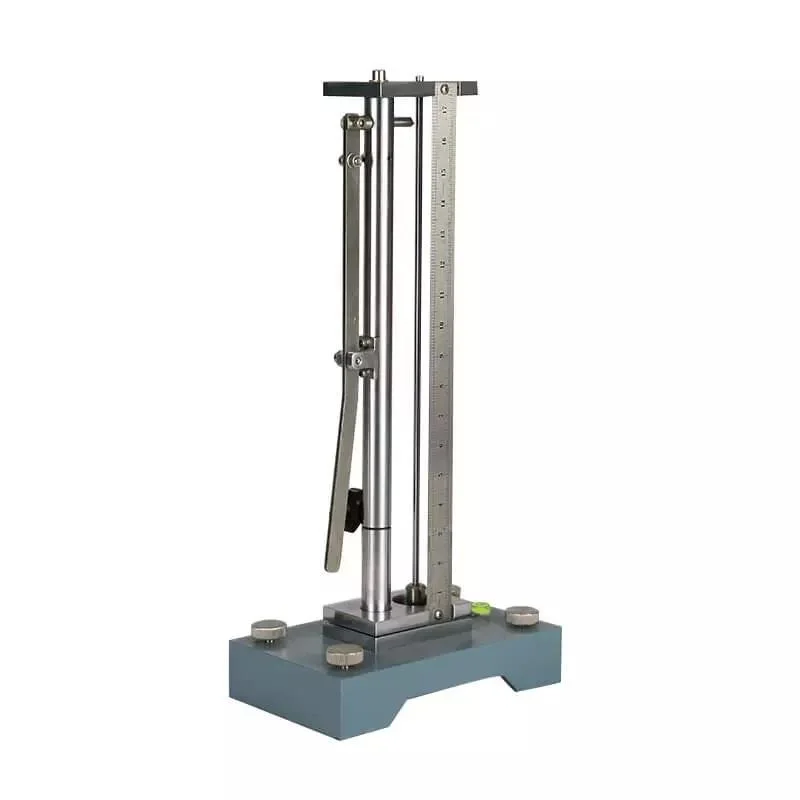
Permanent deformation of rubber after sustained compression – Method A and B | ASTM D395, ISO 815 | Qualification for flange gaskets and process seals requiring long-term sealing force | |
Indentation hardness of soft to medium rubber | ASTM D2240 | Batch QC on incoming compound for gaskets, seals and linings | |
Indentation hardness of hard rubber and ebonite | ASTM D2240 | QC for hard rubber-lined and rubber-metal bonded components | |
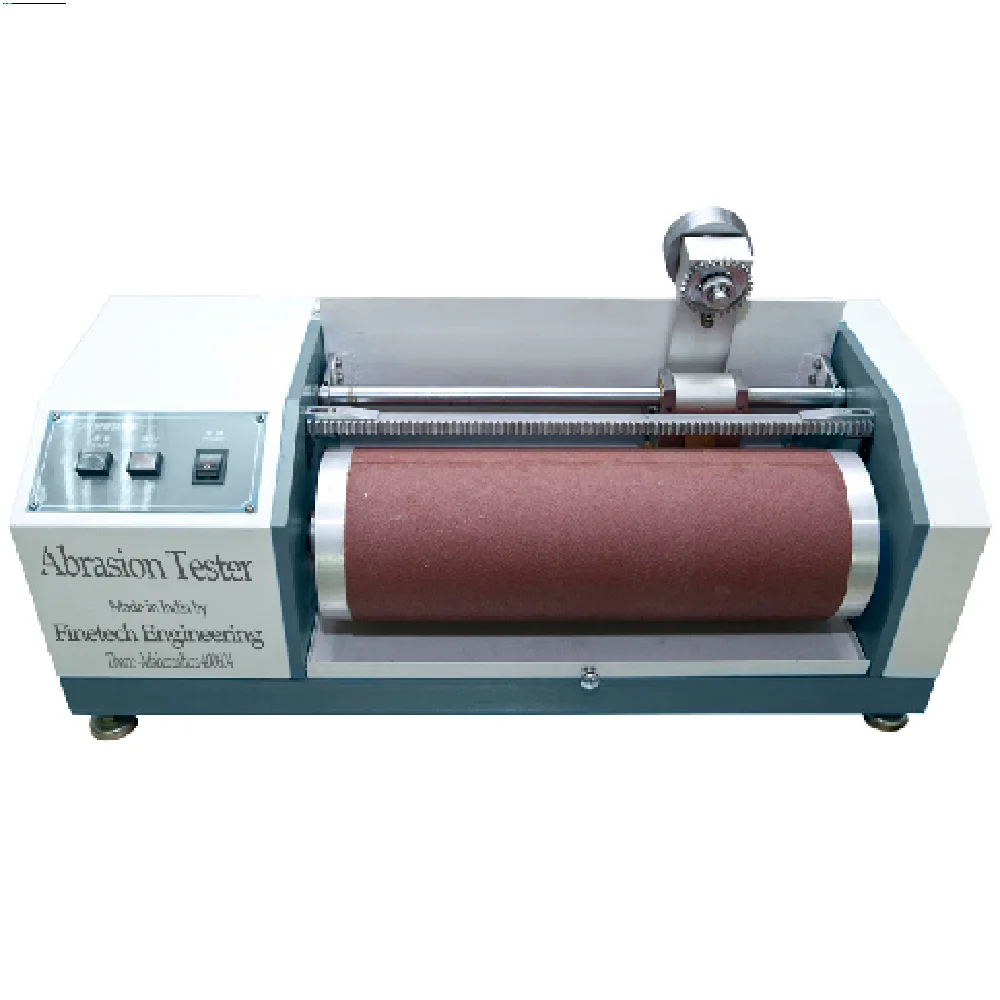
Volume loss of rubber under abrasive wear | DIN ISO 4649 | Wear-resistance QC for linings and seals in abrasive process service | |
Tensile strength, elongation at break, modulus | ASTM D412, ISO 37 | Fundamental mechanical property testing for rubber compound approval |
Manufacturer, not a trader. Every instrument is designed, built and calibrated in our Wagle Estate, Thane factory. You deal directly with the maker – no dealer mark-up, no second-hand specifications.
ISO 9001 certified. ISO 9001 Rubber Laboratory Testing Equipment Gujarat standard is what we hold – our manufacturing is ISO 9001:2015 certified and our equipment is CE marked.
NABL-traceable calibration. NABL traceable Rubber Laboratory Testing Equipment Gujarat – calibration certificates traceable to national measurement standards, supporting NABL-accredited labs and plant supplier audits.
Built for Gujarat’s chemical and petrochemical sector. Our rebound, flex and compression set instruments cover the qualification tests chemical-plant rubber component manufacturers specify most, serving the Rubber Laboratory Testing Equipment manufacturer Ahmedabad-Vadodara-Surat GIDC belt directly.
Built to specific standards. ASTM D395, ASTM D430, ASTM D2632, ASTM D2240 – with IS/BIS methods supported alongside ASTM/ISO/DIN, so your Gujarat lab stays audit-ready.
Installation, calibration and AMC. We commission, train operators and provide annual maintenance contracts across Gujarat.
We dispatch from our Thane factory and deliver across Gujarat’s chemical and petrochemical processing corridor: Ahmedabad, Vadodara, Surat and the wider GIDC industrial belt. As a Rubber Laboratory Testing Equipment manufacturer Gujarat plants have relied on, our team handles installation, calibration, operator training and ongoing AMC support. That makes Finetech the Ahmedabad Vadodara Surat GIDC rubber testing equipment supplier local plants already call for installation, calibration and AMC support.
Tell us your rubber compound type, the component being manufactured (flange gasket, expansion joint, lining, or process seal), the chemicals it will contact, and the test standards or specifications you work to. Whether you need a Pendulum Rebound Resilience Tester Gujarat plants specify, a Demattia flex tester for expansion-joint qualification, or a full rubber testing suite, we will recommend the right configuration and send a quotation.
Phone / WhatsApp: +91 93241 37971
Email: info@finetechengineer.com
Factory and dispatch: C-1 New Kalwa Industrial Premises, Wagle Estate, Thane (W) 400604


















All Equipments & specimen preparation products can be customised as per requirements.
The Demattia flex test (ASTM D430, ISO 132) repeatedly flexes a grooved or pierced rubber specimen and records when a crack initiates or grows. For Gujarat's chemical and petrochemical plants, this directly predicts the flex-fatigue durability of expansion joints, flexible connectors and rubber-lined components subject to repeated thermal cycling, pressure pulsation or vibration in process service.
Rubber hardness testing methods for Gujarat's chemical and petrochemical rubber components include Shore A durometer (ASTM D2240, the default for most flange gaskets and seals), Shore D durometer (for harder lined and bonded components), and IRHD/IRHD Micro (ISO 48-4, for small or curved gasket sections and compact valve seals where a standard Shore durometer cannot seat flat). Hardness testing should be paired with chemical compatibility data, since hardness alone does not confirm suitability for a specific process chemical.
Compression set method A vs B, per ASTM D395: Method A compresses the specimen to a fixed deflection using a spacer bar - simpler and the default for routine QC. Method B applies a constant force, more accurately representing a bolted flange joint tightened to a torque specification, which is how most standard pipe flange joints in Gujarat's petrochemical and chemical plants are actually assembled. Confirm with your customer's piping specification which method their flange design requires.
We are a manufacturer. As a Rubber Laboratory Testing Equipment manufacturer Gujarat plants rely on, every instrument is designed and built in-house at our Wagle Estate, Thane factory - not purchased from another manufacturer and resold.
Yes. We hold ISO 9001 Rubber Laboratory Testing Equipment Gujarat certification - our manufacturing is ISO 9001:2015 certified and our equipment is CE marked. We supply instruments with NABL traceable Rubber Laboratory Testing Equipment Gujarat calibration, supporting NABL-accredited labs and plant supplier-audit requirements.
Yes. We are a Rubber Laboratory Testing Equipment manufacturer Ahmedabad-Vadodara-Surat GIDC belt facilities have sourced from directly, alongside the wider Gujarat industrial corridor. Dispatch is from our Thane factory, with installation, calibration and AMC support provided on-site across Gujarat.